
جدول المحتويات
- ما هو مستخلص نواة النخيل (PKE)؟
- Key Specifications of PKE
- The Ultimate Guide to PKE Uses
- Understanding the PKE Price in 2025
- Benefits and Drawbacks of PKE in Animal Feed
- الأسئلة الشائعة
ما هو مستخلص نواة النخيل (PKE)؟
مستخلص نواة النخيل (PKE) is a crucial co-product derived from the palm oil industry, specifically from the نواة النخيل, of the oil palm fruit (Elaeis guineensis). After the kernel is crushed to extract زيت نواة النخيل using a mechanical screw press (expeller), the leftover fibrous material is PKE. This makes it a highly sustainable and cost-effective ingredient, primarily for the animal feed sector.
Often, the terms Palm Kernel Expeller and Palm Kernel Cake (PKC) are used interchangeably. However, there’s a slight technical difference. PKE is the result of mechanical extraction, leaving a moderate oil content. PKC, on the other hand, can sometimes refer to the product left after solvent extraction, which results in a lower residual oil level. For most commercial purposes, PKE is the more common term.

Key Specifications of PKE
The quality and nutritional value of PKE can vary based on the oil extraction efficiency and the quality of the kernels. However, reputable suppliers adhere to a standard set of specifications that buyers, especially animal nutritionists, rely on. Understanding these parameters is key to formulating effective feed rations.
Typical Nutritional Profile
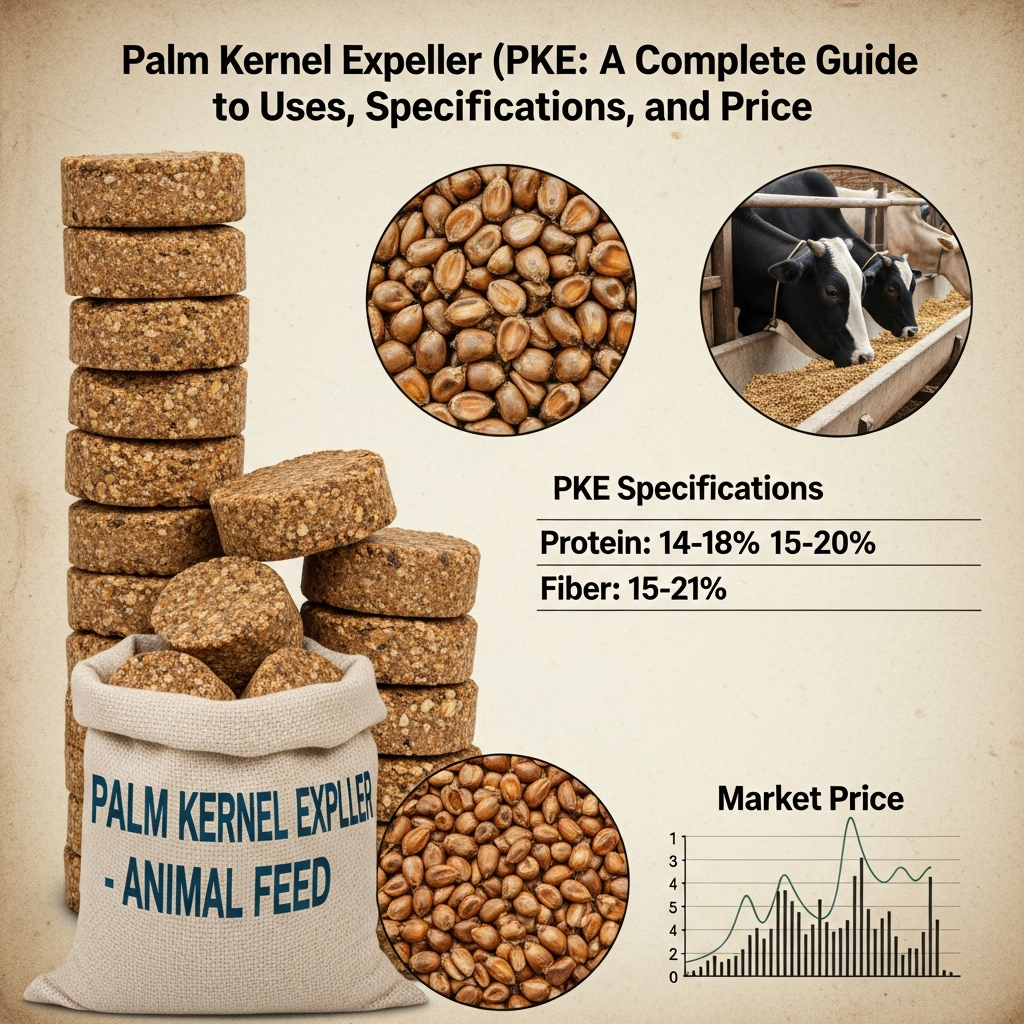
- البروتين الخام (CP): Typically ranges from 14-18%. This makes PKE a valuable source of protein for livestock, balancing the cost against other sources like soybean meal.
- Crude Fat (Oil Content): Usually between 8-12%. The residual oil is a dense source of energy for animals.
- Crude Fibre (CF): High in fiber, generally 15-20%. While this limits its use in monogastric animals, it’s highly beneficial for ruminants’ digestive health.
- الطاقة القابلة للاستقلاب (ME): Averages around 10-12 MJ/kg, providing significant energy for growth and milk production. For an in-depth analysis, you can review this comprehensive study on its energy values.
- محتوى الرماد: Generally below 5%, indicating a low level of mineral contaminants.
The Ultimate Guide to PKE Uses
While primarily known as an animal feed ingredient, PKE has several other valuable applications. Its composition makes it a versatile product in both agricultural and industrial settings.
1. A Cornerstone of Ruminant Feed
PKE shines brightest as a feed for ruminants like dairy and beef cattle, sheep, and goats. Its high fiber content supports healthy rumen function, and its balanced profile of protein and energy makes it an ideal, cost-effective component of their total mixed ration (TMR).
Dairy farmers particularly value this ingredient for its ability to maintain milk fat content and provide a steady energy release. Its palatable nature encourages feed intake, leading to consistent production. Many dairy industry resources confirm its widespread use and benefits in cattle diets.
2. A Feed Supplement for Other Livestock
For monogastric animals like poultry and swine, PKE is used more strategically. Due to its high fiber, it’s typically included at lower rates (5-10% of the diet). It serves as a filler and supplementary nutrient source, helping to manage overall feed costs without compromising animal performance when formulated correctly.
3. An Eco-Friendly Biofuel Source
Beyond the farm, PKE is a valuable biomass fuel. With its good calorific value, it can be burned in industrial boilers to generate steam and electricity, offering a renewable energy alternative to fossil fuels. This aligns with global efforts to create more sustainable biofuel options from agricultural by-products, such as قشرة نواة النخيل و عناقيد ثمار نخيل الزيت.

Understanding the PKE Price in 2025
The price of PKE is dynamic and influenced by a complex interplay of global market factors. For buyers, staying informed about these drivers is essential for making timely and cost-effective procurement decisions in 2025.
Key Factors Influencing PKE Price
- زيت النخيل الخام (CPO) Market: The PKE market is intrinsically linked to the CPO market. High CPO production generally leads to a greater supply of PKE, which can put downward pressure on prices, and vice versa.
- Global Supply & Demand: Major producing countries like Indonesia and Malaysia dictate supply. Meanwhile, demand is driven by major importers like New Zealand, the European Union, and China for their livestock industries.
- مكونات الأعلاف المنافسة: The price of alternatives like soybean meal, corn, and distillers dried grains (DDGS) directly impacts PKE demand. If these alternatives become more expensive, demand for PKE often rises. You can track these trends on global commodity price websites.
- تكاليف الخدمات اللوجستية والشحن: As a bulk commodity, shipping costs play a significant role in the final landed price of PKE. Fluctuations in ocean freight rates can cause major price swings.
Benefits and Drawbacks of PKE in Animal Feed
Like any feed ingredient, PKE has a unique set of advantages and potential challenges that nutritionists must balance.
The Proven Advantages
- الفعالية من حيث التكلفة: It is almost always a more economical source of protein and energy compared to other mainstream options.
- التوافر العالي: As a co-product of the world’s most-consumed vegetable oil, supply is generally stable and abundant.
- Rumen Health: The “scratch factor” from its high fiber content stimulates rumination and helps prevent digestive issues like acidosis in cattle.
Potential Drawbacks to Consider
- تباين العناصر الغذائية: Quality can differ between suppliers. It’s crucial to source from reputable sellers who provide consistent specifications.
- High Fiber Limitations: Its high fiber content makes it unsuitable for high-inclusion rates in poultry and swine diets.
- Storage and Contamination: Like many feedstuffs, PKE must be stored in a dry, cool place to prevent mold growth and mycotoxin contamination, a key focus of organizations like the منظمة الأغذية والزراعة (الفاو) فيما يتعلق بسلامة الأعلاف.
الأسئلة الشائعة
Is PKE the same as palm oil?
No. PKE is the by-product left after palm kernel oil is extracted from the kernel of the palm fruit. It is a solid, fibrous material, not an oil.
ما هو الاستخدام الرئيسي لعصارة نواة النخيل (PKE)؟
The overwhelming primary use of PKE is as an ingredient in animal feed, particularly for ruminant animals like cattle.
Why is PKE good for dairy cows?
PKE provides a balanced source of energy and protein, and its high fiber content is excellent for promoting a healthy rumen environment, which is crucial for milk production and animal well-being.
هل تبحث عن منتجات النخيل عالية الجودة؟
تقدم شركة ماكمور أمانة سجاهتيرا منتجات نخيل عالية الجودة مثل عصارة نواة النخيل، وقشرة نواة النخيل، وزيت النخيل الخام، وزيت نواة النخيل، وغيرها. يرجى التواصل معنا عبر واتساب على الرقم +6282140002198 أو عبر البريد الإلكتروني على admin@makmuramanah.co.id.
ختاماً،, معصرة نواة النخيل (PKE) stands out as a remarkably valuable and sustainable resource for the global feed industry. Its cost-effectiveness and favorable nutritional profile for ruminants ensure it will remain a staple in feed formulations for years to come. By understanding its specifications, uses, and market drivers, you can effectively leverage PKE to optimize both animal performance and profitability.
 Arabic
  English
  Indonesian
  Chinese