Palm Kernel Expeller (PKE): The Ultimate Guide (2025 Update)
As the global demand for sustainable and cost-effective animal feed ingredients grows, the spotlight has turned to innovative resources. A key player in this space is مستخلص نواة النخيل (PKE), a valuable byproduct of the palm oil industry, which also produces زيت النخيل الخام. Once seen as mere waste, PKE is now celebrated as a crucial component in livestock nutrition, offering a powerful blend of energy, protein, and fiber.
This comprehensive guide covers everything you need to know about PKE—from its production and nutritional profile to its practical applications and benefits in modern agriculture. Whether you’re a farmer, nutritionist, or simply curious about sustainable feed solutions, this article delivers the essential insights you need.
جدول المحتويات
- ما هو Palm Kernel Expeller تحديداً؟
- الملف الغذائي لـ PKE
- الاستخدامات الرئيسية لـ PKE في أعلاف الحيوانات
- The Top 4 Benefits of Using PKE in 2025
- Quality Considerations and Potential Drawbacks
- How to Select a High-Quality PKE Supplier
- مصدركم الموثوق لمنتجات النخيل المتميزة
- الخلاصة: مستقبل PKE في تغذية الحيوان
ما هو Palm Kernel Expeller تحديداً؟
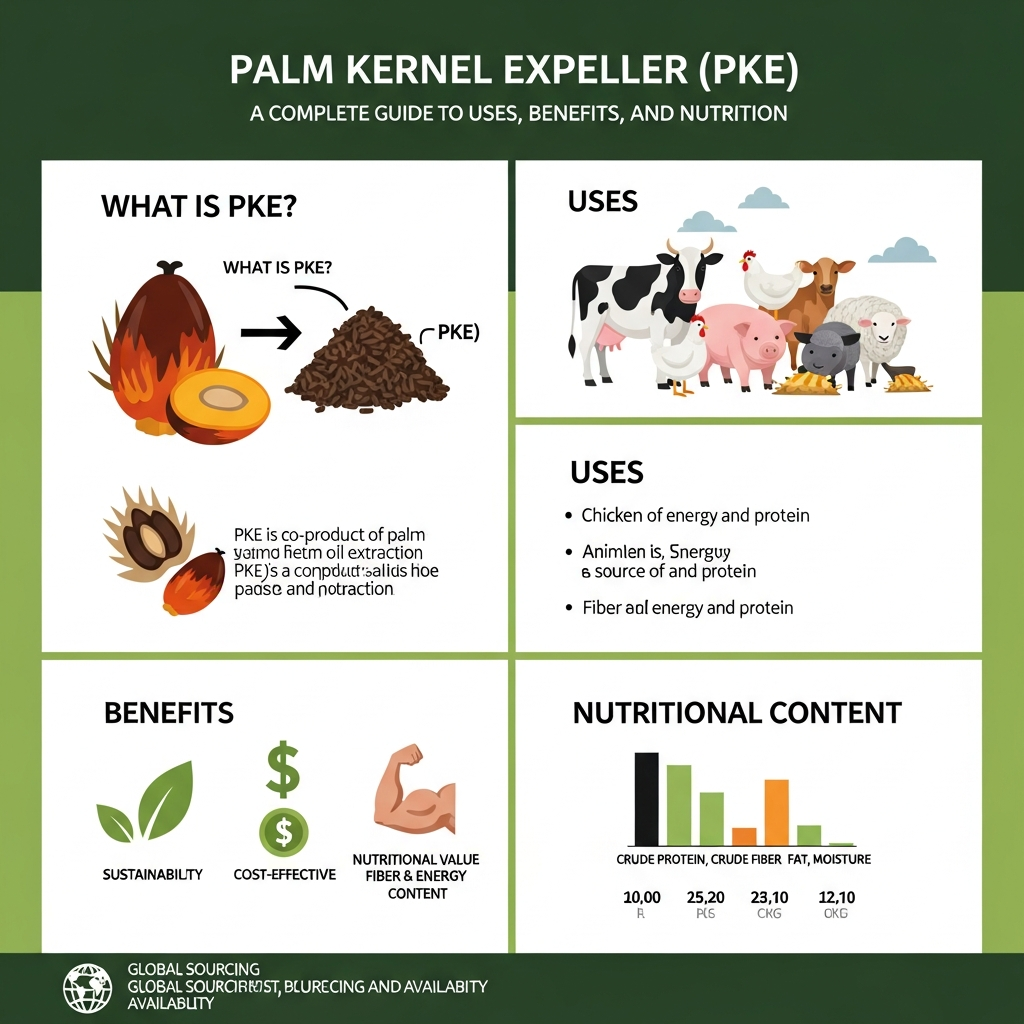
PKE is the solid residue left after the mechanical extraction of oil from the نواة النخيل. The entire process begins with the عناقيد ثمار نخيل الزيت, from which the palm nuts are derived. Through a process called expeller pressing, valuable زيت نواة النخيل is physically squeezed out, leaving a dense, protein-rich cake—the expeller.
It’s important to distinguish PKE from Palm Kernel Meal (PKM). While the terms are often used interchangeably, PKM is typically produced using solvent extraction, resulting in lower residual oil content. PKE, with its higher energy value from this residual oil, is often preferred for specific feed formulations.
Indonesia and Malaysia are the world’s largest producers, exporting millions of tons of this feed ingredient annually to countries like New Zealand, the European Union, and China, where it serves as a staple in the livestock industry.

High-quality PKE pellets are a cornerstone of modern animal nutrition.
الملف الغذائي لـ PKE
The true value of PKE lies in its balanced nutritional composition. While exact values can vary based on oil extraction efficiency and processing, a typical analysis provides a solid foundation for feed formulation.
Here is a typical nutritional breakdown:
- البروتين الخام: 14-18%
- الألياف الخام: 16-22%
- الدهون الخام (مستخلص الإيثر): 8-12%
- الطاقة الاستقلابية: 10-12 MJ/kg (للمجترات)
- المعادن الرئيسية: A good source of phosphorus, copper, zinc, and manganese.
The high fiber content is particularly beneficial for ruminants, promoting healthy rumen function. Furthermore, its moderate protein and high energy content make PKE a versatile ingredient. For a detailed scientific breakdown, Feedipedia offers an extensive analysis of its composition.
الاستخدامات الرئيسية لـ PKE في أعلاف الحيوانات
PKE’s unique properties make it suitable for a wide range of livestock. Its application primarily depends on the animal’s digestive system and the overall goal of the feeding program.
Ruminant Nutrition (Cattle, Sheep, Goats)
Ruminants are the largest consumers of PKE. Its high concentration of digestible fiber makes it an excellent feed for dairy and beef cattle, sheep, and goats. It serves as a reliable source of protein and energy, often replacing more expensive grains like corn or barley.
In dairy operations, this byproduct can support milk production and butterfat content due to its fat and fiber levels. Research published in the Journal of Animal Feed Science and Technology frequently explores how ingredients like PKE can optimize ruminant diets cost-effectively.
Poultry and Swine Nutrition
For monogastric animals like poultry and pigs, the use of PKE is more limited due to its high fiber content, which they cannot digest efficiently. High inclusion rates can lead to reduced growth performance.
However, at lower levels (typically 5-10% of the diet), it can be a cost-effective component. Advanced techniques, such as enzyme supplementation, are being developed to break down the fiber and improve its digestibility for these animals.
Aquaculture Feeds
The search for sustainable alternatives to fishmeal has led to increased interest in plant-based proteins in aquaculture. PKE is being explored as a viable ingredient in fish feed, particularly for herbivorous or omnivorous species, making it a key component in sustainable aquaculture.

Dairy cows thrive with PKE included in their feed rations.
The Top 4 Benefits of Using PKE in 2025
The widespread adoption of PKE in global feed markets is driven by several key advantages:
- الفعالية من حيث التكلفة: It is generally more affordable than other protein sources like soybean meal, allowing for significant reductions in feed costs.
- الاستدامة: As a byproduct, it utilizes a resource that would otherwise go to waste, promoting a more circular economy. The منظمة الأغذية والزراعة (الفاو) of the UN supports using such co-products to enhance food security.
- High Energy and Fiber: The residual oil provides a dense energy source, while the high fiber supports gut health in ruminants.
- Global Availability: With the massive scale of the palm oil industry, PKE is readily available year-round, ensuring a stable supply chain.
Quality Considerations and Potential Drawbacks
While PKE offers many benefits, users must be aware of potential quality issues to ensure optimal results.
Key concerns include:
- High Shell Content: Poor processing can leave a high percentage of قشرة نواة النخيل in the final product. These fragments are indigestible and reduce the feed’s nutritional value.
- الاستساغة: Some animals may find the feed less palatable. It is often introduced gradually and mixed with other ingredients to ensure acceptance.
- خطر السموم الفطرية: Like many ingredients stored in tropical climates, PKE can be susceptible to mold and mycotoxins. Sourcing from reputable suppliers with strong quality control is essential. A study from the معاهد الصحة الوطنية الأمريكية (NIH) database often details these risks in feedstuffs.
How to Select a High-Quality PKE Supplier
To maximize the benefits of this feed ingredient, buyers must be diligent. Look for these signs of a high-quality product:
- اللون والرائحة: Good quality PKE has a light brown color and a fresh, nutty aroma. A dark, burnt, or musty smell can indicate poor processing or storage.
- محتوى منخفض من القشور: Visually inspect for excessive black particles, which signal a high shell percentage.
- Request a Certificate of Analysis (COA): A reputable supplier should always provide a COA detailing the protein, fat, fiber, and moisture content.
مصدركم الموثوق لمنتجات النخيل المتميزة
توفر Makmur Amanah Sejahtera منتجات نخيل عالية الجودة مثل Palm Kernel Expeller وPalm Kernel Shell وCrude Palm Oil وPalm Kernel Oil وغيرها. يرجى التواصل معنا عبر WhatsApp على الرقم +6282140002198 أو مراسلتنا عبر البريد الإلكتروني admin@makmuramanah.co.id. مستخلص نواة النخيل (PKE) has firmly established itself as a cornerstone of the global animal feed industry. Its unique combination of cost-effectiveness, nutritional value, and widespread availability makes it an indispensable tool for farmers aiming to optimize production while managing costs. By understanding its properties, applications, and quality indicators, the agricultural community can continue to leverage this remarkable byproduct sustainably. As we move forward, the role of PKE is set to grow, supporting a more efficient and resilient global food system.هل تبحث عن منتجات النخيل عالية الجودة؟
الخلاصة: مستقبل PKE في تغذية الحيوان