
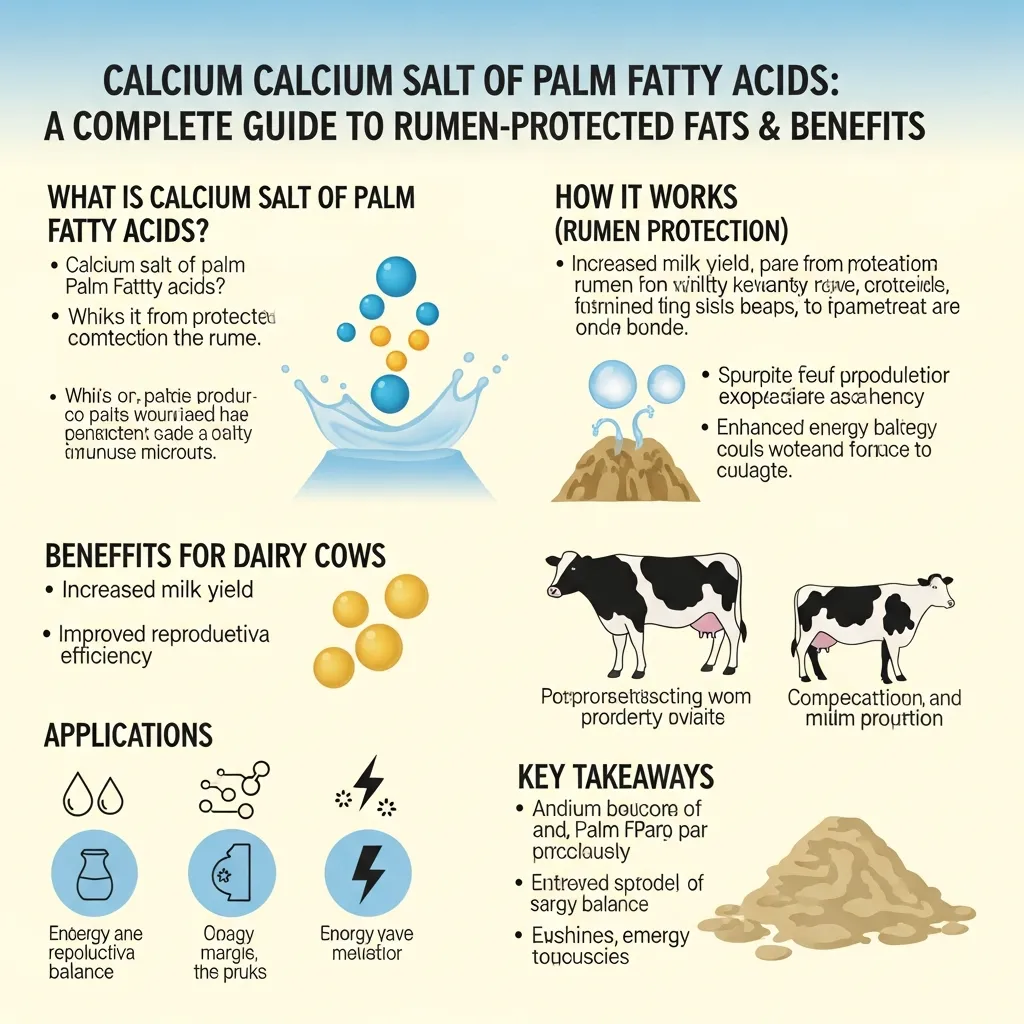
What is Calcium Salt of Palm Fatty Acids? A Complete Guide to Rumen-Protected Fats & Benefits
أملاح الكالسيوم للأحماض الدهنية للنخيل is the ultimate solution for dairy farmers facing the critical challenge of energy deficiency in high-yielding cattle. If you are struggling to maintain body condition scores or milk fat percentages during early lactation, this rumen-protected fat source is likely the missing link in your nutritional strategy. In this 2026 expert guide, we reveal how this supplement transforms herd health and profitability.
Modern dairy cows are metabolic athletes, often requiring more energy than standard feed can provide. This leads to a Negative Energy Balance (NEB), resulting in weight loss and poor fertility. By incorporating أملاح الكالسيوم للأحماض الدهنية للنخيل, producers can safely bridge this gap without disrupting rumen fermentation, ensuring a healthier and more productive herd.
ما هي أملاح الكالسيوم للأحماض الدهنية للنخيل؟
أملاح الكالسيوم للأحماض الدهنية للنخيل, often referred to as calcium soap or bypass fat, is a specialized nutritional supplement created through the reaction of palm fatty acids with calcium ions. This chemical process, known as saponification, creates a product that remains insoluble in the rumen’s neutral pH environment (pH 6.0–6.8) but dissociates readily in the acidic conditions of the abomasum (pH ~2.5).
This unique chemical structure is crucial for ruminant nutrition. Unlike standard dietary fats, which can coat fiber particles and kill beneficial rumen bacteria, calcium salts bypass the rumen fermentation process entirely. This ensures that the fiber digestion remains efficient while delivering a dense source of energy directly to the small intestine for absorption. According to research published in the مجلة علوم الألبان, supplementing with rumen-protected fats can significantly increase energy intake without compromising dry matter intake.
المواصفات الفنية
For nutritionists formulating rations, the typical profile of high-quality calcium salts is as follows:
| المعلمة | مواصفة |
|---|---|
| إجمالي محتوى الدهون | Min 84% |
| محتوى الكالسيوم | Max 9% |
| رُطُوبَة | ماكس 5% |
| نقطة الانصهار | >150°C (Ensures rumen bypass) |
| Acid Value | 195-205 mg KOH/g |
The Science: How Rumen-Protected Fats Work
To understand the transformative power of this supplement, one must look at bovine digestive physiology. The rumen is a large fermentation vat filled with microbes that digest fiber. Free oils and unsaturated fats can be toxic to these microbes, reducing fiber digestibility and leading to milk fat depression.
- Rumen Inertness: The strong calcium bond protects the fatty acids at a pH above 6.0, preventing interaction with rumen microbes.
- Acid Hydrolysis: Once the feed reaches the abomasum (the true stomach with pH ~2.5), the calcium bond breaks, releasing the free fatty acids.
- High Digestibility: The released fatty acids are highly digestible (over 90%) in the small intestine, providing essential energy for milk production and body maintenance.
For a deeper understanding of ruminant digestion, the Wikipedia entry on Ruminants offers a comprehensive overview of the four-chambered stomach system.
7 Proven Benefits of Calcium Salt of Palm Fatty Acids
إن إدراج أملاح الكالسيوم للأحماض الدهنية للنخيل into your total mixed ration (TMR) offers multifaceted benefits that go beyond simple energy supplementation. Here are the top seven advantages observed in modern dairy operations in 2026:
1. Boosting Milk Fat with Calcium Salt of Palm Fatty Acids
Energy is often the limiting factor in milk production. By providing a concentrated energy source that doesn’t fill the rumen with bulk, cows can sustain higher peak milk yields for longer periods. Furthermore, the palmitic acid (C16:0) content in palm fatty acids is known to transfer directly to the mammary gland, boosting milk fat percentages significantly. This leads to a higher milk check for farmers paid on component pricing.
2. Improved Reproductive Performance
Cows suffering from severe weight loss delay ovulation and have poor conception rates. By reducing the severity of negative energy balance (NEB), cows return to estrus sooner and exhibit stronger signs of heat. A study cited by the منظمة الأغذية والزراعة (الفاو) highlights the direct correlation between positive energy balance and improved conception rates.
3. Mitigation of Heat Stress
Digesting fiber generates significant metabolic heat (known as heat increment), which can be detrimental during hot weather. Fat digestion, on the other hand, generates very little heat. Feeding calcium salts allows cows to obtain the necessary energy density without raising their internal body temperature, which is critical for maintaining intake during hot summer months.
4. Prevention of Ketosis and Fatty Liver
Ketosis occurs when the body breaks down its own fat reserves too quickly to meet energy demands, releasing ketones. Providing exogenous energy via أملاح الكالسيوم للأحماض الدهنية للنخيل reduces the liver’s burden to mobilize body fat, significantly lowering the risk of metabolic disorders like ketosis and fatty liver syndrome.
5. Enhanced Body Condition Score (BCS)
Maintaining an optimal BCS is vital for long-term herd longevity. This supplement helps cows minimize body weight loss after calving and regain condition faster for the next lactation cycle. A cow that maintains her weight is a cow that breeds back faster and stays in the herd longer.
6. Cost-Effective Feed Efficiency
While the upfront cost per ton may seem higher than grains like corn or barley, the energy density of calcium salts is roughly 3x that of corn. This means you feed less to get the same energy, leaving more room in the rumen for forage. This improves overall feed conversion efficiency, allowing you to produce more milk per kilogram of dry matter intake.
7. Versatility in Formulation
It blends easily with other feed ingredients. Whether you are using معصرة نواة النخيل as a protein source or وجبة جوز الهند for fiber, calcium salts can be mixed into the TMR without palatability issues once the herd is adapted.
Comparison: Calcium Salts vs. Other Fat Sources
Not all fats are created equal. The table below compares أملاح الكالسيوم للأحماض الدهنية للنخيل against other common energy sources used in 2026 rations.
| ميزة | Calcium Salts (Bypass Fat) | Tallow/Animal Fat | Free Oils (e.g., Soybean Oil) |
|---|---|---|---|
| Rumen Inert? | Yes (High) | معتدل | No (Toxic to microbes) |
| قابلية الهضم | 90-95% | 70-80% | متغير |
| التأثير على هضم الألياف | محايد | Negative if overfed | سلبي للغاية |
| Handling | Dry, Free-flowing Granules | Needs heating tank | Liquid, messy |
| الاستساغة | Moderate (Requires adaptation) | جيد | جيد |
Feeding Guidelines and Dosage
لتحقيق أقصى استفادة من مزايا أملاح الكالسيوم للأحماض الدهنية لزيت النخيل, proper implementation is key. Sudden introduction can lead to feed refusal due to its distinct soapy smell.
- ابدأ ببطء: Introduce 100g per cow per day and gradually increase over 2-3 weeks. This allows the cows to get used to the aroma and texture.
- Target Dosage: The standard inclusion rate is 300g to 800g per head per day, depending on milk yield and stage of lactation. High-producing cows in early lactation benefit from the higher end of this range.
- Mix Thoroughly: Ensure it is well-distributed in the TMR to prevent sorting. The granules should adhere to moist silage or be mixed with a carrier like molasses.
- Monitor Components: Keep an eye on the milk protein-to-fat ratio. High fat supplementation can sometimes dilute milk protein slightly if amino acids are not balanced.
It is also beneficial to balance the ration with high-fiber byproducts. For instance, using قشرة نواة النخيل for bedding or roughage sources can complement the high-energy diet. Additionally, ensuring comfortable bedding with materials like جوز الهند helps reduce stress, further improving production.
For calves or other livestock, products like RBD CP8 (refined palm oil) might be utilized in milk replacers, providing a different profile of fatty acids suitable for young ruminants.
Economic Analysis: Is it Worth the Investment?
In the current economic climate of 2026, every cent counts. While adding a bypass fat increases the daily feed cost per head, the return on investment (ROI) is often substantial. Let’s look at a hypothetical scenario:
If feeding 500g of أملاح الكالسيوم للأحماض الدهنية للنخيل costs $0.50 but results in an increase of 2.5 kg of milk per day (valued at $1.25), the net profit is $0.75 per cow per day. For a 100-head herd, this translates to an additional $2,250 in profit per month. This calculation does not even account for the long-term savings from improved fertility and reduced veterinary bills for ketosis treatment.
Safety and Sustainability in 2026
As we move through 2026, sustainability is non-negotiable. Sourcing palm-based products from responsible suppliers is critical. Modern calcium salts are produced from palm fatty acid distillates (PFAD), a byproduct of oil refining, making them a resource-efficient choice. Regulatory bodies like the FDA Center for Veterinary Medicine generally recognize these salts as safe (GRAS) when used according to good feeding practices.
For additional reading on sustainable livestock practices, the Penn State Extension provides excellent resources on integrating byproducts into dairy rations.
Makmur Amanah Sejahtera نُقدّم منتجات نخيل عالية الجودة مثل عصارة نواة النخيل، وقشرة نواة النخيل، وزيت النخيل الخام، وزيت نواة النخيل، وغيرها. يُرجى التواصل معنا عبر واتساب. +6282140002198 أو راسلنا عبر البريد الإلكتروني على admin@makmuramanah.co.id.
الأسئلة الشائعة
What is the difference between calcium salts and saturated fats?
Calcium salts are chemically modified to be insoluble in the rumen, regardless of their saturation level. Saturated fats (like hydrogenated prills) are naturally hard and bypass the rumen due to their high melting point. Calcium salts generally have higher digestibility in the small intestine compared to very hard saturated fat prills.
Can I feed Calcium Salt of Palm Fatty Acids to beef cattle?
Yes, absolutely. While commonly used for dairy, it is excellent for finishing beef cattle to improve marbling and weight gain without causing acidosis, which is common with high-grain diets.
Does it affect the taste of the milk?
No. When fed at recommended levels (up to 3-4% of dry matter intake), research shows no transfer of off-flavors to the milk. The fat is metabolized and reconstructed into milk fat globules naturally.
How should this product be stored?
It should be stored in a cool, dry place away from direct sunlight and moisture. Being a dry granule, it is easier to store than liquid oils, but humidity can cause clumping over long periods.
Is Calcium Salt of Palm Fatty Acids safe for sheep and goats?
Yes, small ruminants like sheep and goats can also benefit from bypass fats, particularly during late pregnancy (to prevent pregnancy toxemia) and peak lactation. Adjust the dosage according to their body weight, typically 50g-100g per head per day.
خاتمة
In the competitive landscape of dairy farming in 2026, optimizing feed efficiency is the difference between profit and loss. أملاح الكالسيوم للأحماض الدهنية للنخيل stands out as a proven, scientifically backed supplement that solves the energy deficit problem without harming rumen health.
By bypassing the rumen and delivering high-quality energy where it counts, you ensure your herd remains healthy, fertile, and productive. Whether you are aiming for higher milk fat or better body condition scores, this ingredient is a staple of modern nutritional programs.



