
GACC PKE Export to China: The Ultimate Guide for 2026
Navigating the GACC PKE export to China process is the single biggest challenge for producers in 2026. This comprehensive guide provides the definitive roadmap to ensure your palm kernel expeller meets every stringent requirement for successful, profitable market entry.
The complexity of these regulations can be daunting, but with the right preparation and knowledge, it becomes a clear and manageable process.
Introduction: The Multi-Billion Dollar Opportunity
China has an insatiable demand for high-quality animal feed ingredients, with a market size projected to exceed $80 billion in 2026. Palm Kernel Expeller (PKE), a valuable source of protein and fiber, is a prime component for this market, but the General Administration of Customs of the People’s Republic of China (GACC) strictly controls access.
Since the implementation of Decree 248 and 249, the rules have tightened significantly, making compliance non-negotiable. Any deviation can result in rejected shipments, financial loss, and potential blacklisting.
This article breaks down the entire GACC PKE export to China process, from initial registration to final delivery. We turn a complex regulatory maze into a clear, actionable strategy for your business.
ما هي GACC ولماذا تعتبر بالغة الأهمية لصادرات PKE؟
Understanding GACC is the first step in a successful export strategy. It is not just a regulatory body; it is the gatekeeper to the Chinese market. The success of your GACC PKE export to China hinges on your comprehension of its role and regulations.
[Image: Infographic detailing the 5-step GACC registration process for PKE. | alt=”Step-by-step guide for GACC PKE export to China registration.” | title=”GACC Registration Process for PKE Exporters”]
Understanding the Role of GACC (Formerly AQSIQ)
GACC is the unified authority overseeing all imports and exports for China. It absorbed the responsibilities of the former agency, AQSIQ (General Administration of Quality Supervision, Inspection and Quarantine), in 2018. This consolidation means GACC now manages everything from facility registration and product inspection to quarantine and customs clearance.
For agricultural products like PKE, GACC’s mandate is to protect China’s animal and plant health, ensure food safety, and enforce quality standards. This is why the GACC PKE export to China requires such a detailed approval process.
Decree 248 & 249: The New Rules of the Game
Effective January 1, 2022, GACC implemented two critical decrees that transformed import regulations:
- Decree 248: Regulations on the Registration and Administration of Overseas Producers of Imported Food. This requires all foreign facilities that produce, process, or store food products (including animal feed) exported to China to be registered with GACC.
- Decree 249: Administrative Measures on Import and Export Food Safety. This decree outlines the comprehensive safety management, labeling, and traceability requirements for all imported foods.
These decrees shifted the responsibility squarely onto the overseas producers to prove their compliance before shipment, making the GACC PKE export to China process more proactive than reactive.
Pre-Export Checklist: Are You Ready for GACC PKE Export to China?
Before even beginning the application, your facility and processes must be in order. A failed application is often due to a lack of preparation. This checklist covers the absolute essentials for any GACC PKE export to China.
Facility Registration and Production Standards
Your production facility must operate at a high standard, often aligning with HACCP (Hazard Analysis and Critical Control Points) or ISO 22000 principles. GACC will scrutinize your production flow, pest control programs, and sanitation procedures. You must have documented evidence of these systems.
[Video: A short tour of a GACC-compliant PKE processing facility, showing key quality control and traceability steps.]
Product Testing and Analysis
You must have a history of product testing from accredited laboratories. This data should confirm that your PKE consistently meets the quality specifications required by China. Regular analysis demonstrates a commitment to quality control, a key factor in the GACC PKE export to China approval process.
Furthermore, this includes having a clear protocol for sampling and testing each batch destined for the Chinese market. Traceability from the final product back to the raw materials is a must.
Traceability and Record-Keeping Systems
Decree 249 mandates a complete traceability system. You must be able to trace a batch of PKE from its raw material source, through the production process, to the final packaged product. All records must be kept for a minimum of 3 years and be readily available for GACC audits.
This system is a critical component of a successful GACC PKE export to China strategy, as it provides the transparency and accountability that Chinese authorities demand.
The 5-Step GACC Registration Process for PKE Exporters (2026)
Exporters manage the registration process through the China Import Food Enterprise Registration (CIFER) system. This methodical process requires precision and attention to detail. This is the core of the GACC PKE export to China journey.
- إنشاء حساب CIFER: The first step is to access the CIFER system (GACC official site) and create an account. The application must be submitted through your country’s competent authority (e.g., the Ministry of Agriculture).
- Submit the Application Dossier: You will need to submit a comprehensive package of documents. This typically includes business licenses, facility layouts, process flow charts, quality control manuals, traceability plans, and more. All documents must be accurate and, in some cases, translated into Mandarin.
- GACC Technical Review: GACC experts will meticulously review your submission. They may send back a list of questions or requests for additional information. Timely and precise responses are crucial.
- Video or On-Site Audit: For high-risk products like animal feed, GACC will almost certainly conduct a remote video audit or, in some cases, an on-site inspection. They will verify that the information you submitted matches your actual operations.
- Receive GACC Registration Number: Upon successful completion of the audit and review, GACC will approve your facility and issue a unique registration number. This number must be clearly marked on all packaging and shipping documents for every GACC PKE export to China.
PKE Quality Specifications for the Chinese Market
Meeting China’s specific quality standards for PKE is non-negotiable. These standards can be stricter than those in other markets, particularly regarding contaminants. Your GACC PKE export to China will be rejected if these are not met.
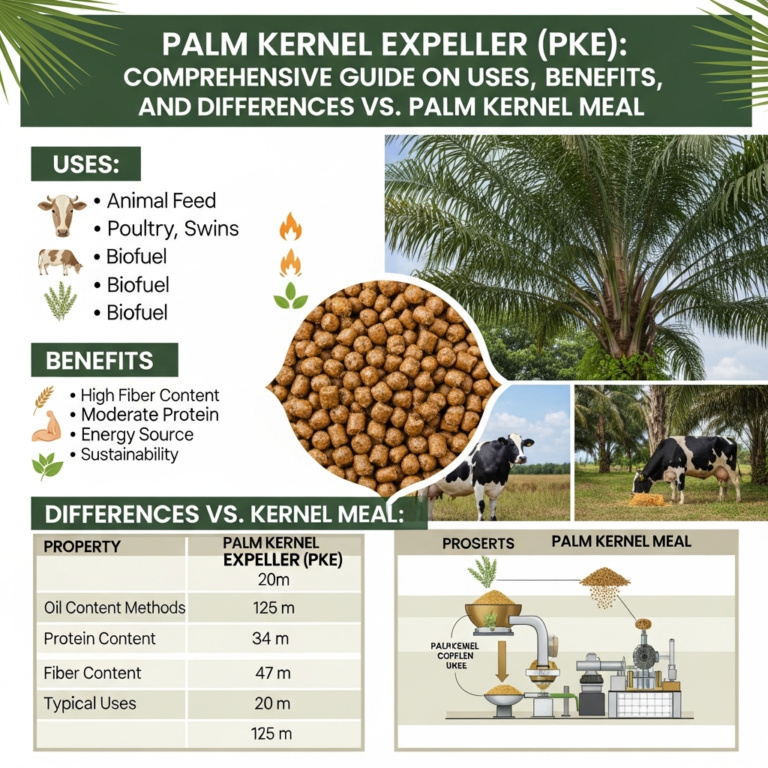
[Image: High-quality photo of palm kernel expeller in a clean, modern processing facility. | alt=”High-protein palm kernel expeller ready for GACC PKE export to China.” | title=”Quality Palm Kernel Expeller”]
Key Contaminant Limits: Aflatoxin and More
China is extremely sensitive to mycotoxins, especially aflatoxin B1. The national standard, GB 13078, sets the maximum allowable levels for contaminants in feed ingredients. As per research published in journals like Toxins, controlling aflatoxin is critical for animal health and, by extension, human food safety.
The GACC PKE export to China requires strict adherence to these limits, which are often tested upon arrival. One failed test can lead to the entire shipment being destroyed or returned.
PKE Specification Comparison Table
The following table provides a general comparison between standard PKE and the typical requirements for the Chinese market. Exporters must verify the most current standards before shipment.
| المعلمة | Standard PKE Specification | Typical China (GACC) Requirement | أهمية |
|---|---|---|---|
| البروتين الخام | 14-16% | > 15% (Minimum) | عالي |
| الدهون الخام | 8-12% | < 10% | واسطة |
| الألياف الخام | 15-18% | < 18% | عالي |
| رُطُوبَة | < 12% | < 12% (Strictly enforced) | مرتفع جداً |
| Aflatoxin B1 | يختلف | < 10 µg/kg (ppb) | Critical |
Labeling and Packaging Requirements
Every bag or container must be labeled in accordance with GACC regulations. The label must be in simplified Chinese and include:
- Product name (معصرة نواة النخيل)
- Net weight
- Name and address of the producer
- GACC registration number
- Production date and batch number
- Shelf life
Incorrect labeling is a simple mistake that can cause significant delays at the port. This is a crucial detail for every GACC PKE export to China.
Logistics and Shipping: From Your Mill to the Chinese Port
Successfully navigating the GACC PKE export to China process doesn’t end with production. Logistics and documentation are the final, critical phase where compliance is essential.
Working with experienced partners who understand the nuances of the Chinese import system is paramount. The entire supply chain must be secure and compliant.
[Image: A map showing the shipping route from a major port in Southeast Asia (e.g., Jakarta) to a major port in China (e.g., Shanghai). | alt=”Shipping and logistics route for agricultural exports to China.” | title=”Export Shipping Routes to China”]
Choosing the Right Freight Forwarder
Your freight forwarder is a key partner in this process. They should have extensive experience with Chinese customs and GACC regulations. A good forwarder will help ensure all documentation is correct and submitted on time, and can troubleshoot issues that may arise during clearance.
Moreover, they can advise on the best shipping lines and routes to minimize transit time and reduce the risk of product degradation, a key concern for any GACC PKE export to China.
Required Shipping Documentation for GACC PKE Export to China
In addition to standard export documents, a GACC PKE export to China requires a specific set of papers:
- بوليصة الشحن: Must be accurate and match all other documents.
- شهادة المنشأ: Authenticated by the chamber of commerce in the exporting country.
- شهادة الصحة النباتية: Issued by the competent authority, certifying the product is free from pests and diseases.
- شهادة التحليل (COA): For the specific batch being shipped, proving it meets quality specs.
- Commercial Invoice and Packing List: Must clearly state the GACC registration number of the production facility.
Just like other bulk commodities such as قشرة نواة النخيل, having flawless paperwork is essential for smooth customs clearance.
Common Mistakes to Avoid in Your GACC PKE Export to China Application
Many businesses falter in their attempts at GACC PKE export to China due to avoidable errors. Learning from these common pitfalls can save you significant time and money. Industry publications like FeedNavigator often highlight the challenges exporters face with new regulations.
Incomplete or Inaccurate Documentation
This is the number one reason for rejection. A single missing document, an incorrect address, or a mismatched number can halt the entire process. It is vital to have a dedicated person or team double-check every single field of every form before submission.
Misunderstanding Product Classification
Is your product classified as a feed ingredient, a feed additive, or a compound feed? The classification determines which regulations and standards apply. Misclassifying your product will lead to an incorrect application and guaranteed rejection. For example, the rules for PKE are completely different from those for substrates like جوز الهند. This kind of error could set back your GACC PKE export to China by months.
Failing the Virtual Audit
The virtual audit is your chance to prove your facility’s compliance. A failed audit is often the result of poor preparation. Ensure that the staff on camera are knowledgeable, that all requested areas of the facility are clean and accessible, and that your internet connection is stable. Conduct mock audits internally to prepare.
مكمور أمانة سجيتيرا نُقدّم منتجات نخيل عالية الجودة مثل مُستخلص نواة النخيل، وقشور نواة النخيل، وزيت النخيل الخام، وزيت نواة النخيل، وغيرها. يُرجى التواصل معنا على واتساب +6282140002198 أو راسلنا عبر البريد الإلكتروني على admin@makmuramanah.co.id.
الأسئلة الشائعة (FAQs)
What is the difference between GACC and the old AQSIQ?
GACC (General Administration of Customs of the People’s Republic of China) absorbed AQSIQ’s functions in 2018. GACC is now the single, unified authority for all import/export inspections, quarantine, and customs clearance, making it the sole agency you must deal with for registration and compliance.
How long does GACC registration for PKE take?
The timeline can vary significantly depending on the completeness of your application and the GACC’s current workload. Generally, you should plan for a process that takes anywhere from 6 to 18 months from initial submission to final approval for your first GACC PKE export to China.
Can I export other products like Copra Meal under the same registration?
No. GACC registration is specific to both the facility and the product category. If you wish to export a different product, such as وجبة جوز الهند, you will likely need to submit a separate application or amend your existing registration, which may require another review and audit process.
What happens if my PKE shipment is rejected by China Customs?
If a shipment is rejected for non-compliance, you typically have two options: return the shipment to the country of origin or have it destroyed. Both options are extremely costly. The rejection is also recorded, which can lead to increased scrutiny on future shipments.
How often do I need to renew my GACC registration?
GACC registration for overseas food producers is valid for 5 years. You must apply for renewal between 3 to 6 months before the expiration date to ensure there is no lapse in your registration, which would halt your ability to export.
Conclusion: Your Gateway to the Chinese Market
The GACC PKE export to China is undoubtedly a complex and rigorous process, but it is not insurmountable. By understanding the regulations, meticulously preparing your facility and documentation, and maintaining a steadfast commitment to quality and traceability, you can unlock access to one of the world’s most lucrative animal feed markets.
Success is built on a foundation of compliance. Treat GACC regulations not as a barrier, but as a blueprint for building a resilient and trustworthy export business. By following the steps outlined in this guide, you are not just preparing for a single shipment; you are building a sustainable and profitable future in the Chinese market. The ultimate success of your GACC PKE export to China depends on this diligence.
[Image: A certificate or official-looking document with the GACC logo (mockup). | alt=”GACC approval certificate for feed exporters.” | title=”GACC Approval Certificate”]

 Arabic
  English
  Indonesian
  Chinese