
Copra Meal: A Complete Guide to Its Benefits, Uses, and Nutrition
وجبة جوز الهند is one of the most underrated yet powerful ingredients in the animal feed industry. For farm operators and livestock managers constantly seeking cost-effective, sustainable, and high-protein feed sources, understanding this coconut by-product is no longer optional—it’s essential for competitive advantage.
The primary challenge in animal nutrition involves balancing cost with quality. Many conventional feed ingredients face volatile pricing and supply chain disruptions. This guide provides the definitive solution, exploring how copra meal can optimize your feed formulations, improve animal health, and ultimately enhance your bottom line in 2026 and beyond.
What Exactly is Copra Meal? A Detailed Look
Copra meal, a valuable feed ingredient, comes from the dried meat of coconuts (كوكوس نوسيفيرا). This by-product remains after manufacturers extract coconut oil. Often called “coconut meal” or “copra cake,” this resource is celebrated for its unique nutritional profile, making it a staple in livestock diets across the globe.
Its production showcases sustainable agriculture, transforming a post-extraction “waste” product into a high-value protein source. Appreciating its role in modern animal husbandry starts with understanding its origins.
From Coconut to Feed: The Production Process
The journey to create copra meal begins with the coconut. Growers dry the white flesh, or kernel, using various methods—including sun-drying, smoke-drying, or kiln-drying—to create “copra.” This drying process is crucial as it significantly reduces the moisture content, making oil extraction possible.
Once dried, the copra undergoes oil extraction. The extraction method directly impacts the final nutritional content of the meal. Processors then grind the resulting fibrous, protein-rich solid to create the final product: وجبة جوز الهند.
[Video: An engaging animated video explaining the copra meal production process from coconut harvesting to oil extraction and final milling. Title: How Copra Meal is Made: From Coconut to Livestock Feed]
What are the Types of Copra Meal?
Two primary methods for extracting oil from copra result in two distinct types of meal:
- الاستخلاص الميكانيكي (الضغط الميكانيكي): This is the most common method. A machine mechanically presses the copra to squeeze out the oil. The resulting “copra expeller” or “copra cake” typically contains a residual oil content of 6-12%. This remaining fat adds significant energy value to the feed.
- استخلاص المذيبات: In this industrial process, a solvent (like hexane) extracts the remaining oil from the copra. This method is more efficient, leaving a much lower residual oil content (around 2-4%). The resulting meal has a higher protein percentage but lower energy content.
For most livestock applications, nutritionists prefer the mechanically pressed expeller meal due to its higher energy value from the residual coconut oil.
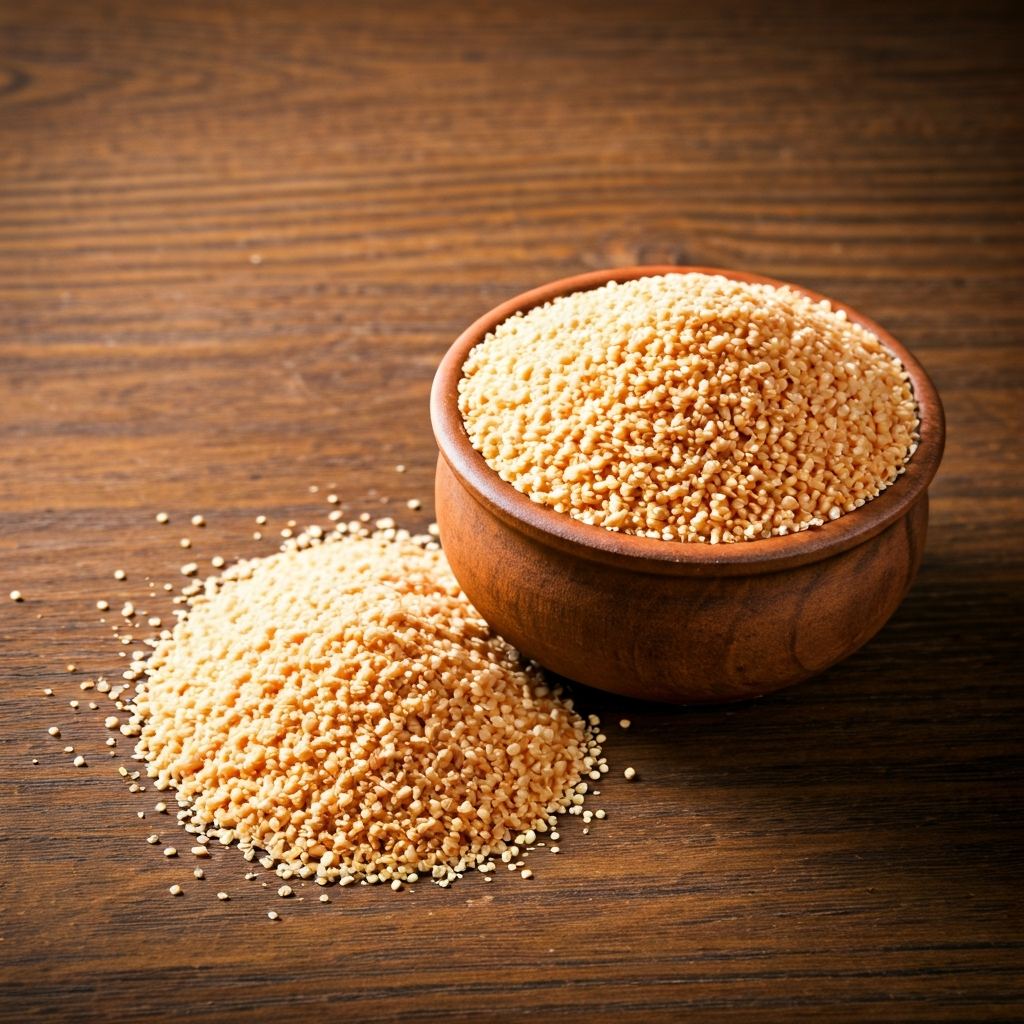
[Image: A close-up shot showing the coarse, granular texture of high-quality brown copra meal. Title: High-Quality Copra Meal for Animal Feed. Alt Text: A detailed view of high-quality وجبة جوز الهند, a protein-rich supplement for animal feed.]
Nutritional Profile of Copra Meal: A Deep Dive
The nutritional value of copra meal can vary based on the coconut’s origin, the drying process, and the oil extraction method. However, it is consistently recognized as a good source of protein, digestible fiber, and energy, especially for ruminants.
As an expert in feed formulation, I’ve seen firsthand how incorporating copra meal can transform a standard ration into a nutritionally dense and palatable meal for livestock. Its balanced profile makes it a versatile tool for nutritionists.
Macronutrient Breakdown (Protein, Fiber, Fat)
On average, high-quality copra meal provides a solid nutritional foundation. Here’s a typical breakdown:
- البروتين الخام: Typically ranges from 18% to 22%. While not as high as soybean meal, it is an excellent mid-range protein source. The protein in copra meal has a high bypass value, meaning it escapes digestion in the rumen and is absorbed in the small intestine, which is highly beneficial for cattle.
- الألياف الخام: Ranges from 10% to 14%. This high fiber content is primarily composed of digestible cellulose and hemicellulose, which supports gut health and function, particularly in ruminants.
- الدهون الخام (الزيت المتبقي): Varies from 2% to 12%. This residual coconut oil is rich in Medium-Chain Fatty Acids (MCFAs), such as lauric acid, which have known antimicrobial properties and provide a readily available energy source.
Essential Amino Acids and Minerals
While copra meal is not a complete protein, it contains a decent profile of essential amino acids. It is particularly rich in arginine but can be limiting in lysine and methionine. Therefore, you should use it with other protein sources to create a balanced amino acid profile in the final diet.
Furthermore, it’s a good source of essential minerals like phosphorus, iron, and manganese. Proper supplementation may be required to balance the calcium-to-phosphorus ratio, a standard practice in professional feed formulation.
7 Key Benefits of Using Copra Meal in Animal Feed
Including copra meal in livestock diets offers several distinct advantages that every farm manager should consider. These benefits go beyond simple nutrition, impacting animal health, performance, and overall farm economics.
- High Palatability: Most animals find the slightly sweet, nutty flavor of copra meal highly palatable. This can increase feed intake, especially when introducing new rations or for picky eaters, ensuring consistent nutrition and growth.
- Excellent Source of Bypass Protein: For ruminants like cattle and goats, the protein in وجبة جوز الهند has a high resistance to degradation in the rumen. This “bypass protein” is digested more efficiently in the lower gut, leading to better amino acid absorption and improved milk and meat production.
- Rich in Healthy Fats: The residual coconut oil is a powerhouse of Medium-Chain Fatty Acids (MCFAs), especially lauric acid. As confirmed by scientific studies, these fats are not just an energy source; they possess antimicrobial properties that can help improve gut health and reduce the incidence of certain diseases.
- Cost-Effective Protein Alternative: Compared to more expensive protein sources like soybean meal or fish meal, copra meal often presents a more economical option without a significant compromise in quality, especially when sourced correctly. This can drastically reduce overall feed costs, a crucial factor given volatile pricing in global markets.
- Improves Milk Quality: In dairy animals, the unique fatty acid profile of copra meal can positively influence the composition of milk fat, potentially increasing its nutritional value.
- Supports Gut Health Through Fiber: The high content of digestible fiber acts as a prebiotic, promoting the growth of beneficial gut bacteria. This leads to improved digestion, better nutrient absorption, and firmer manure. It complements other fibrous products like جوز الهند in a holistic farm ecosystem.
- مستدام وصديق للبيئة: As a by-product of the coconut industry, using copra meal is an excellent example of upcycling. According to the منظمة الأغذية والزراعة (الفاو), this makes the entire coconut value chain more sustainable and efficient.
[Image: An infographic-style diagram showing a coconut on one side, an arrow leading to an oil press, and another arrow pointing to a pile of copra meal on the other, with icons for protein, fiber, and fat. Title: From Coconut to High-Value Copra Meal. Alt Text: Infographic explaining the production of وجبة جوز الهند from coconuts for use in animal nutrition.]
Practical Applications: Who Can Benefit from a Copra Meal Diet?
Copra meal is not a one-size-fits-all solution, but its versatility makes it suitable for a wide range of animals. The key is understanding the ideal inclusion rates and how it complements other feedstuffs in the ration.
As a rule of thumb, it’s a superior feed for ruminants and can be strategically used for monogastric animals with careful formulation.
A Great Feed for Cattle and Dairy Cows
هذا هو المكان وجبة جوز الهند truly shines. Ruminants can easily digest its high fiber content, and its bypass protein characteristic is a major advantage. In dairy cows, it can form up to 20-25% of the concentrate ration, supporting milk production and butterfat content. For beef cattle, it promotes steady weight gain and good carcass quality.
Its Role in Poultry and Swine Diets
For monogastric animals like pigs and poultry, inclusion rates are generally lower. The high fiber content can be a limiting factor for young birds and piglets. However, for laying hens and finisher pigs, inclusion rates of 5-10% are common and can be cost-effective. The presence of lauric acid also offers gut health benefits.
Use in Aquaculture and Other Livestock
Copra meal has found a niche in aquaculture, particularly in feeds for herbivorous fish like tilapia. It’s also used for feeding horses, goats, and sheep. For horses, its low-starch, high-fiber, and high-fat profile makes it a “cool” energy source, ideal for performance without the fizz of high-grain diets.
Comparing Copra Meal with Other Feed Ingredients
When formulating a ration, it’s crucial to know how your ingredients stack up. Copra meal has a unique profile that sets it apart from other common feedstuffs like soybean meal or معصرة نواة النخيل (PKE).
While PKE is also a by-product of oil extraction, it comes from palm nuts and has a different nutritional composition. Let’s compare.
| العناصر الغذائية | وجبة جوز الهند | مستخلص نواة النخيل (PKE) | وجبة فول الصويا |
|---|---|---|---|
| البروتين الخام | 18-22% | 14-17% | 44-48% |
| الألياف الخام | 10-14% | 16-18% | 5-7% |
| الاستساغة | عالي | معتدل | عالي |
| Key Feature | High bypass protein, Lauric Acid | High fiber, good for ruminants | High protein, excellent amino acids |
كما هو موضح في الجدول،, جوز الهند occupies a unique middle ground. It offers better protein content than PKE and provides unique benefits (like MCFAs) that soybean meal lacks, often at a more competitive price point. This makes it a strategic choice for blending and optimizing rations.
[Image: A healthy, robust dairy cow eating from a trough in a clean, modern barn setting. The feed in the trough has the visible texture of a mixed ration. Title: Boost Dairy Performance with Copra Meal. Alt Text: A dairy cow benefiting from a nutritious diet that includes copra meal to boost milk production.]
الأسئلة الشائعة (FAQ)
هل مسحوق جوز الهند مفيد للماشية؟
Absolutely. Copra meal is an excellent feed ingredient for cattle, both dairy and beef. Its high digestible fiber content is perfect for the ruminant digestive system, and its bypass protein means more essential amino acids are absorbed, leading to improved meat and milk yields.
ما الفرق بين وجبة الكوبرا ووجبة جوز الهند؟
The terms “copra meal” and “coconut meal” are often used interchangeably. In most contexts, they refer to the same product: the feed ingredient left after oil extraction from dried coconut flesh (copra). While the name can vary by region, the product is functionally identical.
How much copra meal can be included in poultry feed?
For poultry, the inclusion rate depends on the age and type of bird. You can include it up to 10-15% of the diet for laying hens. For broilers, a lower rate of 5-8% is recommended due to the high fiber content, which can affect digestibility in younger birds.
What are the potential side effects or limitations of using Copra Meal?
The main limitation is its lower content of the amino acids lysine and methionine, so you must balance it with other protein sources. Additionally, improper storage in humid conditions can lead to mold and aflatoxin contamination, so sourcing from a reputable supplier is crucial.
Can horses eat copra meal?
Yes, copra meal is increasingly popular as a horse feed. It’s a low-starch, high-fiber, and high-fat feed, providing “cool” energy without the excitability associated with high-grain diets. It is particularly beneficial for performance horses, senior horses, or those needing to gain condition.
Conclusion: The Smart Choice for Modern Farming
In the competitive landscape of 2026, efficiency, sustainability, and cost-management are paramount. وجبة جوز الهند stands out as a premier feed ingredient that addresses all three. Its robust nutritional profile, high palatability, and unique health benefits—derived from its fiber and medium-chain fatty acids—make it an invaluable asset for any livestock operation.
By integrating this versatile coconut by-product into your feeding strategy, you are not just choosing an economical alternative; you are investing in superior animal health, performance, and a more sustainable agricultural practice. Whether for dairy, beef, poultry, or horses, utilizing وجبة جوز الهند is a key step toward a more profitable and resilient farming future. Explore your options for high-quality وجبة جوز الهند اليوم.
[Image: A large, neatly stacked warehouse of bagged copra meal ready for shipping, with the sun setting in the background, symbolizing global trade. Title: Global Supply of Premium Copra Meal. Alt Text: Bags of premium copra meal in a warehouse, ready for international export and use in livestock feed.]

 Arabic
  English
  Indonesian
  Chinese