
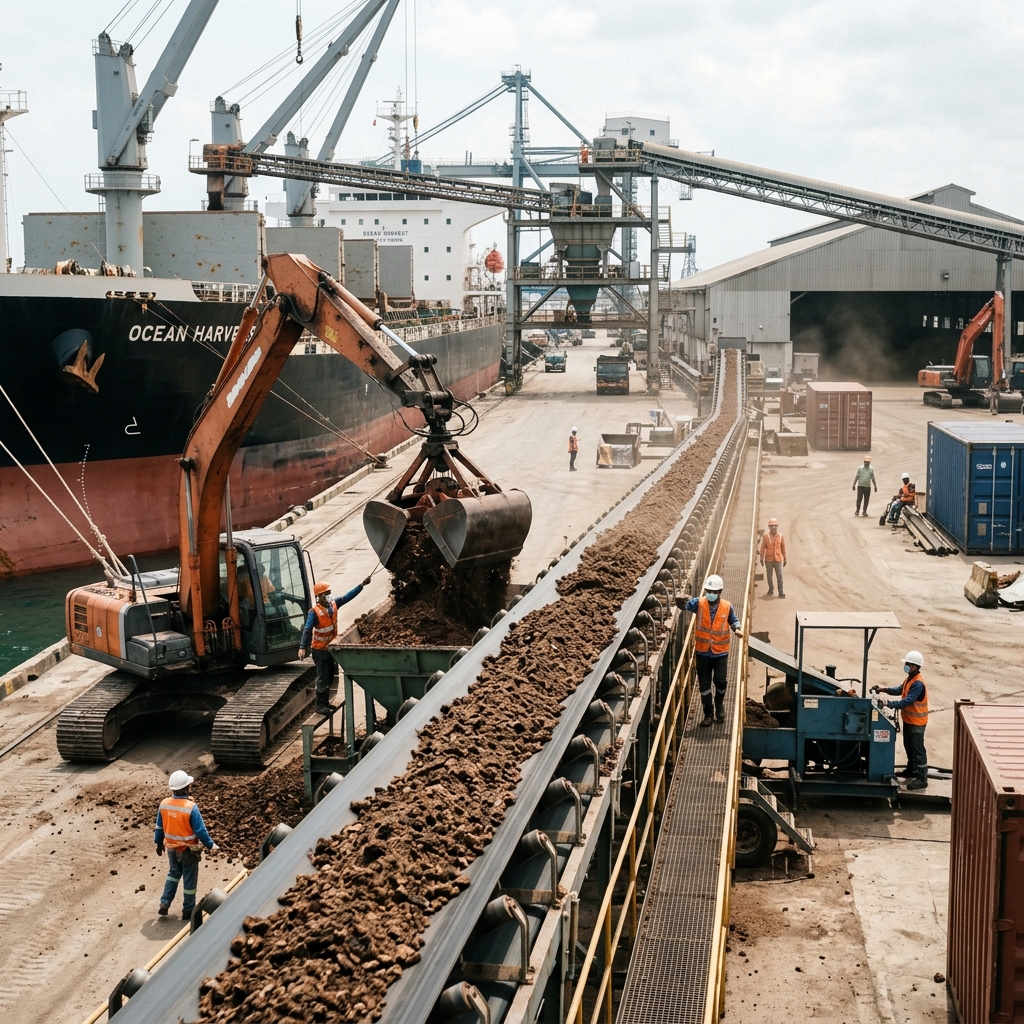
معصرة نواة النخيل serves as one of the most cost-effective energy and protein supplements in global livestock nutrition today. International importers, feed millers, and agricultural commodity traders rely on this sustainable byproduct to optimize animal diet formulations. However, securing high-quality bulk shipments while remaining fully compliant with international trade standards requires rigorous technical knowledge.
Furthermore, rapidly changing trade policies and strict quarantine regulations mean buyers must understand key parameters like HS Code classification and GACC registration. According to recent market analysis from the منظمة الأغذية والزراعة (الفاو), global demand for sustainable oilseed meals continues to rise significantly in 2026. Consequently, choosing a reliable supplier who satisfies international quality standards has become a commercial priority for every enterprise navigating a bulk palm kernel expeller import guide.
تعريف: معصرة نواة النخيل (PKE) is a nutrient-rich, fibrous byproduct obtained during the mechanical extraction of oil from the crushed nut (kernel) of the oil palm tree (Elaeis guineensis). It is widely utilized as a bulk feed ingredient for ruminants, providing balanced levels of crude protein, medium-chain fatty acids, and digestible neutral detergent fiber.
What is Palm Kernel Expeller? Production and Feed Profile
Understanding the industrial manufacturing process of معصرة نواة النخيل is essential for evaluating its end-use quality. The production begins after primary palm oil extraction, where remaining palm nuts are cracked to obtain intact kernels. These kernels undergo thermal conditioning and moisture reduction before entering mechanical screw presses.
[Image: Flowchart detailing the mechanical screw pressing process of palm kernels into expeller cake | Alt text: Mechanical screw pressing process producing high quality Palm Kernel Expeller | Title: Palm Kernel Expeller Manufacturing Process Diagram]
During mechanical pressing, high pressure extracts the majority of crude palm kernel oil. The resulting solid residue forms dense, dry cakes known commercially as expeller flakes or pellets. In contrast to solvent-extracted meals, mechanical expeller processing retains higher residual fat levels, boosting the overall metabolizable energy density of the feed.
Mechanical Screw Pressing vs. Solvent Extraction Methods
Feed manufacturers frequently contrast mechanical expeller cake with solvent-extracted meal. The traditional ضغط البراغي الميكانيكية method yields residual oil levels between 6.0% and 10.0%, whereas solvent extraction reduces fat levels below 2.0%. Consequently, mechanical expeller options deliver greater caloric energy to dairy cattle and beef cattle diets.
Moreover, mechanical processing completely avoids chemical solvent residues like hexane. This ensures a natural ruminant feed ingredient profile suitable for eco-conscious livestock production standards. Agricultural nutritionists regularly highlight these thermal-mechanical advantages when formulating high-performance farm feeds.
Key Nutritional Specifications and Crude Protein Content of Palm Kernel Expeller
Evaluating standard physical and chemical parameters prevents purchasing substandard feed materials. High-grade وجبة نواة النخيل offers predictable nutritional values that allow precise dietary balancing across various production stages. Importers must benchmark contract specifications against standardized lab thresholds.
Understanding the exact crude protein content alongside energy values ensures that feed mills achieve optimal conversion ratios. Below are the standard baseline metrics every professional procurement team must audit prior to executing purchase agreements:
- البروتين الخام (CP): 14.0% – 18.0% (ideal baseline for lactating cows and growing beef)
- Crude Fat / Ether Extract: 6.0% – 10.0% (provides essential metabolic bypass energy)
- الألياف الخام (CF): 15.0% – 18.0% (promotes healthy rumen fermentation and buffering)
- نسبة الرطوبة: Maximum 12.0% (critical for preventing mold and heating during ocean transit)
- محتوى الرماد: Maximum 5.5% (indicates mineral balance and absence of sand contamination)
- Aflatoxin Content: Maximum 20–50 ppb (strictly governed by destination import thresholds)
[Video Embed Suggestion: Overview of Palm Kernel Expeller Nutritional Profile & Rumen Fermentation Benefits | Title: Technical Guide to Ruminant Feed Formulations with PKE]
HS Code Classification and Global Customs Compliance
Accurate tariff classification prevents costly customs delays, unexpected duties, and regulatory fines at destination ports. Global customs authorities categorize palm processing residues under standardized Harmonized System (HS) numbers to streamline international commerce.
Technical Breakdown of HS Code 2306.60 Regulations
The standard global tariff code for this product is HS Code 2306.60. This specific subheading covers oil-cake and other solid residues derived from the extraction of palm nuts or kernels, whether ground, unground, or in the form of pellets. Importers must cross-reference this code with local tariff schedules to ensure accurate customs declarations.
Additionally, verifying regional import duty rates through official portals such as the منظمة الجمارك العالمية simplifies duty calculations. Accurate documentation ensures smooth processing through maritime customs terminals worldwide without incurring demurrage fees.
Mandatory Documentation Checklist for International Bulk Shipments
Customs clearing requires complete, verifiable trade documentation issued by certified inspection agencies in the exporting origin. Importers purchasing feed grade PKE should consistently require the following baseline documents from their supply partner:
- شهادة التحليل (COA): Issued by accredited independent laboratories (e.g., SGS, Sucofindo).
- شهادة الصحة النباتية: Confirms freedom from quarantine pests and plant pathogens.
- Certificate of Origin (Form E, Form D, or General CO): Enables preferential tariff access under bilateral trade agreements.
- Non-Radiation & Fumigation Certificates: Guarantees bulk cargo safety inside vessel holds during ocean transit.
Navigating GACC Registered Supplier Sourcing for China Imports
Exporting agricultural feed ingredients to the People’s Republic of China requires strict regulatory adherence. China’s General Administration of Customs (GACC) enforces stringent biosecurity and hygiene rules under Decrees 248 and 249.
[Image: Quality compliance inspector examining clean feed pellets before vessel loading | Alt text: GACC registered supplier conducting inspection for bulk Palm Kernel Expeller shipment | Title: GACC Import Compliance Inspection Protocol]
Understanding China GACC Decrees 248 and 249 Compliance
Chinese feed importers can only source feed materials from overseas processing facilities registered on the official GACC white list. Official documentation published by the الإدارة العامة للجمارك الصينية specifies that unregistered suppliers cannot clear shipments through Chinese ports.
Therefore, international buyers seeking how to source GACC approved palm kernel expeller must verify that their manufacturer holds an active registration code. Sourcing from a verified GACC registered supplier proves that the processing factory meets rigorous sanitation, pest control, and raw material traceability protocols.
Step-by-Step Verification Protocol for Overseas Feed Mills
To avoid trade disputes or rejected shipments at destination ports, follow this straightforward verification workflow when identifying potential production partners in Southeast Asia:
- Request the manufacturer’s official GACC registration code (e.g., CINAxxxxxxx or origin equivalent).
- Verify the code on the official GACC Single Window online database for feed export authorization.
- Confirm that the registration explicitly permits the export of palm oil residue products.
- Audit the manufacturer’s historical bills of lading to verify continuous export compliance.
Comparative Feed Analysis: Palm Kernel Expeller vs. Alternative Oilseed Meals
Formulating cost-effective livestock rations requires comparing alternative oilseed meals on a cost-per-unit-nutrient basis. The table below illustrates how معصرة نواة النخيل evaluates against alternative commercial feedstuffs in global livestock nutrition:
| Nutritional Component | معصرة نواة النخيل | وجبة جوز الهند | وجبة فول الصويا | نخالة الأرز |
|---|---|---|---|---|
| Crude Protein (%) | 14.0 – 18.0% | 20.0 – 22.0% | 44.0 – 48.0% | 12.0 – 14.0% |
| Crude Fat (%) | 6.0 – 10.0% | 8.0 – 11.0% | 1.0 – 2.0% | 12.0 – 15.0% |
| Crude Fiber (%) | 15.0 – 18.0% | 11.0 – 13.0% | 3.5 – 6.0% | 11.0 – 13.0% |
| ألياف المنظفات المحايدة (NDF) | 55.0 – 68.0% | 45.0 – 52.0% | 10.0 – 14.0% | 25.0 – 30.0% |
| Primary Target Species | Cattle, Sheep, Goats | Ruminants, Swine | Poultry, Swine, Aqua | Ruminants, Swine |
While soybean meal boasts higher crude protein, its market price remains significantly higher per metric ton. Combining expeller cake with concentrated protein sources offers an economical ration formulation strategy. Importers frequently pair this ingredient alongside جوز الهند to optimize digestible fiber and energy balance.
Additionally, commercial nutritionists often integrate high-energy bypass fats such as أملاح الكالسيوم للأحماض الدهنية لزيت النخيل for high-yielding dairy herds. For agricultural operations managing livestock bedding or soil conditioning, utilizing sustainable materials like جوز الهند complements total farm management.
[Infographic Blueprint: Interactive Nutrient Matrix Comparing Digestible Energy vs Crude Fiber across 5 Major Tropical Feed Ingredients]
Quality Control Protocol & Bulk Palm Kernel Expeller Sourcing Criteria
Executing successful commodity transactions depends on strict quality control measures before cargo loading. Even minor quality variations can damage stored feed bulk during long-distance maritime shipments across variable climate zones.
[Image: High-resolution close up of dry, golden-brown feed pellets | Alt text: Close up of premium quality Palm Kernel Expeller feed pellets | Title: Premium Quality Feed Grade Expeller Sample]
Moisture Thresholds and Self-Heating Prevention Strategy
Moisture content remains the single most critical quality indicator for bulk agricultural cargo shipments. If moisture levels exceed 12.0%, microbial respiration causes internal heating inside dry bulk vessel holds. According to research published in ساينس دايركت, self-heating degrades essential amino acids and creates severe mold propagation risks.
Moreover, high thermal pressure damages natural fat-soluble vitamins. Procurement contracts must mandate pre-shipment sampling by independent surveyors to verify moisture levels remain strictly below contract caps before ocean vessel loading begins.
Mycotoxin Mitigation and Aflatoxin Risk Management
Humid tropical climates introduce mold contamination hazards during harvest, crushing, and storage periods. Aflatoxins—toxic metabolic byproducts produced by الرشاشيات fungi—pose serious animal health hazards and violate strict statutory import limits in destination markets.
Importers should mandate that suppliers implement Good Manufacturing Practices (GMP) and real-time laboratory testing. Establishing dry, well-ventilated warehouse storage at export ports preserves ingredient integrity prior to loading, ensuring total safety for commercial herds.
Global Logistics, Market Trends, and Palm Kernel Expeller Price Per Metric Ton 2026
Selecting appropriate logistics modes directly impacts total landed costs. Depending on purchasing volume, importers choose between containerized shipping options or ocean dry bulk charters to optimize freight expenses.
Breakbulk Charters vs. Containerized Jumbo Bag Logistics
Large feed mills and multinational agricultural conglomerates typically import via ocean breakbulk chartering. Breakbulk vessels carry 5,000 to 30,000 metric tons per voyage, yielding lower freight rates per ton. However, breakbulk ocean logistics require specialized port equipment capable of rapid bulk discharge.
In contrast, small and medium feed producers prefer containerized shipping options. Packaging expeller meal into Jumbo Bags (1,000 kg capacity) or Bulk In Container (BIC) liners minimizes handling losses. Containerized transit simplifies multimodal transport directly to internal processing facilities.
Commercial Pricing Dynamics and Palm Kernel Expeller Specifications for Cattle
Evaluating the palm kernel expeller price per metric ton 2026 requires analyzing global vegetable oil production cycles, dry bulk ocean freight indexes, and competing soy meal benchmarks. Latest market updates from the دائرة الزراعة الخارجية التابعة لوزارة الزراعة الأمريكية highlight stable supply flows from major crushing hubs in Southeast Asia.
When reviewing palm kernel expeller specifications for cattle, nutritionists value its balanced fat-to-fiber ratio. Incorporating this ingredient into beef cattle feed rations lowers reliance on expensive feed grains. Furthermore, industrial energy processors frequently purchase complementary products such as قشرة نواة النخيل for industrial boiler fuel, or refined liquid oils like RBD CP8 to streamline overall supply chain logistics.
مكمور أمانة سجيتيرا توفر منتجات زيت النخيل عالية الجودة مثل معصرة نواة النخيل, قشرة نواة النخيل, Crude Palm Oil, Palm Kernel Oil, etc. Kindly contact us at WhatsApp +6282140002198 أو راسلنا عبر البريد الإلكتروني على admin@makmuramanah.co.id.
الأسئلة الشائعة
What is the official HS Code for Palm Kernel Expeller?
The standard international customs tariff classification for this product is HS Code 2306.60. This code applies specifically to oil-cake and solid residues derived from extracting oil from palm nuts or kernels, whether ground, unground, or formatted into dense feed pellets.
Why is GACC approval necessary for exporting feed ingredients to China?
China’s General Administration of Customs (GACC) mandates that all overseas feed processing plants exporting to China must hold official GACC registration under Decrees 248/249. This requirement guarantees biosecurity, processing sanitation, and complete supply chain traceability before port entry clearance.
What is the typical crude protein content in feed grade PKE?
High-grade expeller meal typically contains between 14.0% and 18.0% crude protein on a dry matter basis. This parameter makes it an ideal, cost-effective protein and energy supplement for beef cattle, lactating dairy cows, sheep, and goats.
How does mechanical expeller meal differ from solvent-extracted meal?
Mechanical expeller processing leaves residual crude fat levels between 6.0% and 10.0%, providing high metabolizable energy. In contrast, solvent extraction uses chemical solvents like hexane to strip oil below 2.0% fat, yielding lower caloric energy content.
How should bulk expeller cargo be stored during sea transit?
Cargo must be loaded at moisture levels strictly below 12.0% inside well-ventilated dry bulk holds. Maintaining low moisture prevents microbial self-heating, nutrient degradation, mold growth, and aflatoxin development during long ocean voyages.
خاتمة
Navigating global agricultural commodity trade requires absolute technical clarity across feed specifications, legal standards, and customs compliance. Sourcing high-grade معصرة نواة النخيل enables commercial livestock operations to optimize ration performance while controlling overall feed costs. By verifying essential parameters such as HS Code 2306.60 and securing GACC-certified suppliers, buyers protect their international supply chains against trade disruptions.
[Image: Commercial bulk cargo vessel loading feed products at export port terminal | Alt text: Cargo ship loading bulk Palm Kernel Expeller for ocean export | Title: Global Commodity Shipping Infrastructure]
Choosing dependable, quality-focused supply partners guarantees consistent product specifications and seamless port clearance. Contact our technical export specialists today to secure verified, high-performance feed ingredients tailored for your international livestock feed business.
 Arabic
  English
  Indonesian
  Chinese