
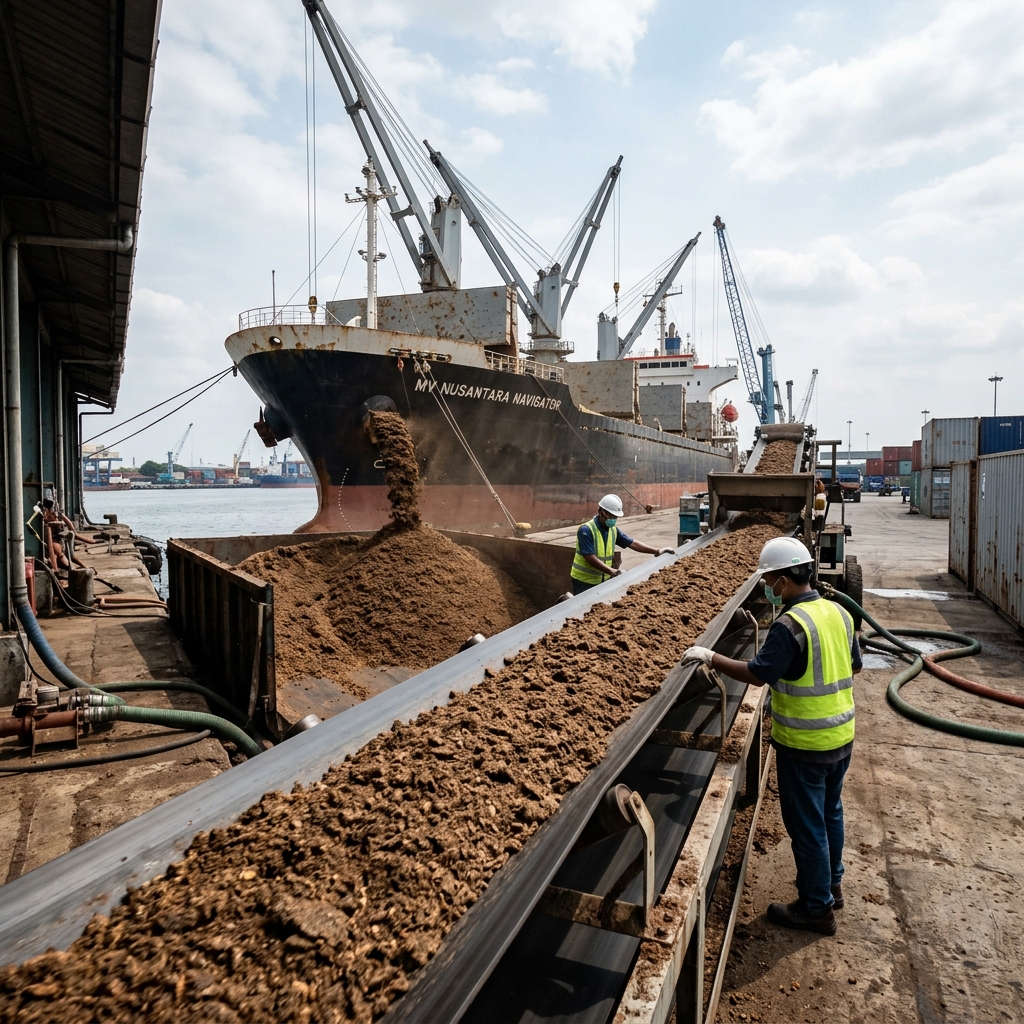
Securing GACC-Approved Palm Kernel Expeller for international feed supply chains requires strict compliance with updated Chinese customs standards and phytosanitary rules in 2026. Without proper registration and quality verification, shipments risk severe customs holds, re-export orders, or outright confiscation at major ports.
This comprehensive guide details the technical specifications, HS code classifications, step-by-step GACC registration procedures, and sourcing strategies needed to ensure flawless clearance. Whether you are an importer in East Asia or a global feed manufacturer, mastering these regulatory requirements is essential for maintaining an uninterrupted supply chain.

What Is GACC-Approved Palm Kernel Expeller?
GACC-Approved Palm Kernel Expeller refers to high-grade palm kernel expeller (PKE) produced by overseas processing facilities registered and approved by the General Administration of Customs of China (GACC) under Single Window Decree 248/249 protocols. This plant-based feed byproduct is generated during the mechanical extraction of oil from palm nuts.
As a widely utilized animal feed ingredient, it provides a balanced profile of metabolizable energy, crude protein (14%–18%), and digestible fiber. Consequently, dairy and beef cattle producers rely heavily on this material to increase milk yields and optimize daily weight gains while maintaining lower ration costs.
Physiological Role of Palm Kernel Meal in Ruminant Nutrition
In modern ruminant nutrition research, mechanical PKE serves as an ideal non-starchy energy supplement. Unlike fast-fermenting cereal grains, the dietary fiber in GACC-Approved Palm Kernel Expeller degrades gradually within the rumen, sustaining optimal microbial protein synthesis.
Furthermore, livestock operations frequently blend mechanical PKE with وجبة نواة النخيل to fine-tune total dietary fat levels while preserving structural fiber intake across dry-lot feed formulations.
Technical Specifications & Quality Benchmarks
Importers must verify that every batch meets strict chemical and physical parameters before loading. Furthermore, Chinese customs authorities conduct rigorous spot testing for moisture, heavy metals, and mycotoxin levels upon arrival.
| المعلمة | Standard Grade Requirement | GACC Compliance Limit |
|---|---|---|
| Crude Protein Content | Min 14.5% – 16.0% | Min 14.0% |
| Crude Fat / Fat Content | 6.0% – 8.5% | الحد الأقصى 10.0% |
| محتوى الرطوبة | Max 10.0% – 12.0% | الحد الأقصى 12.0% |
| الألياف الخام | 15.0% – 18.0% | Max 18.0% |
| Aflatoxin B1 | < 20 ppb | Max 10 ppb (Strict Control) |
| Total Ash | Max 4.5% – 6.0% | Max 7.0% |
Mitigating Mycotoxin Risks in GACC Customs Clearance
Customs quarantine officers enforce zero-tolerance thresholds for pathogenic mold strains and aflatoxin contamination. Elevated moisture levels during maritime transit accelerate fungal growth, leading to immediate rejected entry during customs clearance inspections.
Additionally, modern feed formulations often combine PKE with complementary ingredients such as high-grade وجبة جوز الهند and rumen-bypass energy supplements like أملاح الكالسيوم للأحماض الدهنية لزيت النخيل to maximize total digestible nutrients in dairy cattle diets.
PKE HS Code Classification & Import Regulations
Accurate tariff classification prevents legal disputes and tariff penalties during port declarations. Globally, palm kernel expeller is classified under the Harmonized Commodity Description and Coding System managed by the منظمة الجمارك العالمية.
Navigating palm kernel expeller HS code import regulations requires precise documentation on all commercial invoices and certificates of origin to match destination tariff databases.
- Harmonized System (HS) Code:
2306.60.00— Oil-cake and other solid residues, whether or not ground or in the form of pellets, resulting from the extraction of palm nuts or kernels. - China Import HS Code (CIQ):
2306.60.0000(Requires valid quarantine inspection permits and GACC facility registration). - Subheading Specifics: Classified specifically under solid agricultural processing residues intended for animal feed manufacturing.
Importers should ensure that shipping documents, including Bills of Lading and Phytosanitary Certificates, state HS code 2306.60 explicitly to match the GACC database profile without discrepancy.
Why Is GACC Registration Mandatory for Feed Imports?
The Chinese Ministry of Agriculture and Rural Affairs (MARA) and GACC enforce strict biosecurity protocols to protect domestic agriculture against mycotoxins, plant pests, and toxic heavy metals. According to agricultural import data from the دائرة الزراعة الخارجية التابعة لوزارة الزراعة الأمريكية, China imports millions of metric tons of plant protein meal annually, making regulatory control paramount.
Consequently, overseas manufacturers must maintain active inclusion on the official GACC approved facility list (CIFER system). If a processing factory loses its registration status, Chinese customs officers will immediately deny entry to shipments originating from that facility.

Step-by-Step Guide: How to Register GACC for Palm Kernel Expeller Imports
Successfully navigating the import process requires executing five standardized steps. Understanding how to register GACC for palm kernel expeller sourcing minimizes regulatory friction and speeds up destination port clearance.
- Verify Factory Registration on the CIFER Platform: Before opening a Letter of Credit (LC), confirm that your supplier possesses an active GACC registration code for feed ingredients under Decrees 248/249.
- Secure Quality Analysis & Phytosanitary Documentation: Demand an official Certificate of Analysis (COA) confirming that moisture is under 12% and aflatoxin meets Chinese standards. The origin country’s agricultural authority must issue a clean Phytosanitary Certificate.
- Establish Import Permit Approval: Ensure the Chinese importing entity holds a valid License for Importation of Feed and Feed Additives issued by MARA prior to shipment vessel departure.
- Select Reliable Logistics and Packaging: Transport PKE via clean, dry bulk vessels or 20-foot jumbo bag containers. Moisture ingress during sea transit can cause mold proliferation, leading to cargo rejection.
- Execute Port Customs & CIQ Physical Inspection: Upon entry at Chinese ports (such as Qingdao, Tianjin, or Guangzhou), customs officials draw samples for lab analysis. Once cleared, goods are released for domestic distribution.
Video Overview: Industrial processing, quality sampling, and containerization of export-grade PKE.
Key Advantages of GACC-Approved Palm Kernel Expeller in Animal Diets
Nutritionists incorporate PKE into feed matrices because of its unique physiological benefits for ruminants. Scientific literature preserved by the منظمة الأغذية والزراعة (الفاو) highlights its structural fiber value in supporting healthy rumen fermentation.
1. Superior Rumen Health and Fat Digestion
Unlike starchy grains like corn or wheat, PKE contains neutral detergent fiber (NDF) of approximately 55%–65%. This digestible fiber buffers the rumen environment, preventing subacute ruminal acidosis (SARA) in high-yielding dairy cows.
2. High Energy Density from Natural Residual Oils
Mechanical expeller processing leaves 6% to 8% natural palm lipids in the meal. This residual oil delivers concentrated energy without reducing cellulolytic bacteria activity, driving steady milk fat synthesis.
3. Cost-Effective Replacement for Soy Meal and Rice Bran
By substituting a portion of expensive soybean meal and rice bran with PKE, commercial feed mills reduce raw material formulation costs while preserving daily dietary crude protein content ratios.

Sourcing from a GACC Approved Palm Kernel Expeller Supplier Indonesia
Indonesia stands as the world’s largest producer of palm oil byproducts. Partnering with an authorized GACC approved palm kernel expeller supplier Indonesia guarantees that your supply chain complies with strict biosecurity standards while maintaining stable monthly volume delivery.
Furthermore, Indonesian palm processing facilities generate versatile agricultural commodities. For instance, integrated suppliers produce industrial biomass solutions like قشرة نواة النخيل for renewable green energy, horticultural growing substrates such as جوز الهند, and refined edible oils including RBD CP8.
Working directly with verified exporters ensures that every container loaded with GACC-Approved Palm Kernel Expeller meets exact laboratory standards for moisture, crude fiber, and aflatoxin limits.
مكمور أمانة سجيتيرا توفر منتجات زيت النخيل عالية الجودة مثل معصرة نواة النخيل, قشرة نواة النخيل, Crude Palm Oil, Palm Kernel Oil, etc. Kindly contact us at WhatsApp +6282140002198 أو راسلنا عبر البريد الإلكتروني على admin@makmuramanah.co.id.
الأسئلة الشائعة
What is the HS code for Palm Kernel Expeller?
The international HS code for Palm Kernel Expeller is 2306.60.00. Under Chinese customs tariff schedules, it is entered under classification code 2306.60.0000 for solid feed residue imports.
How do I verify if a supplier has GACC approval?
You can verify a supplier’s registration status by accessing the official GACC CIFER platform (Single Window) and searching for their facility registration number under the foreign registered feed enterprise database.
What is the difference between Palm Kernel Expeller and Palm Kernel Meal?
Palm Kernel Expeller is produced via mechanical pressing, retaining 6%–8% residual oil. Solvent-extracted palm kernel meal contains lower residual fat (1%–2%). Consequently, mechanical PKE offers higher metabolizable energy for livestock.
What is the typical shelf life of GACC-Approved Palm Kernel Expeller?
When stored in dry, cool, and well-ventilated warehouse environments with moisture held below 10%, high-grade PKE retains nutritional stability for 6 to 12 months without substantial lipid oxidation.
Why is GACC registration required for animal feed imports?
GACC registration is mandatory under Decrees 248 and 249 to enforce strict biosecurity, prevent contaminant entry, and guarantee that imported agricultural feedstuffs adhere strictly to Chinese biosecurity standards.
Conclusion: Streamlining Your PKE Procurement
Importing agricultural commodities into high-compliance markets requires diligent regulatory oversight. By establishing proper verification procedures—confirming HS code 2306.60 classifications, verifying CIFER registration codes, and executing pre-shipment laboratory analysis—importers eliminate transit risks effectively.
Partnering with a certified international supplier guarantees that every shipment meets mandated phytosanitary and biosecurity criteria. Work with verified processing leaders to secure your supply chain and source premium GACC-Approved Palm Kernel Expeller اليوم.

 Arabic
  English
  Indonesian
  Chinese