
Palm Kernel Expeller: 7 Proven 2026 Feed Wins in Egypt
Procuring معصرة نواة النخيل has become an indispensable operational strategy for Egyptian livestock producers grappling with escalating grain import expenses and unpredictable feed markets in 2026. Egyptian dairy operations, beef feedlots, and commercial compounders face tightening profit margins as traditional protein meals fluctuate dramatically in price. By leveraging the balanced fiber, residual oil, and cost-effective protein of mechanical palm extraction, progressive producers successfully reduce overall feed expenditure without sacrificing milk yield or average daily gain.
Egypt imports over 60% of its raw feed components annually, making commercial livestock enterprises exceptionally vulnerable to global currency and supply shocks. According to the USDA Foreign Agricultural Service Egypt report, private agribusinesses throughout the Nile Delta and Upper Egypt are actively diversifying away from exclusive reliance on yellow corn and imported soybean meal. In this challenging economic environment, agro-industrial co-products deliver essential resilience, transforming volatile rations into stable, cost-controlled daily nutritional programs.
Integrating cost-effective معصرة نواة النخيل into national milling formulas directly strengthens animal feed ingredients availability across Egyptian governorates. As commercial mills modernize, utilizing an oilseed byproduct meal with proven digestive performance allows local producers to maintain continuous production cycles despite international currency fluctuations.

Rising Demand for Palm Kernel Expeller in Egypt
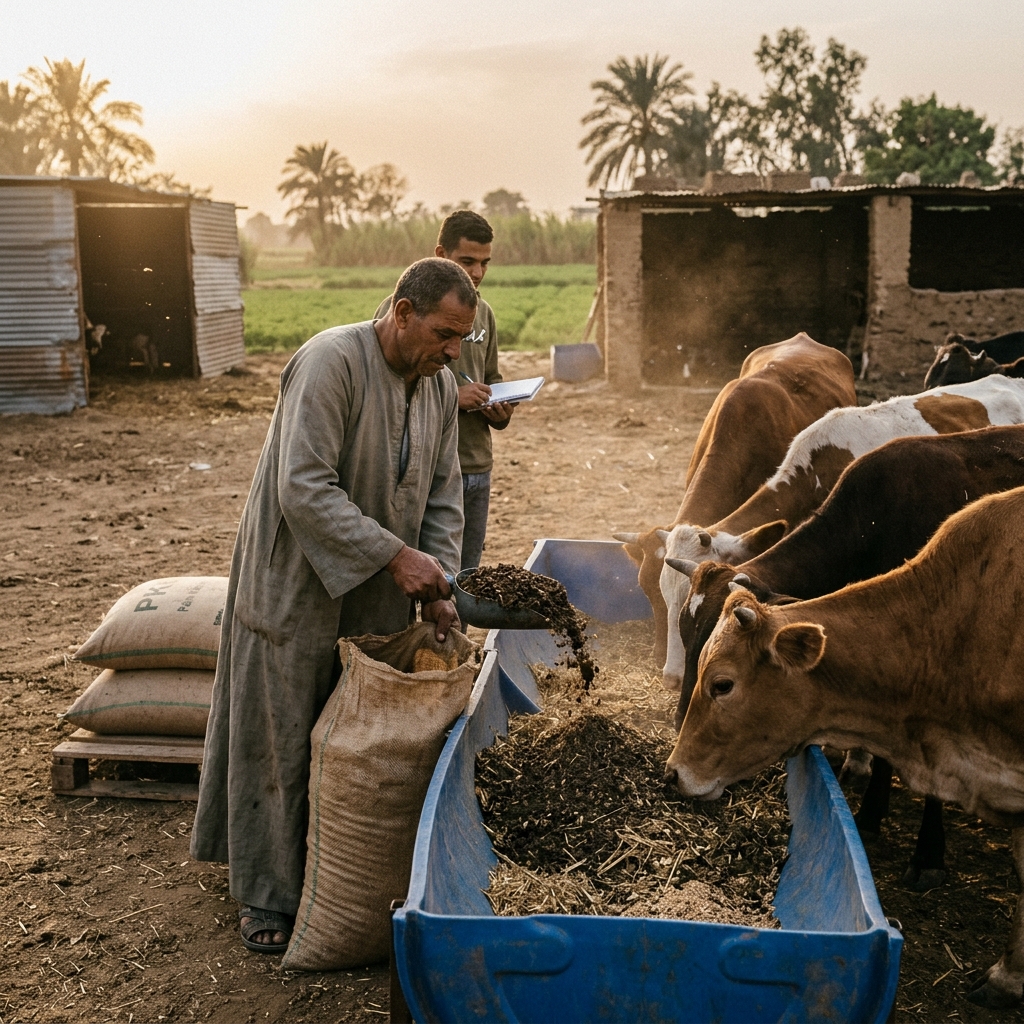
The Egyptian livestock sector is experiencing an unprecedented structural transformation driven by urbanization, expanding domestic demand for red meat, and the commercialization of large-scale dairy projects. Consequently, feed millers require reliable bulk raw materials that fulfill both caloric and protein benchmarks simultaneously. Importers and nutritionists increasingly rely on Palm Kernel Expeller to bridge the critical nutritional gap between roughages like Egyptian clover (berseem) and concentrated energy sources.
Unlike solvent-extracted palm kernel meal, which undergoes chemical leaching, expeller-pressed material retains a meaningful portion of digestible plant lipids. This residual oil provides intensive energy without inducing ruminal acidosis, a persistent hazard under Egypt’s scorching summer conditions. Furthermore, commercial livestock trials demonstrate that replacing a portion of high-starch cereal grains with mechanical palm pulp stabilizes rumen pH while lowering overall diet cost per metric ton.
Recent data from the FAO livestock feed database highlights that mechanical palm meal integration creates durable supply chain flexibility for arid and semi-arid production zones. Feed compounders across Sharkia, Dakahlia, and Beheira governorates are actively re-engineering ruminant formulas to establish resilient production models against ongoing currency variations.
Moreover, macroeconomic studies by the World Bank Agribusiness Development Unit emphasize that sustainable livestock feed Egypt initiatives rely heavily on substituting imported human-edible food grains with industrial coproducts. Palm Kernel Expeller aligns perfectly with this developmental mandate, delivering superior performance at a reduced economic baseline.
Nutritional Profile and Chemical Composition of Palm Kernel Expeller
معصرة نواة النخيل is the solid, protein-rich byproduct derived from mechanically crushing oil palm seeds (Elaeis guineensis) via continuous screw presses, leaving a coarse, fibrous meal packed with residual dietary lipids, insoluble polysaccharides, and essential minerals.
Understanding the exact biochemical composition of this feedstuff enables nutritionists to balance rations with high precision. Standard commercial batches supply between 14% and 18% crude protein on a dry matter basis, alongside an ether extract (fat) fraction ranging between 6% and 10%. Moreover, the phosphorus-to-calcium ratio in palm expeller complements the high-calcium profile of fresh Egyptian clover, creating a naturally synergistic dietary union.
| Nutrient Parameter (DM Basis) | معصرة نواة النخيل | Soybean Meal (44%) | Wheat Bran | Yellow Corn |
|---|---|---|---|---|
| Dry Matter (%) | 90.5 – 92.0% | 89.0% | 88.5% | 87.0% |
| Crude Protein (%) | 14.5 – 17.5% | 44.0% | 15.0% | 8.5% |
| Crude Fat / Ether Extract (%) | 6.5 – 9.5% | 1.5% | 3.5% | 3.8% |
| Crude Fiber (%) | 13.0 – 17.0% | 6.0% | 9.5% | 2.2% |
| Neutral Detergent Fiber – NDF (%) | 54.0 – 62.0% | 14.0% | 38.0% | 9.0% |
| Metabolizable Energy (MJ/kg DM) | 10.5 – 11.8 | 12.8 | 9.8 | 13.5 |
| Phosphorus (%) | 0.55 – 0.65% | 0.62% | 1.05% | 0.28% |
As documented in a peer-reviewed ruminant nutrition study, the high Neutral Detergent Fiber (NDF) fraction within palm seed coproducts consists largely of digestible hemicelluloses and mannans. These structural carbohydrates ferment steadily over extended periods, generating an optimal acetate-to-propionate ratio that supports bovine mammary synthesis.
Extensive profiles compiled by Feedipedia Animal Feed Resources confirm that the digestible fiber matrix in mechanical palm expeller operates as a powerful functional rumen buffer, sustaining essential chewing activity without accelerating transit speed through the gastrointestinal tract.

How to Formulate Palm Kernel Expeller for Egyptian Ruminants
Formulating balanced Total Mixed Rations (TMR) requires an understanding of digestive kinetics. Because the carbohydrate matrix is non-starchy, Palm Kernel Expeller can safely replace 20% to 40% of concentrated cereal components without triggering digestive disturbances. Feed compounders frequently pair this meal with complementary tropical byproducts like وجبة جوز الهند to create balanced, highly palatable ration profiles.
Precision balancing also means pairing medium-protein coproducts with adequate minerals and effective fibers. In agricultural development zones, combining quality palm coproducts with horticulture substrates like جوز الهند in circular farming systems demonstrates the expanding utility of sustainable agro-materials throughout North Africa.
Optimizing Palm Kernel Expeller for Dairy Cows and Buffaloes
Egyptian commercial dairy herds, particularly Holstein crossbreds and native water buffaloes (Bubalus bubalis), respond remarkably well to dietary palm co-products. Buffaloes possess a robust rumen microbiome capable of degrading fibrous cell walls with exceptional efficiency. When nutritionists introduce the ingredient gradually over 10 to 14 days, milk fat percentages typically rise by 0.2 to 0.4 percentage points.
Advanced dairy cattle nutrition Egypt programs rely on palm expeller to maintain consistent rumen fermentation dynamics. Because the crude protein feed contains a high rumen-undegradable protein (RUP) fraction, amino acids flow cleanly into the small intestine, enhancing overall milk protein synthesis.
To maximize productivity while safeguarding ruminal function, herd managers should adhere to these targeted feeding strategies:
- Lactating Dairy Cows: Incorporate 1.5 to 3.0 kg per head daily (15% to 25% of total concentrate mix) to maintain persistent milk production and boost fat-corrected milk yield.
- Milking Water Buffaloes: Provide 2.0 to 4.0 kg per head daily, capitalizing on the species’ unique fiber degradation capacity to augment dense, market-demanded butterfat volumes.
- Dry and Transition Cows: Limit inclusion to 1.0 kg daily alongside long dry roughage to preserve gut fill without providing excessive uncalculated energy.
- Fat-Boost Strategies: Combine expeller meals with rumen-protected fats such as أملاح الكالسيوم للأحماض الدهنية لزيت النخيل during peak lactation periods to satisfy intense caloric requirements safely.
Evaluating the Benefits of Palm Kernel Expeller for Cattle in Feedlots
In beef fattening units across the desert reclamation lands of Nubariya, Wadi El Natrun, and Ismailia, young bulls require dense, cost-effective energy to achieve rapid muscular development. Integrating Palm Kernel Expeller at 20% to 30% of total dietary dry matter delivers uniform weight gains while preventing subacute ruminal acidosis (SARA), a condition that frequently plagues grain-heavy feedlots.
Documented benefits of palm kernel expeller for cattle include superior rumen stability, lower laminitis frequency, and exceptional fecal consistency. Feedlot operators report that replacement of costly imported corn flours with mechanical palm meal preserves steady carcass gain while buffering commercial margins against grain market volatility.
How to Feed Palm Kernel Expeller to Sheep and Goats
Understanding how to feed palm kernel expeller to sheep is critical for pastoral and intensive producers managing Barki, Rahmani, or Ossimi flocks. Small ruminants derive substantial nutritional value from this ingredient due to their selective feeding behaviors and agile chewing kinetics.
Commercial sheep and goat producers feeding local breeds successfully utilize inclusion levels of 15% to 20% within grower-finisher mixes. The moderate crude protein stimulates microbial synthesis, which in turn accelerates daily frame expansion while significantly cutting commercial feed purchase costs.
Care must be taken to monitor copper levels when compounding minerals for ovine flocks, although mechanical palm coproducts comfortably fall within safe dietary boundaries when rations are professionally formulated with adequate zinc and molybdenum.
Economic and Operational Benefits of Palm Kernel Expeller in Egypt
Agribusiness profitability relies directly on the metric of cost per unit of digestible nutrient delivered to the farm gate. Evaluating feedstuffs strictly on raw purchase price produces misleading calculations. Astute buyers assess the net energy for lactation (NEL) and rumen-undegradable protein (RUP) delivered per Egyptian Pound invested.
Understanding current palm kernel expeller price in Egypt 2026 dynamics enables enterprise managers to calculate replacement values against conventional ingredients accurately. When yellow corn prices spike at Mediterranean discharge ports, palm expeller offers an unmatched economic cushion.
Commercial livestock operations across Egypt secure notable performance benefits by transitioning to palm co-products:
- Substantial Ration Cost Reductions: Blending palm expeller lowers finished ruminant feed rations batch costs by 15% to 25% relative to conventional corn-soy concentrates.
- Mitigation of Aflatoxin Risks: Properly processed mechanical palm meals consistently demonstrate far lower mycotoxin contamination rates than improperly stored local grains or peanut meals.
- Heat Stress Management: Digestion of fibrous lipids generates lower metabolic heat increment compared to the rapid fermentation of heavy starch, keeping cattle cooler during peak Egyptian summers.
- Pellet Quality and Durability: The residual fat content lubricates pellet dies during commercial pressing, reducing mill machinery wear while enhancing physical pellet durability.
- Industrial Biomass Utilization: Many integrated processing complexes also source sustainable bio-energy fuel like قشرة نواة النخيل to power production boilers cleanly and economically.

Port Handling, Storage, and Sourcing Guide for Egyptian Buyers
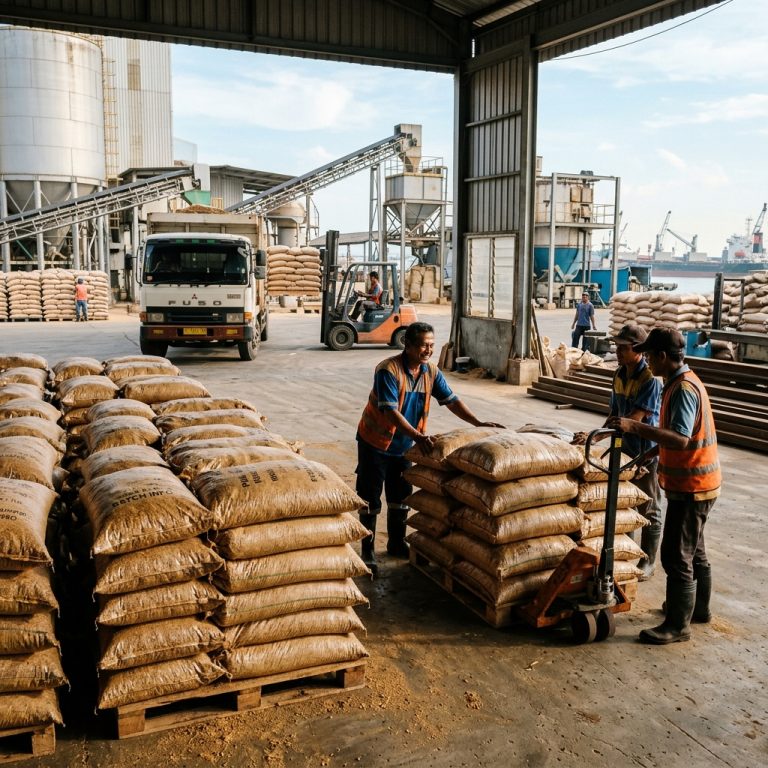
Navigating Egyptian maritime import logistics requires rigorous planning and seasoned supply chain partnerships. Breakbulk and containerized shipments of palm expeller typically discharge through Alexandria, El Dekheila, Damietta, or Port Said. Importers must verify that maritime transport vessels enforce tight moisture controls throughout oceanic transit to prevent caking, fungal development, or localized heating.
Working alongside vetted bulk palm kernel expeller suppliers Egypt ensures that delivery parcels meet exacting physical specifications upon customs clearance. Reliable supply corridors from Indonesia and Malaysia guarantee constant inventory for compound feed plants in Sadat City and Tenth of Ramadan industrial areas.
Before confirming purchase contracts or accepting offloaded shipments at Egyptian ports, inspection teams must verify the following physical and analytical criteria:
- نسبة الرطوبة: Never accept shipments exceeding 10.0% moisture; optimal storage stability under Mediterranean and desert climates requires levels between 7.5% and 9.0%.
- Residual Oil / Ether Extract: Ensure residual fat measures between 6.5% and 9.5%, indicating authentic mechanical extraction rather than spent solvent-leached meal.
- Aflatoxin Analysis: Independent lab testing must verify total aflatoxin levels below 20 ppb (parts per billion) before dispatching cargo to feed manufacturing plants.
- Foreign Matter & Shell: Check that excessive broken shell fragments are absent, as poor shell separation artificially inflates acid detergent lignin (ADL) while depressing digestible energy.
- Aroma and Color: Premium expeller displays a clean, toasted, nutty aroma with a uniform brownish coloration, devoid of burnt, moldy, or rancid characteristics.
مكمور أمانة سجيتيرا نُقدّم منتجات نخيل عالية الجودة مثل عصارة نواة النخيل، وقشرة نواة النخيل، وزيت النخيل الخام، وزيت نواة النخيل، وغيرها. يُرجى التواصل معنا عبر واتساب. +6282140002198 أو راسلنا عبر البريد الإلكتروني على admin@makmuramanah.co.id.
الأسئلة الشائعة
What is the difference between Palm Kernel Expeller and palm kernel meal?
Palm Kernel Expeller is produced via mechanical screw pressing, leaving 6% to 10% residual oil and higher energy. In contrast, palm kernel meal is chemically extracted using solvents, reducing fat content below 2% and yielding a lower overall metabolizable energy value for livestock.
Can poultry and aquaculture diets in Egypt utilize Palm Kernel Expeller?
Yes, but only in strictly controlled quantities. Because monogastric birds and fish lack cellulolytic enzymes to digest beta-mannans, poultry diets cap inclusion at 3% to 5% unless supplemented with exogenous beta-mannanase enzymes to break down insoluble non-starch polysaccharides.
How does Palm Kernel Expeller perform during Egyptian summer heat?
It performs exceptionally well. Its residual plant fats are metabolized with a considerably lower heat increment compared to rapidly fermenting grains. Consequently, ruminants generate less internal thermal stress, helping sustain daily dry matter intake during intense heat waves.
What is the shelf life of Palm Kernel Expeller in warehouse storage?
When moisture levels stay below 9% inside well-ventilated, pest-controlled warehouses, the product stores safely for six to nine months. Stacking bags on wooden pallets away from concrete walls prevents condensation buildup during fluctuating seasonal temperatures.
How quickly can ruminants adapt to a diet containing this ingredient?
Dairy cows and feedlot cattle adapt smoothly over a 10 to 14-day transition period. Stepwise increases allow the ruminal microflora to upregulate mannan-degrading bacterial populations, eliminating palatability hesitation and ensuring consistent total feed intake throughout the herd.
Strategic Outlook for Egyptian Animal Feed Formulation
Securing resilient, nutrient-dense ingredients remains the cornerstone of profitable animal agriculture in Egypt. As input costs reshape commercial livestock economics in 2026, forward-thinking feed mills, dairy enterprises, and fattening feedlots cannot rely solely on conventional commodity grains. Partnering with established global exporters to supply certified Palm Kernel Expeller ensures stable dietary formulas, improved rumen health, and predictable profit margins.
By blending empirical nutritional planning with disciplined import execution, Egyptian producers can decouple their operations from international grain volatility. Implementing high-grade معصرة نواة النخيل throughout dairy, beef, and small ruminant feeding programs empowers local operations to achieve superior feed conversion ratios, resilient animal health, and sustainable commercial growth.
 Arabic
 English
 Indonesian
 Chinese
