
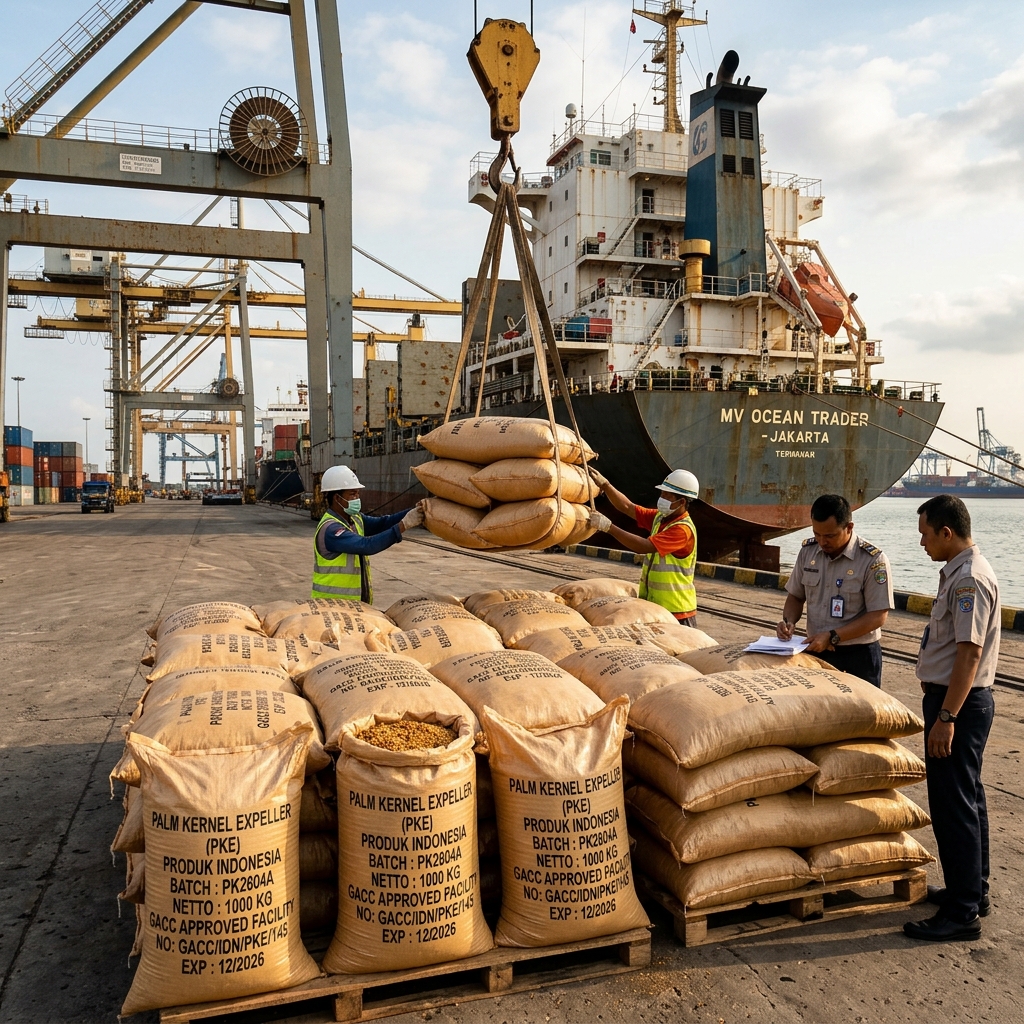
Procuring certified GACC approved palm kernel expeller from Indonesia guarantees compliant, seamless customs clearance for international feed mill operators targeting Chinese ports. Global feed millers face rigorous scrutiny under Chinese regulatory standards. Sourcing unverified feed materials causes severe vessel rejections, demurrage penalties, and costly customs quarantines.
China imported over 1.4 million metric tons of palm kernel meal in recent years to support its rapidly modernizing dairy and beef livestock sectors. However, regulatory updates enforced by the General Administration of Customs of China require strict source registration. Exporters must fulfill zero-tolerance protocols for physical contaminants, pathogenic microflora, and excessive moisture.
This authoritative technical guide outlines the compliance standards, nutritional specifications, documentation pathways, and factory audit checkpoints necessary to secure top-tier feed ingredients directly from Indonesian production hubs in 2026.
What Is GACC Approved Palm Kernel Expeller?
A GACC approved palm kernel expeller is an agro-industrial by-product of palm oil mechanical crushing mills in Indonesia that holds official facility accreditation from the General Administration of Customs of China under Decree 248 and 249 registration frameworks, authorizing legal commercial importation for animal feed production.

Mechanically extracted from the crushed endosperm of the oil palm fruit (Elaeis guineensis), this golden-brown meal provides an exceptional blend of medium-chain triglycerides, bypass protein, and digestible fiber. Unlike secondary solvent-extracted variants, mechanically pressed expeller retains 6% to 10% residual oil content. This lipid presence elevates gross caloric density for dairy cattle, beef steers, and swine rations.
Furthermore, Chinese buyers demand rigorous biosecurity documentation before approving commercial letters of credit. Only Indonesian facilities verified through China’s official Single Window portal possess the legal authority to dispatch bulk vessels or containerized shipments across Chinese borders.
Agricultural enterprises operating across East Asia categorize this meal as a premier ruminant animal feed raw material because it delivers stable rumen fermentation without inducing metabolic acidosis. As livestock producers scale intensive feeding systems, establishing verified supply channels remains indispensable.
Why China Enforces Strict GACC Certification for Feed Imports
In response to international biosecurity challenges and domestic food safety mandates, China implemented sweeping import regulations through Customs Decrees 248 and 249. These frameworks govern foreign feed and food manufacturing registration, establishing direct oversight over overseas processing facilities.
Consequently, any supplier wishing to handle importing palm kernel expeller from Indonesia to China must satisfy exhaustive facility inspections conducted by Indonesian quarantine agencies and submitted directly to Chinese regulators. Unregistered producers face automated clearance refusal, cargo confiscation, or mandatory re-exportation at buyer expense.
Additionally, Chinese feed compounders rely heavily on dependable fiber alternatives to manage domestic shortages of corn and soybean meal. Leading agricultural research published via the Animal Feed Science and Technology Journal confirms that palm kernel by-products enhance rumen fermentation and maintain milk butterfat levels when integrated systematically into total mixed rations (TMR).
To ensure steady feeding operations without customs interruptions, purchasing managers exclusively procure verified GACC approved palm kernel expeller from validated processors located across Sumatra and Kalimantan.
Nutritional Benchmarks of GACC Approved Palm Kernel Expeller
Meeting regulatory standards involves more than maintaining official registration paperwork; it requires delivering consistent physical and biochemical parameters. Chinese buyers establish strict baseline thresholds to protect herd health and maximize feed conversion ratios.

Commercial palm kernel meal Indonesia exports vary depending on raw nut quality, screw-press calibration, and post-crush cooling efficiency. Ensuring your supplier complies with both Chinese national standards (GB/T) and international animal feed parameters guarantees unhindered port transit.
Technical Specifications: GACC Approved Palm Kernel Expeller Pellets vs Meal
Exporters supply this commodity in two distinct physical forms: loose expeller meal (mash) and condensed pellets. Pelleting reduces transit bulk, suppresses airborne dust, and optimizes flowability during mechanized ship discharge at major ports such as Qingdao, Tianjin, and Guangzhou.
| المعلمة | Indonesian PKE (Standard Export) | China GACC Standard Requirement | Copra Meal Comparison |
|---|---|---|---|
| البروتين الخام (CP) | 14.0% – 16.5% min | ≥ 14.5% | 20.0% – 22.0% |
| Crude Fat / Oil Content | 6.5% – 9.5% max | ≥ 6.0% (Mechanical press) | 8.0% – 11.0% |
| محتوى الرطوبة | 8.0% – 10.0% max | ≤ 12.0% (Target < 10%) | ≤ 11.0% |
| ألياف المنظفات المحايدة (NDF) | 55.0% – 66.0% | Standard ruminant grade | 45.0% – 52.0% |
| Aflatoxin B1 | < 20 ppb | ≤ 20 ppb (Strict threshold) | ≤ 20 ppb |
| Sand / Silica | < 1.5% max | ≤ 2.0% max | < 2.0% max |
For buyers managing diverse protein procurement portfolios, combining PKE with complementary ingredients such as وجبة جوز الهند creates an optimal amino acid balance while minimizing volatile commodity expenses across multi-species feeding regimens.
Crude Protein and Energy Feed Supplement in Dairy Cattle Feed Formulation
Integrating a certified crude protein and energy feed supplement into commercial rations stabilizes dietary costs. In modern dairy production, palm kernel expeller delivers rumen undegradable protein (RUP), allowing essential amino acids to bypass microbial breakdown and absorb directly in the small intestine.
Nutritionists balancing commercial dairy cattle feed formulation protocols value PKE for its high level of digestible neutral detergent fiber (dNDF). This structural carbohydrate ferments slowly into acetate, driving higher milk fat percentages without depressing rumen pH.
Comparative Digestibility and Rumen Fermentation Characteristics
Unlike grain concentrates packed with rapidly fermentable starches, PKE contains hemicellulose-rich fiber matrices that foster cellulolytic microbial colonies. Peer-reviewed global feed databases managed by the منظمة الأغذية والزراعة (الفاو) show that incorporating expeller meal up to 25% of total dietary dry matter maintains steady volatile fatty acid production in feedlot steers.
Furthermore, livestock operations compounding high-energy diets frequently blend mechanical meal with refined palm lipid fractions, including RBD CP8 and rumen-protected bypass fats, maximizing energy density during peak lactation cycles.
Step-by-Step Export Protocol from Indonesia to Chinese Ports
Executing an export contract to Chinese destinations requires systematic alignment between bilateral regulatory bodies. Indonesian suppliers must coordinate directly with the Indonesian Quarantine Authority (Barantin) to ensure absolute compliance throughout the transport chain.
Below is the verified six-step pathway for processing and dispatching compliant commercial shipments of GACC approved palm kernel expeller:
- Raw Material Screening: Mills screen palm nuts during primary crushing to remove shell fragments, foreign stones, and metallic debris before expeller extraction.
- Laboratory Mycotoxin Screening: Technicians analyze homogenized core samples for aflatoxin B1, zearalenone, heavy metals, and Salmonella contamination.
- Factory Dispatch to Port Warehouse: Covered transport trailers haul the bulk meal to specialized port holding facilities, avoiding rainfall and secondary contamination.
- Pre-Shipment Phytosanitary Inspection: Indonesian quarantine officers perform physical lot samplings to confirm the cargo is free from live weevils, pests, and toxic weed seeds, issuing the mandatory phytosanitary certificate Indonesian customs mandate.
- In-Transit Cargo Fumigation: Licensed fumigation specialists apply aluminum phosphide under gas-tight hatch seals according to bilateral quarantine agreements.
- GACC Import Clearance Filing: Shipping agents upload the original Phytosanitary Certificate, Certificate of Origin (Form E), and Bill of Lading into the Chinese Single Window terminal prior to vessel arrival.

Moreover, commercial partners must track vessel ventilation carefully during oceanic transit across the South China Sea. Proper air circulation prevents moisture migration, surface condensation, and heating within cargo holds.
CIF Qingdao Port Specifications and Shipping Logistics
Procuring shipments on palm kernel expeller CIF Qingdao port specifications requires defined agreements regarding discharge speeds, free demurrage days, and stevedoring provisions. Qingdao, Rizhao, and Tianjin port authorities conduct routine quarantine swabs immediately after vessel berthed operations commence.
Sellers must guarantee that moisture parameters remain below 10% at loading, protecting the cargo during seasonal temperature differentials between equatorial loading docks and northern Chinese discharge terminals.
How to Verify GACC Approved Palm Kernel Expeller Suppliers in Indonesia
Learning how to verify GACC approved palm kernel expeller suppliers protects procurement managers from costly broker fraud and unregistered cargo seizures. Importers must conduct direct due diligence using official customs registers prior to executing purchase contracts.
First, access the China Import Food Enterprise Registration platform (CIFER) hosted by Chinese customs authorities. Request the manufacturer’s 18-digit registration code and cross-reference the entity name against current registered enterprise registries for GACC approved animal feed ingredient manufacturers Indonesia.
Second, ensure the manufacturer maintains active operational licenses with local Indonesian commercial departments. Experienced mill operators also maintain diversified secondary supply lines, including قشرة نواة النخيل for industrial biomass, horticultural جوز الهند for agricultural bedding, and specialized lipid derivatives such as أملاح الكالسيوم للأحماض الدهنية لزيت النخيل for specialized ruminant energy supplementation.
Finally, mandate pre-shipment independent inspection by international testing authorities such as SGS, Intertek, or CCIC. These agencies perform unbiased moisture, protein, and micro-contaminant assays directly at load ports prior to issuing negotiable shipping documents.
Video Guide: Inside an accredited Indonesian crushing facility processing high-grade GACC approved palm kernel expeller.
Sourcing Risks and Preventing Customs Border Clearance Rejections
Importing bulk agricultural commodities involves structural supply chain hazards that require vigilant oversight. Overlooking basic quality checks can result in vessel quarantines or total cargo rejections by customs inspectors upon arrival in China.
- High Moisture Inducing Spontaneous Heating: Palm kernel meal with moisture exceeding 11.5% tends to oxidize, ferment, and cake during warm maritime transport. Exporters must cool the expeller thoroughly before stowing it into holds.
- Mycotoxin Proliferation: Inadequate drying conditions encourage Aspergillus mold growth, driving aflatoxin levels above Chinese maximum residue limits. Rigorous moisture management eliminates this biological risk.
- Excess Shell Fragments: Careless milling leaves dense shell particles in the meal, diluting overall protein value and risking gastrointestinal abrasions in livestock. Experienced processors use multi-stage vibrating screens to remove excess shell.
- Mismatched Customs Documentation: Discrepancies between the manufacturer’s registered GACC name and the issuing entity on the commercial invoice trigger immediate audit holds at Chinese border checkpoints.
Technical trade briefs published by the USDA Foreign Agricultural Service (FAS) highlight that strict documentary harmonization between bilateral trade certificates remains the single most critical factor in avoiding port demurrage charges.
Furthermore, maintaining direct oversight of processing facilities through experienced domestic management teams neutralizes these logistical hurdles before vessels depart Indonesian territorial waters.
مكمور أمانة سجيتيرا نُقدّم منتجات نخيل عالية الجودة مثل عصارة نواة النخيل، وقشرة نواة النخيل، وزيت النخيل الخام، وزيت نواة النخيل، وغيرها. يُرجى التواصل معنا عبر واتساب. +6282140002198 أو راسلنا عبر البريد الإلكتروني على admin@makmuramanah.co.id.
الأسئلة الشائعة
What does GACC approval mean for Indonesian palm kernel expeller?
GACC approval signifies that an Indonesian palm kernel processing facility holds official accreditation from Chinese customs under Decrees 248 and 249. This certification confirms compliance with Chinese sanitary, biosecurity, and quality protocols, permitting direct commercial importation into China.
What are the primary animal feed benefits of palm kernel expeller?
Palm kernel expeller serves as a cost-effective energy and protein source for ruminants. It delivers 14% to 16% crude protein, high neutral detergent fiber to stimulate rumen function, and residual oils that boost butterfat synthesis in dairy cows.
How long does GACC registration remain valid for overseas feed mills?
Under Chinese regulations, enterprise registration remains valid for five years from the official approval date. Indonesian producers must initiate renewal filings through competent local authorities between three and six months before their registration expires.
What is the acceptable aflatoxin threshold for China feed imports?
Chinese agricultural authorities enforce a strict maximum ceiling of 20 parts per billion (ppb) for aflatoxin B1 in imported palm kernel meal. Exporters prevent mycotoxin build-up through prompt drying and controlled storage conditions.
Can private trading companies export PKE to China without their own registration?
No, private traders cannot export feed ingredients using unlisted entities. However, trading firms can execute export sales by partnering directly with officially registered Indonesian processing mills named on the GACC Single Window approval list.
Partnering with a Verified Indonesian Exporter
Securing consistent, compliant agricultural commodities is essential for scaling livestock operations and maintaining feed manufacturing profitability. International trade compliance requires working with partners who understand both domestic plantation logistics and international import standards set by organizations like the الاتحاد الدولي لصناعة الأعلاف (IFIF).
By conducting diligent facility audits, confirming proper biosecurity certification, and coordinating directly with reputable processors, feed importers can establish long-term supply stability. Sourcing top-grade GACC approved palm kernel expeller from verified Indonesian processing hubs ensures smooth customs entry, protects herd nutrition, and safeguards your trade investments across every port of call in 2026.
 Arabic
 English
 Indonesian
 Chinese
