
Palm Kernel Expeller Egypt: 7 Essential 2026 Import Steps
Palm Kernel Expeller Egypt is an energy-dense, medium-protein coproduct generated from mechanically crushed oil palm kernels, widely imported across Egyptian governorates to formulate cost-effective ruminant feed. Supplying 14.5% to 17.5% crude protein and 10.8 to 11.5 MJ/kg metabolizable energy, it serves as a non-starch alternative to costly imported corn and soybean meal.
Procuring bulk consignments of Palm Kernel Expeller Egypt livestock feed requires verified direct suppliers, strict compliance protocols, and consistent energy-density standards. Egyptian livestock enterprises face escalating commercial pressures due to unpredictable global grain markets and domestic feed availability shortages. By turning toward direct imports of mechanical expeller-pressed palm kernel meal, agribusinesses achieve superior feed stability while curbing operational costs.
Egypt’s commercial animal husbandry sector demands high-performance feed alternatives that deliver consistent rumen degradable protein without straining foreign exchange allocations. According to data tracked by the دائرة الزراعة الخارجية التابعة لوزارة الزراعة الأمريكية, feed raw material inputs represent over 70% of total production expenses across Egyptian dairy and beef cattle operations. Consequently, leading feed millers, fattening centers, and commercial dairy processors are shifting strategic focus toward direct-vessel ocean contracting of agro-industrial coproducts.
Agribusiness managers know that identifying the best feed alternatives for dairy cows in Egypt is critical during currency adjustments. Using mechanical palm expeller protects animal diets from micro-ingredient segregation and ensures balanced daily nutrient intake across large herds.
Why Palm Kernel Expeller Egypt Importers Are Scaling Direct Volume in 2026
The demand for sustainable ruminant nutrition across the governorates of Beheira, Sharqia, and Alexandria continues to reach unprecedented levels. Agribusiness operators realize that relying exclusively on traditional yellow maize and imported soybean meal creates vulnerability to commodity price spikes. In contrast, securing direct bulk allocations of Palm Kernel Expeller Egypt imports creates an economic safety net for year-round feed operations.
Furthermore, palm kernel expeller contains negligible starch content, eliminating the acute subacute ruminal acidosis (SARA) risks frequently triggered by cereal grain overfeeding. This digestive stability allows feed compounders to sustain high dry-matter intake even during scorching summer temperatures across Upper and Lower Egypt. Research indexed by ScienceDirect agricultural studies verifies that replacing up to 30% of standard concentrate rations with expeller meal preserves milk yield and enhances milk fat percentage in lactating cows.
Commercial livestock producers who calculate the cost of palm kernel meal per ton in Egypt discover immediate balance-sheet relief. Replacing high-cost grains with expeller meal lowers cost per kilogram of liveweight gain without compromising gut integrity or daily production targets.
- Acidosis Mitigation: Low-starch dietary fiber prevents digestive upset in high-producing ruminants.
- Sustained Caloric Intake: Residual oil delivers non-heating energy ideal for hot Mediterranean climates.
- Cost Compression: Reduces dependence on volatile global soybean meal and yellow maize tenders.
- Trace Mineral Enrichment: Natural presence of phosphorus and essential trace elements supports metabolic health.
Nutritional Profile & Ruminant Digestibility Benchmarks in Palm Kernel Expeller Egypt
High-grade expeller pellets offer substantial bypass protein characteristics, shielding valuable amino acids from premature microbial breakdown in the rumen. This biological mechanism ensures that critical peptides bypass into the abomasum for optimized small-intestine absorption. When producers feed certified consignments of معصرة نواة النخيل, dairy cattle demonstrate improved body condition scores and accelerated average daily gains (ADG) in feedlot fattening steers.
Moreover, the inherent residual oil content (typically 7.5% to 10.5%) acts as a concentrated source of non-fermentable metabolic calories. This fat content eliminates the need to top-dress expensive supplemental tallow or vegetable oils into daily Total Mixed Rations (TMR). Commercial dairy managers frequently pair expeller rations with bypass fatty supplements such as أملاح الكالسيوم للأحماض الدهنية لزيت النخيل to maximize peak lactation persistence.
For high-performance dairy cattle feed operations, combining expeller meal with high-energy fractions like RBD CP8 olein-derived dietary fats delivers dense non-protein calories needed during early lactation. This strategic combination cushions dairy herds against severe energy deficits.
Overcoming Local Egypt Feed Shortages with Tropical Agro-Byproducts
Egyptian compound feed plants historically depended heavily on seasonal clover (berseem) and expensive cereal concentrates. However, seasonal weather anomalies and restricted arable land surrounding the Nile River create feed supply deficits during peak production windows. Importing high-density tropical co-products provides dependable supply continuity unaffected by regional Mediterranean drought patterns.
Additionally, compounders frequently blend expeller shipments with complementary plant-based protein meals like جوز الهند to formulate well-rounded amino acid profiles. The physical pellet and mash forms of expeller meal integrate seamlessly into commercial horizontal batch mixers, preventing micro-ingredient segregation during highway haulage across Cairo, Giza, and the Delta.
To optimize overall farm efficiency, livestock operators also utilize clean coconut husk substrates like جوز الهند for moisture-absorbent livestock bedding in covered pens, creating comprehensive operational synergy between Indonesian agricultural products and Egyptian farm management.
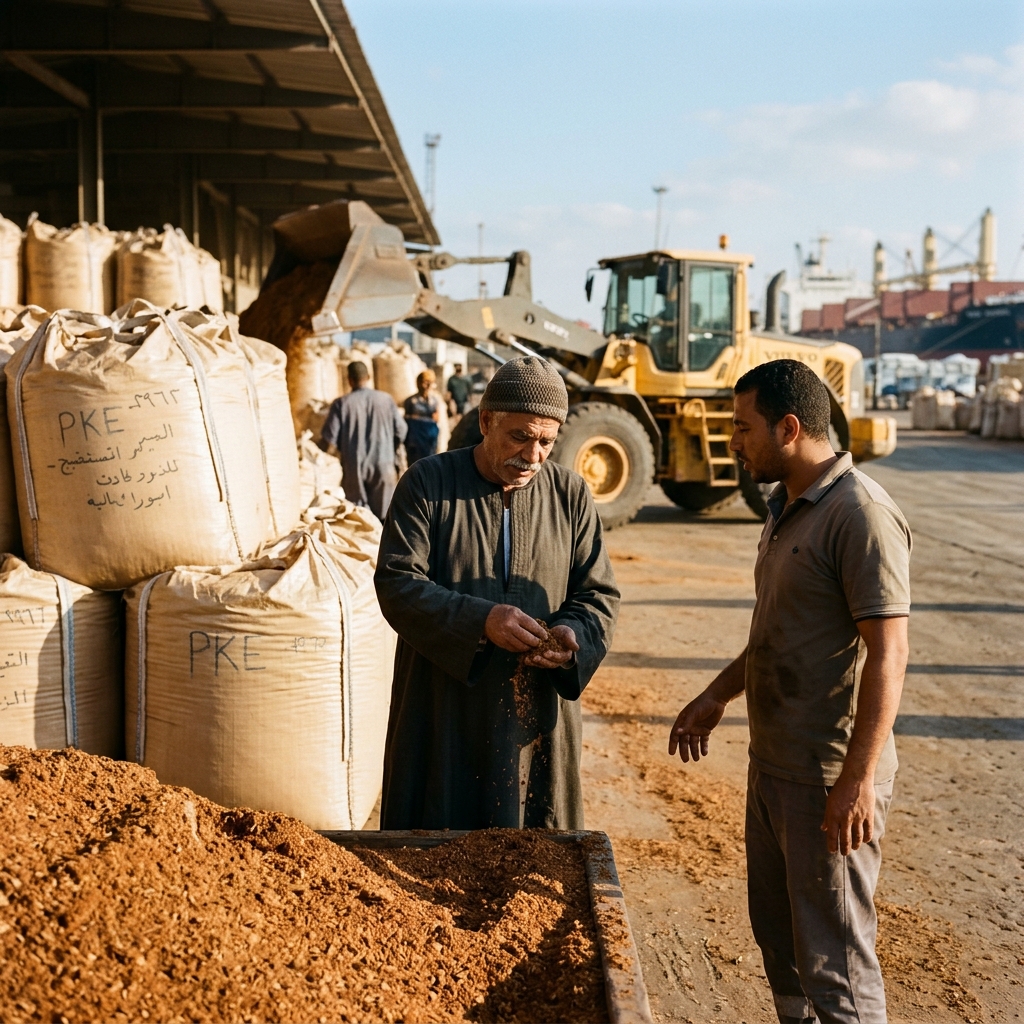
[Image: High-grade Indonesian Palm Kernel Expeller bulk shipment arriving at Alexandria Port Egypt ready for animal feed processing | alt: Palm Kernel Expeller Egypt port discharge and quality inspection | title: Palm Kernel Expeller Egypt Port Import Logistics]
Technical Specifications: Evaluating Palm Kernel Expeller Egypt Shipments
Procuring animal feed Egypt buyers can depend upon requires absolute precision regarding chemical parameters, fungal toxin thresholds, and processing methods. Not all expeller meals deliver the same nutritional performance; solvent-extracted palm kernel meal (PKM) provides lower residual energy than mechanically screw-pressed palm kernel expeller (PKE). Feed compounding raw materials buyers must inspect laboratory certificates of analysis (COA) prior to loading vessels at origin ports in Indonesia.
The table below provides a detailed benchmark comparing primary feedstuffs imported through Egyptian seaports, highlighting the balanced performance of mechanical expeller:
| Nutritional Parameter | معصرة نواة النخيل (ميكانيكية) | Copra Meal (Expeller) | Soybean Meal (44% Solvent) | Yellow Corn (Maize) |
|---|---|---|---|---|
| Dry Matter (DM) % | 90.0% – 92.0% | 91.0% – 93.0% | 89.0% – 90.0% | 86.0% – 88.0% |
| Crude Protein (CP) % | 14.5% – 17.5% | 20.0% – 22.0% | 44.0% – 48.0% | 8.0% – 9.5% |
| Crude Fat / Oil % | 7.5% – 10.5% | 7.0% – 9.5% | 1.0% – 2.0% | 3.5% – 4.5% |
| Neutral Detergent Fiber (NDF) % | 54.0% – 66.0% | 45.0% – 52.0% | 12.0% – 15.0% | 9.0% – 11.0% |
| الطاقة القابلة للاستقلاب (المجترات) | 10.8 – 11.5 MJ/kg | 11.2 – 12.0 MJ/kg | 12.5 – 13.2 MJ/kg | 13.0 – 13.8 MJ/kg |
| Aflatoxin Safety Limit | < 20 ppb (Egyptian Standard) | < 20 ppb | < 20 ppb | < 20 ppb |
Crude Protein, Energy, and Fiber Metrics in Palm Kernel Expeller Egypt
For Egyptian livestock operations, the functional value of Palm Kernel Expeller Egypt formulas lies in its digestible fiber matrix. The neutral detergent fiber (NDF) fraction consists predominantly of hemicellulose and mannans, which rumen cellulolytic bacteria ferment slowly over 24 to 48 hours. This prolonged degradation generates steady volatile fatty acid (VFA) streams, notably acetate, which directly fuels butterfat synthesis in commercial milking parlors.
In addition, the crude protein concentration (14.5%–17.5%) provides an economical foundation for replacing higher-cost plant proteins. While monogastric animals cannot fully metabolize the fibrous structure without enzyme supplementation, mature ruminants digest this ingredient with outstanding biological efficiency.
International nutrition guidelines compiled by the منظمة الأغذية والزراعة (الفاو) confirm that tropical agro-industrial coproducts offer indispensable dietary fiber for arid commercial cattle production, making this raw material ideal for Egypt’s intensive feedlots.
Aflatoxin Limits and Moisture Control for Egyptian Ports
Egyptian regulatory authorities impose zero tolerance for out-of-specification mycotoxin and aflatoxin levels. The Feedipedia animal feed resources directory underlines that improper moisture management during tropical maritime voyages elevates mycotoxin proliferation. Exporters must ensure total cargo moisture does not exceed 10.0% to 11.0% at loading, guaranteeing that marine transit temperatures inside vessel holds do not induce sweating or condensation spoilage.
Rigorous pre-shipment fumigation protocols with aluminum phosphide guarantee shipments remain free from live insect pests such as Tribolium castaneum و Oryzaephilus surinamensis. Egyptian Quarantine and Inspection bodies sample incoming vessels rigorously before authorizing discharge onto quay aprons.
[Image: Technical laboratory quality analysis showing protein, moisture, and aflatoxin inspection testing for animal feed | alt: Laboratory analysis of feed raw materials for Palm Kernel Expeller Egypt import | title: Quality Control Standards for Feed Imports]
7 Essential Steps: The Import Process for Palm Kernel Expeller Egypt
Navigating import regulations for palm kernel expeller in Egypt demands structured adherence to digital tracking platforms and maritime customs requirements. Importers who follow a disciplined sequential framework avoid costly demurrage penalties at Mediterranean and Red Sea deepwater terminals.
- Register Transaction on the Egyptian Single Window (Nafeza): The licensed Egyptian importer initiates the declaration by submitting exporter verification details and obtaining an Advance Cargo Information (ACI) issuance number at least 48 hours prior to vessel departure.
- Verify Phytosanitary and Laboratory Documentation with Origin Producers: Ensure your Indonesian supplier generates official phytosanitary certificates, non-GMO declarations, certificates of origin (Form K or COO), and accredited independent surveyor reports (e.g., SGS, Sucofindo, or Surveyor Indonesia).
- Establish Trade Finance Compliance via CBE-Approved Instruments: Open confirmed irrevocable letters of credit (L/C) or structured documentary collection through accredited Egyptian commercial banks adhering strictly to Central Bank of Egypt trade finance regulations.
- Contract Dedicated Bulk Vessel or Containerized Ocean Freight: Secure Supramax or Handymax bulk vessels for direct voyage routes via the Indian Ocean and Bab el-Mandeb strait to Port of Ain Sokhna or Adabiya, or through the Suez Canal to Alexandria and Damietta.
- Supervise Pre-Shipment Hold Fumigation and Loading Surveys: Mandate gas-tight fumigation using aluminum phosphide pellets and acquire clean hold inspection certificates to prevent pest introduction during maritime transport.
- Coordinate Alexandria Port Feed Import Discharge Operations: Direct vessel berthing with licensed stevedoring companies to ensure rapid offloading via pneumatic suckers or grab cranes into sealed harbor transit warehouses.
- Execute Port Border Clearance with GOEIC and MALR: Upon arrival, the General Organization for Export and Import Control (Egyptian Customs Authority) together with the Ministry of Agriculture and Land Reclamation extract composite samples to certify absence of pathogenic mold, radiation, and non-permitted agricultural residues.
Egyptian Customs Authority (Nafeza) and ACI Number Protocol
The Egyptian Customs Authority mandates that all maritime cargo bound for domestic seaports must feature a verifiable 19-digit ACI identification number. This identifier must appear plainly on all commercial bills of lading (B/L), commercial invoices, and packing manifests before the carrier issues original documents. Foreign suppliers must upload shipment data securely to the CargoX platform to facilitate immediate clearance by customs brokers in Cairo and Alexandria.
Failure to register cargo on CargoX prior to origin sailing results in cargo rejection at the Egyptian shoreline, forcing the carrier to return containers or bulk volumes at the importer’s direct expense. Working exclusively with certified, export-ready Indonesian milling partners completely eliminates these procedural risks.
Mandatory Quality Testing via GOEIC and MALR
Inspectors from the Central Administration of Plant Quarantine (CAPQ) examine raw agricultural byproducts immediately upon vessel berthing. Egyptian standard specifications require bulk Palm Kernel Expeller Egypt imports to satisfy stringent chemical and biological criteria before receiving release permits.
Quarantine laboratories evaluate samples for salmonella contamination, total bacterial count (TBC), synthetic chemical residues, and heavy metals. Once clearance certificates are signed, customs releases cargo directly to specialized pneumatic port elevators or open-top tipper trucks for immediate highway distribution.
Sourcing Direct: How to Partner with Indonesian PKE Exporters
Securing agricultural commodities through intermediate trading brokers often inflates final per-ton delivery costs and complicates quality accountability. Direct partnerships with primary Indonesian mill aggregators and coastal terminal operators yield transparent pricing structures and strict batch traceability from processing mills to ship holds.
Experienced Indonesian suppliers manage integrated bulk storage facilities at strategic deepwater ports across Sumatra and Kalimantan. This infrastructure ensures uninterrupted dry loading rates reaching 3,000 to 5,000 metric tons per weather-working day (PWWD), minimizing vessel charter demurrage charges for the Egyptian buyer.
Securing Cost Advantages via Direct Vessel Charters
Medium-scale feed compounders often initiate procurement through 20-foot shipping containers packed with loose bulk or 50-kg woven polypropylene bags, accommodating roughly 21 to 24 metric tons per container. However, larger commercial feed consortia across the Nile Delta reap substantial freight savings by chartering dedicated Handymax bulk carriers transporting 20,000 to 35,000 metric tons per voyage.
Direct ocean procurement bypasses secondary reseller markups, allowing Egyptian feed producers to preserve tight profit margins while guaranteeing stable feed supply contracts. Moreover, comprehensive agricultural operators frequently integrate sustainable biomass fuels, utilizing قشرة نواة النخيل for industrial boiler power alongside their feed distribution operations.
Agribusinesses seeking a certified palm kernel expeller Egypt direct supplier bulk partner should implement structured quality verification protocols before chartering maritime tonnage:
- Verify Port Storage Hygiene: Demand proof of covered origin warehousing to eliminate wet-damage risks.
- Audit Independent Laboratory Certifications: Inspect pre-loading COA records for protein, crude fiber, and moisture thresholds.
- Track Vessel Discharge Windows: Align stevedoring contracts with port grain terminal silo capacities across Damietta and Alexandria.
- Establish Clear Demurrage Clauses: Protect your procurement budget by defining loading and discharge demurrage rates explicitly.
[Image: Infographic diagram outlining the complete logistics roadmap of Palm Kernel Expeller from Indonesian crushing mills to Egyptian agricultural farms | alt: Sourcing journey of Palm Kernel Expeller Egypt from producer to farm | title: Supply Chain Blueprint for Expeller Imports]
[Video Embed: Educational documentary showcasing the mechanical screw-pressing process of palm kernel seeds into high-protein animal feed expeller pellets at modern Indonesian crushing mills]
مكمور أمانة سجيتيرا نُقدّم منتجات نخيل عالية الجودة مثل عصارة نواة النخيل، وقشرة نواة النخيل، وزيت النخيل الخام، وزيت نواة النخيل، وغيرها. يُرجى التواصل معنا عبر واتساب. +6282140002198 أو راسلنا عبر البريد الإلكتروني على admin@makmuramanah.co.id.
Frequently Asked Questions About Palm Kernel Expeller Egypt
What is the inclusion rate of Palm Kernel Expeller in Egyptian dairy cow diets?
Lactating dairy cattle diets safely incorporate 15% to 25% Palm Kernel Expeller within daily dry matter concentrate rations. This balanced inclusion level stimulates rumen microbial protein synthesis, sustains butterfat content, and substantially reduces overall formulation expenses without lowering daily milk yields in commercial dairy herds.
What documents are mandatory to import Palm Kernel Expeller into Egypt?
Clearing cargo through Egyptian customs requires an authenticated ACI number via Nafeza, commercial invoice, detailed packing list, original clean ocean bill of lading, phytosanitary certificate, certificate of origin, and an accredited independent inspection certificate confirming strict moisture and aflatoxin compliance below twenty parts per billion.
How does Palm Kernel Expeller compare with soybean meal for beef cattle fattening?
While soybean meal delivers higher crude protein, mechanical palm kernel expeller supplies essential functional fiber and non-starch energy through residual oil content. Expeller meal functions as an economical foundation concentrate, reducing total ration costs while providing safe, acidosis-free calories during intensive feedlot steer finishing cycles.
Which Egyptian ports handle bulk Palm Kernel Expeller shipments?
Major ocean ports handling bulk and containerized expeller shipments include Port of Alexandria, Port of Damietta, and Port Said along the Mediterranean coast, alongside Port of Ain Sokhna and Port of Adabiya situated along the Red Sea maritime passage for direct Asian shipping lanes.
What is the typical shelf life of imported Palm Kernel Expeller in Egypt?
When stored in dry, well-ventilated flat warehouses or vertical steel silos below 11% moisture, mechanical expeller maintains peak nutritional stability for 9 to 12 months. Adequate warehouse ventilation prevents surface mold growth and minimizes residual lipid oxidation during hot summer conditions across Egypt.
Conclusion: Securing Your 2026 Feed Supply Chain with Palm Kernel Expeller Egypt
Navigating commercial livestock feeding across Egypt requires forward-thinking sourcing strategies that prioritize both nutritional efficiency and macroeconomic fiscal discipline. Incorporating Palm Kernel Expeller Egypt bulk shipments directly into feed manufacturing pipelines provides long-term insulation against global commodity grain price swings. Livestock operators achieve optimized daily weight gains, enhanced milk fat yields, and protected financial margins across every production cycle.
Establishing dependable supply partnerships with certified Indonesian primary exporters empowers Egyptian agribusinesses to streamline clearance procedures through the Nafeza system, eliminate costly intermediaries, and guarantee consistent raw material quality. Plan your upcoming livestock feeding season with reliable, lab-verified Palm Kernel Expeller Egypt allocations that advance commercial profitability and animal health performance in 2026 and beyond.
[Image: Agricultural fleet transporting processed feed rations to modern dairy and beef feedlot operations across Egypt | alt: Distribution of Palm Kernel Expeller Egypt feed rations | title: Commercial Livestock Feed Distribution in Egypt]
 Arabic
 English
 Indonesian
 Chinese
