
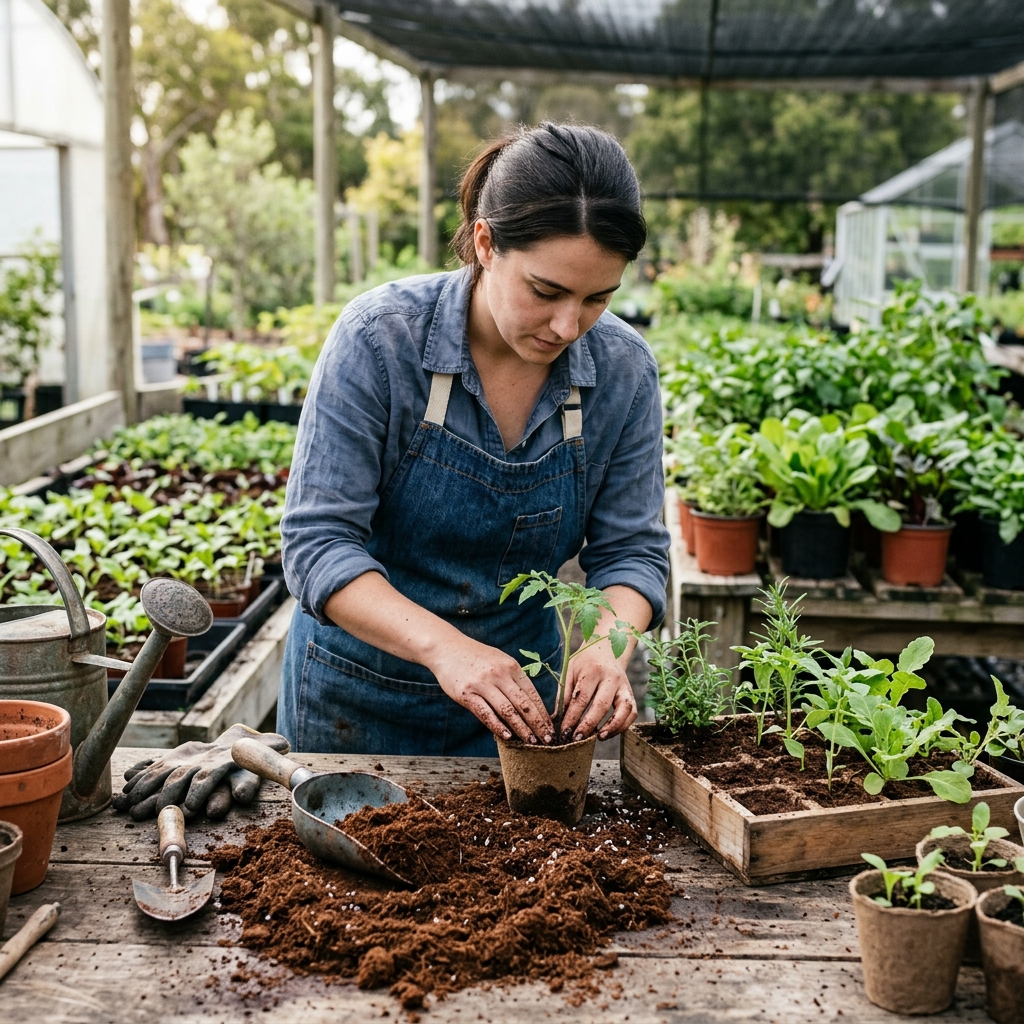
Coco Peat as Soil: 7 Proven Ways to Avoid Plant Loss (2026)
استخدام coco peat as soil is one of the most debated practices in modern horticulture. While coconut coir offers extraordinary water retention and root aeration, treating it identically to garden earth often leads to nutrient starvation and stunted growth. Gardeners require clear guidelines to unlock its potential without falling into common traps.
Natural topsoil takes hundreds of years to form, whereas agricultural demands have depleted topsoils globally. Consequently, commercial greenhouses and urban growers increasingly seek sustainable alternatives. According to research published by the منظمة الأغذية والزراعة (الفاو), soil degradation impacts over 33% of global land, driving horticulturalists toward soilless substrates.
In this guide, you will learn the exact biological and physical distinctions between coconut coir and natural earth, the critical pros and cons, and a step-by-step framework to maximize plant vitality.
Can You Really Use Coco Peat as Soil?
To answer directly: yes, you can deploy coco peat as soil, but only if you recognize that it functions as an inert substrate. Pure coco coir contains virtually zero base macronutrients like nitrogen, phosphorus, and potassium.
In traditional agronomy, true soil consists of mineral particles (sand, silt, and clay), living microorganisms, decaying organic humus, and naturally cycling nutrients. When growers deploy pure coco peat as soil in its unblended state, they are practicing hydroponics rather than conventional soil gardening.
Without ongoing supplemental fertilization and proper mineral balancing, plants growing in unamended coir quickly exhaust their seedling reserves and develop severe chlorosis. However, when buffered correctly or amended with rich compost, it performs better than most commercial potting mixes.
[Image: High-resolution macro photo showing the spongy texture of compressed and expanded coconut coir fibers beside natural rich dark potting soil. Alt: Examining texture differences before using coco peat as soil. Title: Coconut Coir vs Natural Soil Texture Comparison]
Comparative Analysis: Coco Peat vs Traditional Potting Soil
Before modifying your potting strategy, examining structural differences between substrates helps prevent root failure. The following comparison highlights key agronomic factors.
| Agronomic Property | Coco Peat Substrate | Standard Potting Soil |
|---|---|---|
| المحتوى الغذائي | Nearly zero (Inert substrate) | Moderate to High (N-P-K present) |
| pH Range | Naturally stable: 5.8 – 6.8 | Variable: 6.0 – 7.5 |
| احتباس الماء | Holds 8–10x its dry weight | Holds 3–5x its dry weight |
| Aeration / Oxygenation | Exceptional (High air porosity) | Moderate to low (Compacts over time) |
| Decomposition Rate | Slow (High lignin breakdown resistance) | Rapid (Settles and degrades quickly) |
| Pest & Weed Risk | Sterile (Free of weed seeds/pathogens) | Higher (May harbor fungus gnats) |
Pros of Using Coco Peat as Soil in Container Gardening
Horticultural professionals frequently switch to this coconut coir growing medium because of its distinct mechanical traits. When managing irrigation accurately, adopting coco peat as soil delivers measurable performance advantages.
- Superior Water Holding Capacity: Exceptional water retention in coco coir allows it to absorb moisture rapidly and release it evenly, cutting overall water consumption by up to 30%.
- Maximized Soil Aeration: Unlike fine peat or clay that cements when saturated, coir maintains significant air pores even when holding maximum water capacity.
- Neutral, Predictable pH: Sphagnum peat moss requires heavy limestone additions to offset harsh acidity, whereas coir serves as an ideal, eco-friendly peat moss alternative sitting naturally between 5.8 and 6.8.
- Resistance to Pathogens: Raw coir possesses natural antifungal properties that suppress damping-off pathogens in juvenile seedlings and cuttings.
- Structural Longevity: Because coconut fibers boast high lignin content, the material resists compaction and breaks down slowly over 3 to 5 years.
Many growers discover that utilizing coir as a functional potting mix amendment provides roots with the ideal balance of hydration and oxygen diffusion.
Cons and Hidden Risks of Coco Peat as Soil
Despite its physical benefits, using coco peat as soil poses serious chemical hurdles if you do not understand cation exchange dynamics. Horticultural studies from امتداد جامعة ولاية بنسلفانيا highlight the unique nutrient holding profiles of bark and coir products.
Nutritional Deficiencies of Coco Peat as Soil
The primary hazard of unbuffered coco peat as soil is its severe cation exchange capacity (CEC) bias toward potassium and sodium. Coconut palms naturally grow along coastal shores, accumulating substantial salt ions inside the coir husks during development.
When you hydrate unbuffered coir, these fibers actively lock away calcium and magnesium ions while displacing excess potassium and sodium into the root zone. Consequently, your plants show apparent calcium deficiencies—such as blossom end rot in tomatoes or deformed tip growth—even if you apply standard fertilizers regularly.
Additionally, because coir contains minimal native microflora, beneficial microbial colonies must be introduced artificially using worm castings or compost tea to establish a living rhizosphere.
[Image: Infographic diagram explaining the Cation Exchange Capacity (CEC) of coir, demonstrating calcium and magnesium locking versus potassium release. Alt: Cation exchange mechanics when utilizing coco peat as soil. Title: Coco Coir Nutrient Absorption Diagram]
How to Buffer Coco Peat Before Planting: 5 Proven Steps
Never place seeds or delicate root systems directly into cheap, unwashed coconut blocks. Mastering the technique of buffering coco peat with calcium magnesium converts raw, salt-laden bricks into a thriving growing substrate.
- Hydrate and Rinse the Bricks: Place your dry coir block into a large reservoir. Add clean water (approx. 5 liters per 1 kg block). Allow it to expand fully over 20 minutes, then drain the wastewater thoroughly to wash out loose surface salts.
- Measure Initial Electrical Conductivity (EC): Using an EC meter, measure the runoff water. If the reading exceeds 0.8 mS/cm, continue rinsing until the salinity drops below 0.5 mS/cm to protect delicate root caps.
- Prepare a Calcium-Magnesium Bath: Fill a container with clean water and dissolve 7 to 10 grams of agricultural-grade Calcium Nitrate and Magnesium Sulfate (or a commercial Cal-Mag formula) per 10 liters of water.
- Soak for 24 Hours: Submerge your hydrated coir in the Cal-Mag solution. This vital chemical exchange strips native sodium and potassium out of the fiber binding sites, saturating them with bio-available calcium and magnesium.
- Final Drain and Aeration: Drain the nutrient water thoroughly. Squeeze out excess moisture until the substrate feels damp like a wrung-out sponge before blending it into containers.
By preparing and buffering coco peat methodically, relying on coco peat as soil guarantees strong seedling emergence rather than frustrating nutrient lockouts.
The 3 Best Potting Soil Mix Recipes with Coco Peat
Understanding how to mix coco peat with soil allows growers to combine the structural resilience of coconut fiber with natural biological fertility. These recipes optimize air-filled porosity and nutrient supply.
1. The Universal Indoor Houseplant Blend
Indoor plants such as Monsteras, Pothos, and Philodendrons demand rapid drainage to avert fungal root rot. Mix:
- 50% Buffered coconut coir medium
- 30% Coarse perlite or pumice
- 20% Screened worm castings or aged compost
2. The Raised Bed & Heavy Feeder Vegetable Mix
Tomatoes, peppers, and leafy greens require dense organic sustenance throughout their vegetative stages. Combine:
- 40% Hydrated and buffered coir
- 30% Composted animal manure or rich organic compost
- 20% Screened garden loam or coarse river sand
- 10% Biochar charged with organic liquid amendments
Commercial agricultural operations also incorporate bio-based feedstocks such as معصرة نواة النخيل و وجبة جوز الهند as organic nitrogen boosters, or deploy crushed قشرة نواة النخيل at container bases to improve drainage channels. For balanced lipid-based soil conditioning, advanced producers study amendments like أملاح الكالسيوم للأحماض الدهنية لزيت النخيل to enrich soil conditioning formulations.
3. The Seed Starting & Microgreen Formula
Emerging roots require lightweight texture without high electrical conductivity that burns tender tissues. Mix:
- 70% Finely screened coconut coir
- 30% Fine-grade horticultural vermiculite
This mix holds moisture evenly across seed trays, preventing shallow germinating seeds from drying out during crucial germination windows.
Fertilizer Requirements for Coco Peat Substrate
Because coir is fundamentally an inert substrate, your irrigation schedule must supply active mineral nutrition. Meeting fertilizer requirements for coco peat substrate differs substantially from standard backyard gardening.
First, always provide a dedicated Cal-Mag supplement alongside your primary nitrogen-phosphorus-potassium (N-P-K) fertilizer. Liquid organic feeds—such as fish hydrolysate and cold-water kelp meal—deliver trace minerals without spiking harmful sodium salts.
Second, monitor soil runoff pH consistently. Academic trials indexed in ساينس دايركت suggest maintaining root zone runoff between 5.8 and 6.2 for optimal cation absorption in coir-based substrates. If runoff drops below 5.5, flush with pure, pH-adjusted water to prevent phosphorus lockout.
Authoritative guidance from the الجمعية الملكية للبستنة (RHS) notes that sustainable peat substitutes deliver their best yield when accompanied by structured, low-concentration liquid fertigation throughout vegetative phases.
[Image: Step-by-step visual guide showing a grower blending expanded coco peat, perlite, and organic compost in a large mixing tub. Alt: Preparing a balanced potting mix using coco peat as soil amendment. Title: Potting Mix Preparation with Coco Peat]
[Video Suggestion: “How to Buffer and Mix Coco Peat for Maximum Plant Growth – Complete 2026 Guide”]
مكمور أمانة سجيتيرا نُقدّم منتجات نخيل عالية الجودة مثل عصارة نواة النخيل، وقشرة نواة النخيل، وزيت النخيل الخام، وزيت نواة النخيل، وغيرها. يُرجى التواصل معنا عبر واتساب. +6282140002198 أو راسلنا عبر البريد الإلكتروني على admin@makmuramanah.co.id.
الأسئلة الشائعة
Can plants grow in 100% coco peat without any real soil?
Yes, plants can thrive in pure coir, but you must treat the system as hydroponics. Because unamended coir contains zero native plant food, you must supply complete water-soluble fertilizers with every irrigation cycle, particularly supplementing extra calcium and magnesium to prevent severe chlorosis.
How often should you water plants grown in coco peat as soil?
Watering frequency depends on pot dimensions, temperature, and plant stage. Because coir exhibits exceptional moisture retention alongside drainage, water whenever the top inch feels dry to the touch, which typically equates to every 2 to 4 days for standard indoor containers.
Does coco peat attract fungus gnats like standard potting soil?
Pure coco coir rarely attracts fungus gnats because it contains no decaying peat or fungal spores. However, when growers mix coir with rich compost or overwater persistently, fungus gnats can still colonize the moist organic debris on the surface layer.
Can you reuse coco peat after harvesting your plants?
Yes, coir fibers can be reused across 2 to 3 years. Simply pull out thick root masses, rinse thoroughly with fresh water to remove accumulated fertilizer salts, and re-soak the substrate in a fresh Cal-Mag buffering solution before planting your next crop.
Why are my plant leaves turning yellow in coco peat?
Yellowing foliage in coir typically signals nitrogen deficiency or calcium lockout. Because raw coconut fibers bind calcium and magnesium tightly, always verify your water contains Cal-Mag, check that your drainage EC is below 1.2 mS/cm, and maintain pH within 5.8 to 6.2.
Conclusion: Mastering Coco Peat for Resilient Plant Growth
Choosing whether to adopt coco peat as soil depends on your cultivation objectives and commitment to nutrient management. Pure coir provides an extraordinarily oxygen-rich environment that eliminates root suffocation, yet its biological emptiness demands disciplined feeding.
By buffering raw coconut coir with calcium and blending it with quality amendments like compost, vermiculite, and aged biomass, you combine the structural resilience of soilless media with the natural fertility of earth. Integrate these verified practices to build robust root zones, minimize irrigation stress, and produce bountiful harvests.
Ultimately, treating coco peat as soil is not a shortcut, but a powerful agronomic tool. When you master its hydration, buffer its minerals, and balance its fertility, your garden will thrive with remarkable vigor.
[Image: Vibrant, lush green container garden with vegetables and flowers thriving in a coco peat blend substrate. Alt: Thriving vegetable container garden utilizing coco peat as soil. Title: Healthy Plants Growing in Coco Peat Substrate]
 Arabic
 English
 Indonesian
 Chinese
