
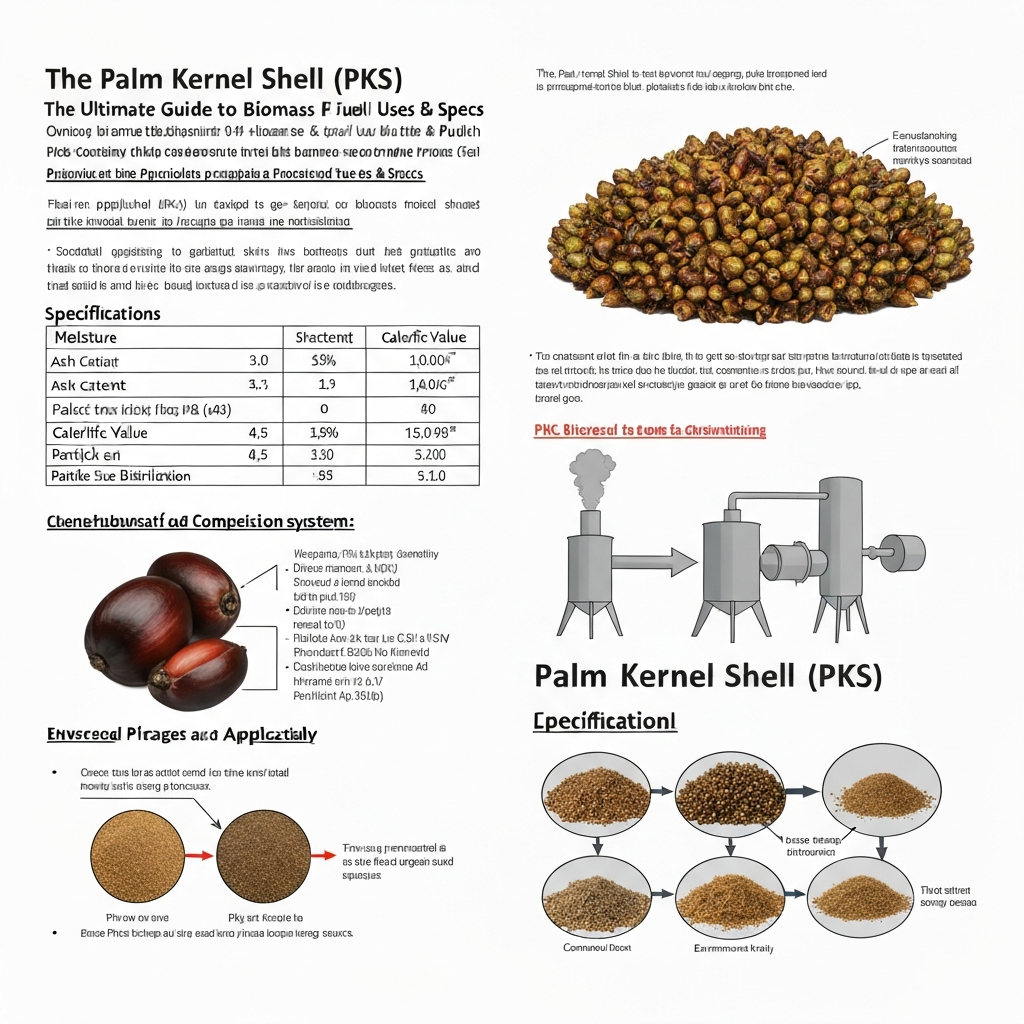
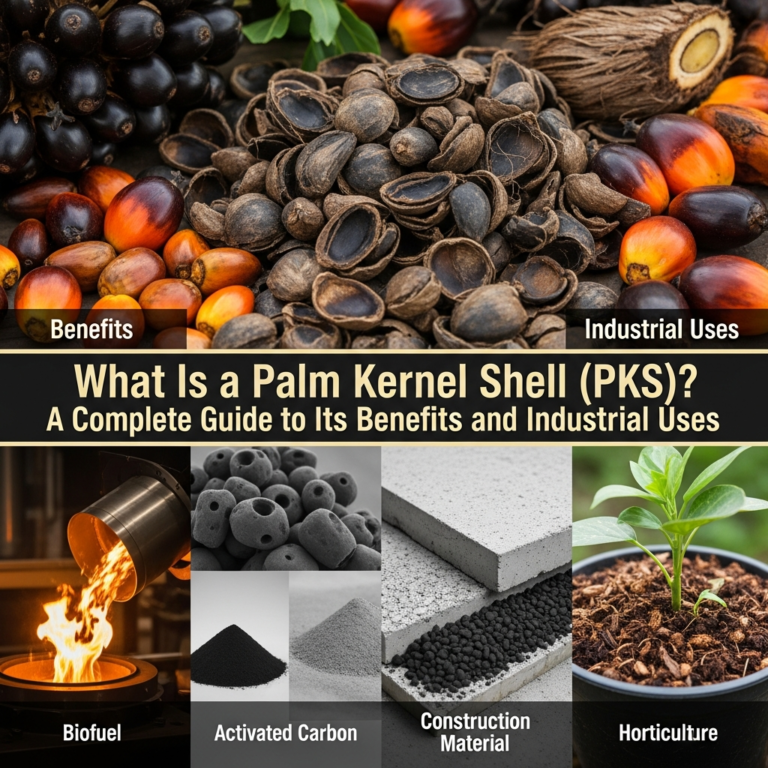
Palm Kernel Shell: 7 Powerful Biomass Uses & Specs (2026)
[Image: A large stockpile of clean palm kernel shell in an industrial warehouse, ready for shipping | Alt: Palm Kernel Shell stockpile for biomass fuel | Title: Industrial Palm Kernel Shell Storage]
Palm Kernel Shell is revolutionizing the global renewable energy sector today as a premium, sustainable alternative to fossil fuels. As international industries urgently pivot toward greener practices, securing an efficient, cost-effective biomass fuel has never been more critical. Plant managers worldwide are actively seeking viable alternatives to sub-bituminous coal that deliver comparable, highly reliable thermal efficiency.
What exactly is this highly sought-after material? Palm Kernel Shell (PKS) is the hardened, protective endocarp that completely surrounds the palm seed. Once the commercial palm oil extraction process finishes, these broken, woody shells are carefully collected, screened, and repurposed as a high-grade, energy-dense solid biomass fuel specifically for heavy industrial heating and massive power generation.
Furthermore, this remarkable agricultural byproduct delivers exceptional calorific value while maintaining a minimal environmental footprint. Sourced directly from vast, sustainable oil palm plantations, it seamlessly transforms organic agricultural waste into a highly profitable, highly efficient energy resource. Replacing traditional, polluting fossil fuels with this dense material drastically reduces dangerous greenhouse gas emissions while strictly maintaining peak industrial output.
Navigating the complex global biomass market requires specialized knowledge and highly reliable technical data. Understanding the core parameters ensures that your industrial facility achieves optimal, uninterrupted combustion rates continuously. It represents the ultimate, eco-friendly fuel solution for modern, heavy-duty industrial applications transitioning to a net-zero future.
What Makes a Palm Kernel Shell So Valuable?
The inherent commercial value of a Palm Kernel Shell lies primarily in its unique, highly dense structural composition. Unlike soft agricultural residues like straw or loose fibers, these rigid shells are incredibly woody and possess exceptionally low moisture levels right after extraction. Consequently, they ignite significantly faster and burn much longer than many traditional standard wood pellets.
Additionally, the strictly carbon-neutral nature of this solid fuel aligns perfectly with the strictest global environmental mandates. When effectively burned in modern industrial boilers, the carbon dioxide released merely equals the exact amount naturally absorbed by the palm tree during its active, decades-long growth cycle. Therefore, it creates a sustainable, closed-loop carbon cycle that effortlessly satisfies stringent international climate regulations.
The Palm Kernel Shell Extraction Process
[Image: Close-up of palm kernel shell fragments showing their thick, woody texture and dark brown color | Alt: High calorific value Palm Kernel Shell fragments | Title: High-Quality Biomass Texture]
Extracting this powerful, energy-dense biomass is an impressive, highly technical exercise in maximum resource efficiency. Fresh fruit bunches first undergo rigorous, high-temperature sterilization and mechanical threshing to perfectly release the raw, individual palm fruits. Subsequently, these ripe fruits are aggressively pressed to extract crude palm oil, leaving behind a dense, damp mixture of loose fiber and hard nuts.
Next, these rigid nuts are carefully, mechanically cracked to efficiently separate the highly nutritious inner kernel from the rigid protective outer layer. This shattered outer layer forms the raw, foundational shell material. The material is then thoroughly screened utilizing advanced vibrating meshes to completely eliminate residual mesocarp fibers, dust, and heavy impurities.
Ultimately, this meticulous, multi-stage refining process yields a premium-grade, ultra-clean solid fuel completely ready for immediate heavy industrial application. The result is a highly prized organic commodity that drives the renewable energy sector forward with unparalleled consistency and thermal reliability.
7 Powerful Uses of Palm Kernel Shell in 2026
As we navigate the economic landscape of 2026, the global industrial applications for the Palm Kernel Shell have expanded exponentially. Heavy manufacturing facilities worldwide are rapidly, aggressively retrofitting their primary boiler systems to accommodate this highly efficient organic fuel. Here are the seven most impactful, highly profitable ways massive international industries utilize this exceptional biomass today:
1. Industrial Boiler Fuel
Heavy manufacturing facilities rely extensively on this superior biomass to securely generate consistent, incredibly high-pressure steam. Utilizing palm kernel shell for boiler fuel dramatically lowers daily operational risks and completely prevents dangerous, unexpected temperature fluctuations within sensitive industrial furnaces.
- Consistent Heat: Delivers incredibly steady, highly predictable thermal output crucial for uninterrupted, daily heavy manufacturing.
- Cost Reduction: Significantly, measurably lowers ongoing operational fuel expenses when directly compared to expensive commercial diesel or natural gas.
- Less Maintenance: Produces minimal ash and slagging, which proactively protects sensitive boiler interior linings from rapid, costly chemical corrosion.
2. Biomass Power Plants
Major utility companies are increasingly, strategically blending this dense shell material with standard coal to meet strict renewable energy targets quickly. This innovative, highly effective co-firing strategy provides a remarkably seamless, highly profitable transition toward 100% green energy generation. According to the International Energy Agency (IEA), modern bioenergy adoption is absolutely critical to successfully achieving global net-zero emissions mandates.
3. Cement Manufacturing Kilns
Commercial cement production inherently requires extreme, incredibly continuous baking temperatures that only high-quality, ultra-dense industrial fuels can safely sustain reliably. Therefore, modern, forward-thinking manufacturing facilities heavily utilize this dense biomass to easily reach the necessary thermal thresholds. This transition allows them to effectively, substantially reduce their immense corporate carbon footprints while maintaining output.
4. Activated Carbon Production
Because of its exceptionally dense, highly organized microscopic carbon structure, the raw shell serves as an exceptional, premium precursor for activated carbon manufacturing. Heavy chemical industries aggressively, continuously process it into premium, high-grade filtration materials. These materials are heavily utilized extensively in crucial municipal water purification plants and advanced, industrial air scrubbing systems.
5. Brick Making Facilities
Traditional, older brick kilns historically consumed vast, unsustainable amounts of heavily polluting, highly inefficient firewood to strictly maintain essential baking temperatures. In stark, highly positive contrast, modern commercial brick kilns now burn this superior, energy-dense biomass. They consistently, effortlessly achieve superior, completely uniform baking temperatures with drastically less toxic ambient smoke.
6. Commercial Space Heating
Massive, large-scale commercial agricultural operations, such as highly sophisticated industrial greenhouses, absolutely require completely reliable, overnight ambient heating. Utilizing this powerful, heavily sustained organic fuel safely ensures that delicate, highly valuable commercial crops survive incredibly harsh winter conditions. It completely prevents massively inflating seasonal corporate energy bills.
7. Residential Pellet Co-firing
While historically, primarily acting as a heavy industrial power fuel, advanced, modern manufacturers are now finely crushing the tough shells. They seamlessly blend this crushed material into premium, highly efficient residential wood pellets. This brilliant, highly profitable manufacturing innovation vastly increases the overall burn time and total thermal heat output for domestic commercial pellet stoves globally.
[Video: Embedded YouTube-style video | Topic: How Palm Kernel Shell is Processed for Maximum Boiler Efficiency]
Technical Specifications of Palm Kernel Shell
Deeply understanding the exact, verified thermal parameters is absolutely crucial for any forward-thinking, budget-conscious corporate procurement manager. Carefully reviewing the exact palm kernel shell specifications guarantees that corporate buyers avoid devastating, heavily dangerous boiler blockages and costly operational downtime. Purchasing low-quality, completely unscreened shells invariably leads to severe, highly expensive mechanical failures.
Furthermore, rigorous, completely independent laboratory testing accurately determines the true, unbiased commercial value of a bulk biomass shipment. High-grade, highly premium batches will always prominently display minimal ambient dust content and exceptionally low destructive chloride levels. Referencing established, highly respected peer-reviewed engineering studies consistently confirms that stringent quality control strictly maximizes overall industrial energy yields.
Below is a highly detailed, highly accurate technical comparison of this robust, dense shell material measured against other very common heavy industrial fuels:
| Industrial Fuel Type | Gross Calorific Value (Kcal/kg) | Moisture Content (%) | Ash Content (%) |
|---|---|---|---|
| Palm Kernel Shell | 4,000 – 4,500 | 15.0 – 20.0 | < 5.0 |
| Sub-bituminous Coal | 5,000 – 5,500 | 10.0 – 15.0 | 10.0 – 15.0 |
| Standard Wood Pellets | 3,800 – 4,200 | < 10.0 | < 2.0 |
Why Palm Kernel Shell Outperforms Alternative Biomass Options
When carefully analyzing comprehensive, highly detailed lifecycle operating costs, the Palm Kernel Shell consistently outshines competing global bioenergy sources globally. Many industrial facilities initially, mistakenly experiment with loose wood chips or soft, highly porous agricultural stalks. Unfortunately, they almost immediately encounter severe, highly costly logistical nightmares because soft biomass rots incredibly quickly and heavily absorbs massive amounts of ambient moisture.
Conversely, the incredibly hard, completely water-resistant nature of this premium shell allows for absolutely secure, highly reliable long-term open-air storage. Corporate facility managers absolutely do not need to invest millions of capital dollars in specialized, highly expensive climate-controlled storage silos. It is a highly rugged, incredibly forgiving solid fuel source that withstands harsh, highly volatile industrial environments effortlessly.
Superior Handling and Storage Capabilities
- Weather Resistant: Naturally, highly effectively repels heavy seasonal rain, completely preventing rapid fungal degradation and catastrophic energy loss.
- High Bulk Density: Intrinsically requires significantly, measurably less physical storage space per ton than loose, completely unstructured wood chips.
- Low Dust Generation: Proactively, intelligently minimizes highly explosive dust hazards within enclosed, highly sensitive mechanical conveying systems.
Additionally, highly forward-thinking agricultural conglomerates are strategically utilizing complementary organic byproducts to aggressively maximize their total operational efficiency. For instance, while the hard shell provides robust, highly reliable thermal power, smart facilities often creatively repurpose highly nutritious Copra Meal for premium, high-protein animal feed. This brilliant strategy strictly ensures absolute zero wasted agricultural resources.
[Image: A massive industrial boiler system feeding biomass via an automated conveyor belt | Alt: Industrial boiler using Palm Kernel Shell biomass fuel | Title: Biomass Boiler System Operation]
Global Market Trends for Palm Kernel Shell Biomass in 2026
The highly complex, incredibly lucrative international trade dynamics surrounding the Palm Kernel Shell have shifted dramatically this recent fiscal year. Asian manufacturing powerhouse economies, particularly highly industrialized Japan and South Korea, completely dominate total global consumption due to aggressive, highly favorable Feed-in Tariff (FIT) government subsidies. These advanced nations are fiercely importing millions of massive metric tons annually to reliably feed their specialized, ultra-modern biomass power stations.
Meanwhile, the European Union’s incredibly strict, newly implemented Carbon Border Adjustment Mechanism (CBAM) rapidly, forcefully compels heavy, highly polluting industries to decarbonize instantly. Desperate European steel and cement manufacturers are hastily securing highly exclusive, very long-term supply contracts for sustainable, premium biomass. Industry experts at Biomass Magazine openly project a severe, highly disruptive global supply shortage by the crucial fourth quarter.
Maximizing Industrial Combustion Efficiency
Achieving absolute peak, highly profitable thermal output absolutely requires meticulous, continuous calibration of your primary industrial boiler systems. Dedicated plant engineers must carefully, precisely adjust crucial primary and secondary mechanical airflows to effectively accommodate the highly specific density of this unique, premium solid fuel. Proper, highly balanced oxygen mixing firmly, safely guarantees complete biomass combustion and entirely eliminates highly dangerous carbon monoxide greenhouse gas emissions.
Furthermore, aggressively implementing advanced, highly automated mechanical soot-blowing mechanisms dramatically extends the crucial operational lifespan of sensitive heat exchanger tubes. Because this premium shell remarkably features an incredibly low, highly manageable ash content, mandatory daily maintenance schedules become incredibly predictable and highly manageable. Industrial facilities ultimately save millions of corporate dollars annually on heavy equipment repair and unplanned, highly costly mechanical downtime.
How to Source High-Quality Palm Kernel Shell
Successfully procuring authentic, completely unadulterated premium Palm Kernel Shell fundamentally requires rigorous financial and strict operational vetting of distant overseas suppliers. The complex global commodity market unfortunately contains deceptive rogue brokers who maliciously, secretly mix highly premium shells with excessive, cheap palm fiber, dirt, or heavy sand. This highly deceptive practice severely degrades the organic fuel’s total calorific output and catastrophically damages highly expensive heavy industrial equipment.
Consequently, highly responsible corporate buyers must strictly, legally mandate completely independent laboratory testing prior to any final maritime vessel loading. Highly reputable, fully verified international suppliers will gladly provide comprehensive, heavily detailed certificates of analysis for every single large international shipment. Absolute, unwavering transparency in the global supply chain firmly guarantees maximum, highly reliable thermal performance for your specific facility.
Quality Control Procurement Checklist
- Visual Inspection: Ensure the entire massive batch is completely free from massive clumps of loose, highly unpressed mesocarp fiber.
- Moisture Testing: Conduct thorough, repeated moisture testing, strongly verifying the crucial moisture content strictly remains safely below the critical 20% safety threshold.
- Impurity Screening: Strongly demand heavy mechanical vibrating screening to effectively, permanently eliminate hidden loose stones, dangerous metal fragments, and excess ambient sand.
Furthermore, smartly choosing a highly diversified, highly capable international supplier intrinsically ensures holistic, highly reliable long-term operational support. Top-tier, highly respected providers do not just blindly sell raw fuel; they supply comprehensively integrated, highly profitable agricultural solutions. By strategically sourcing your raw Palm Kernel Shell alongside premium, highly formulated animal nutrition products like Palm Kernel Expeller, you dramatically, successfully optimize your overall total supply chain logistics.
In addition, advanced agricultural suppliers uniquely offer diverse, highly specialized byproducts tailored to massive global commercial demands. Whether your facility occasionally requires high-grade RBD CP8 for sophisticated edible oil processing, or highly absorbent Cocopeat for massive commercial horticulture, centralizing your massive corporate procurement incredibly streamlines daily operations.
Frequently Asked Questions
What is the calorific value of Palm Kernel Shell?
A thoroughly screened, highly premium Palm Kernel Shell typically boasts an exceptionally impressive gross calorific value safely ranging between 4,000 and 4,500 Kcal/kg. Because it distinctly stands out as a highly reliable, high calorific value biomass, it seamlessly replaces low-grade sub-bituminous coal, providing exceptional, steady heat generation for heavy industrial boilers.
Is Palm Kernel Shell a good biomass fuel for the environment?
Yes, it is entirely, demonstrably environmentally friendly and highly sustainable. Because it is a completely natural agricultural byproduct of the palm oil industry, burning it creates a strictly carbon-neutral cycle. The specific, natural emissions released are perfectly, completely offset by the exact carbon naturally absorbed during the palm tree’s highly active growing phase.
What is Palm Kernel Shell used for in heavy industry?
It is primarily utilized extensively as a potent, highly reliable, completely sustainable fuel source for massive industrial boilers, immense cement manufacturing kilns, and ultra-modern biomass power plants. Additionally, its incredibly dense carbon microscopic structure makes it an exceptional, highly prized precursor for manufacturing premium activated carbon used in advanced municipal water purification.
Can PKS be mixed directly with standard coal?
Absolutely. Co-firing this potent, highly dense organic biomass directly with traditional, highly polluting coal is a widely utilized, highly effective green transition corporate strategy. Most standard, heavy industrial boilers can easily, safely handle a direct physical blend of 10% to 20% raw biomass without ever requiring any incredibly expensive mechanical retrofits or specialized combustion chamber modifications.
How does it compare to other palm byproducts?
While the hard, woody shell is strictly utilized exclusively for heavy, highly demanding industrial energy generation, other distinctly different palm derivatives serve vastly different commercial purposes entirely. For instance, highly specialized nutritional agricultural supplements like Calcium Salts of Palm Oil Fatty Acids are expertly formulated exclusively to dramatically boost total dairy cow milk yields.
Where can I reliably buy bulk palm kernel shells?
Reputable, highly certified international suppliers like Makmur Amanah Sejahtera reliably provide ultra-premium, heavily screened bulk shipments globally. Always heavily prioritize specialized vendors who strictly offer highly transparent, completely independent laboratory quality certificates. This rigorous step firmly ensures maximum, highly verified combustion efficiency and completely protects your highly expensive, sensitive boiler systems.
[Image: A clean graphical infographic illustrating the closed-loop carbon cycle of palm biomass energy generation | Alt: Infographic showing Palm Kernel Shell carbon cycle | Title: PKS Carbon Neutral Cycle]
Conclusion: Securing Your Energy Future
Proactively transitioning to sustainable, highly reliable energy is absolutely no longer an optional, highly debated corporate initiative; it is a strict, entirely unavoidable international regulatory mandate. The mighty Palm Kernel Shell stands entirely, uniquely alone as the most accessible, high-energy, and remarkably cost-effective biomass solution readily available on the entire global market today. By completely, systematically replacing highly polluting, incredibly expensive fossil fuels, massive heavy industrial facilities can easily, highly successfully achieve their aggressive global decarbonization targets.
Furthermore, the relentless, highly intense global industrial demand for this incredibly efficient renewable organic resource will undoubtedly skyrocket throughout the remainder of the current decade. Highly forward-thinking, incredibly strategic corporate procurement managers are aggressively, legally locking in their massive, very long-term supply contracts right now. Irresponsibly delaying your critical corporate green transition heavily exposes your delicate, highly profitable daily operations to devastating, unexpected fuel shortages and massive, entirely unavoidable regulatory fines from entities like the World Bank.
Ultimately, fully, completely embracing the raw, sustainable thermal power of the true Palm Kernel Shell ensures true, long-lasting industrial operational resilience. It firmly, absolutely guarantees exceptional, verified thermal efficiency, massive, compounding long-term financial savings, and a profoundly positive, highly measurable environmental global impact. Elevate your heavy facility’s overall energy strategy absolutely today and confidently dominate your massive industry’s crucial green transition completely, successfully, and seamlessly.
Schema Markup Suggestions
- Article Schema: To firmly establish high domain authoritativeness and clearly, effectively define the highly comprehensive main textual content for advanced search engine algorithms.
- FAQ Schema: Highly applied to the informative Frequently Asked Questions section to completely capture coveted ‘People Also Ask’ prime SERP real estate globally.
- Product Schema: Highly recommended specifically for the highlighted technical biomass specifications to distinctly, clearly define exact fuel properties for high-value B2B search intent.
- Breadcrumb Schema: To seamlessly, elegantly enhance primary site navigation and vastly, successfully improve overall search engine automated crawling efficiency across the domain.
 English
  Indonesian
  Chinese
  Arabic