
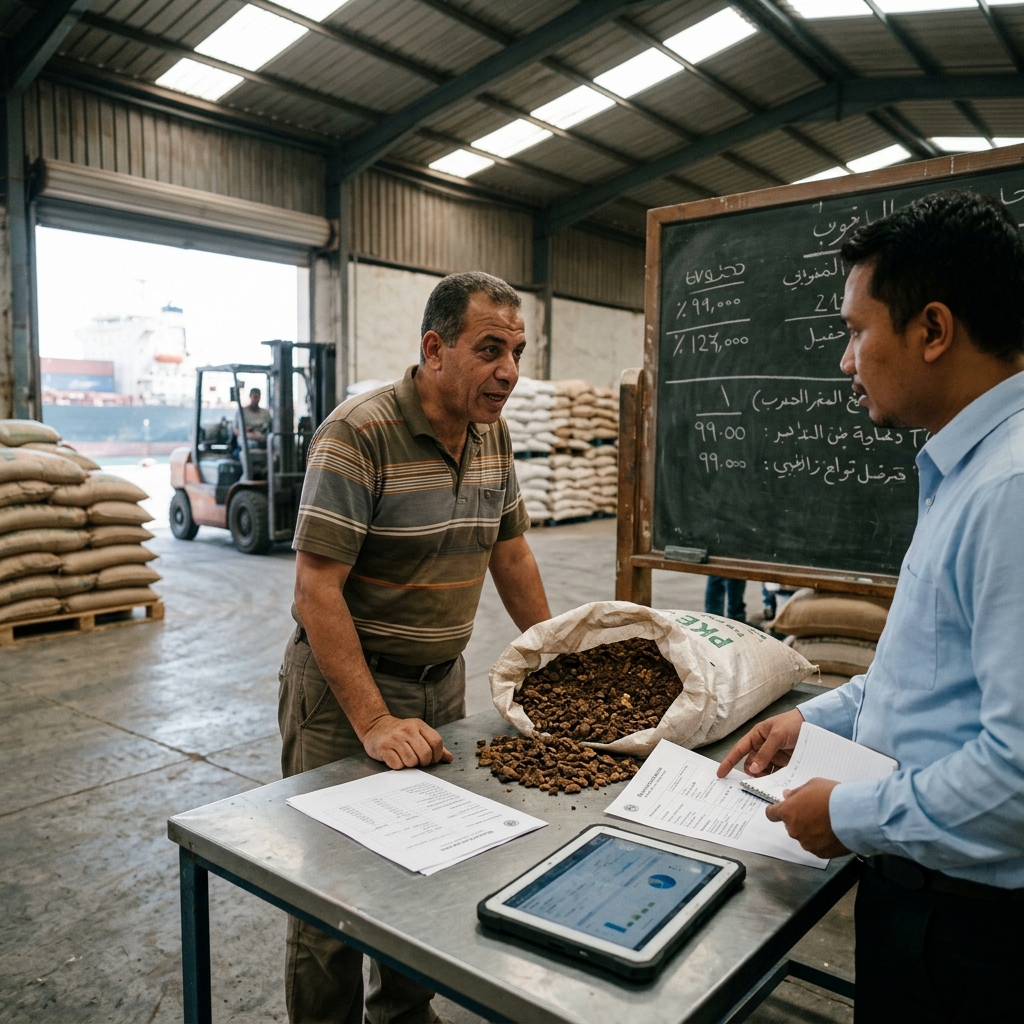
Partnering with a reliable Palm Kernel Expeller supplier for Egypt is essential for animal feed producers aiming to meet rising North African livestock demands in 2026. As Egypt expands its dairy and beef cattle sectors across the Nile Delta and Upper Egypt, securing a consistent supply of cost-effective energy and protein feedstuffs has become a top commercial priority.
Palm Kernel Expeller (PKE)—also known as palm kernel cake or meal—offers commercial feed mills an exceptional combination of digestible fiber, crude protein, and residual lipids. According to data published by the Food and Agriculture Organization (FAO), sustainable livestock feed formulation relies heavily on plant-based coproducts that replace expensive traditional grains like yellow corn without compromising ruminant productivity.
This comprehensive guide details everything Egyptian feed importers, procurement officers, and nutritionists need to know about sourcing bulk PKE, verifying chemical specifications, clearing customs under the Nafeza system, and partnering with the best PKE supplier for Egyptian livestock feed.
What is Palm Kernel Expeller and Why is Demand Growing in Egypt?
Palm Kernel Expeller (PKE) is a nutrient-rich feed ingredient generated during the mechanical extraction of palm oil from the seeds of the oil palm tree (Elaeis guineensis). It is widely recognized as a high-value medium-grade protein and fiber supplement ideal for ruminants, including dairy cows, fattening bulls, and sheep.
[Image: High-grade bulk Palm Kernel Expeller pellets ready for export shipping | title: High Quality Palm Kernel Expeller Supplier for Egypt | alt: Palm Kernel Expeller supplier for Egypt bulk loading shipment]
Egyptian feed manufacturers increasingly rely on a trusted Palm Kernel Expeller supplier for Egypt as global markets experience price volatility in traditional corn and soybean meal. Furthermore, PKE delivers highly digestible fiber that maintains healthy rumen motility, preventing metabolic disorders such as subacute ruminal acidosis (SARA).
To balance dietary amino acid profiles and optimize fat intake, animal nutritionists routinely blend PKE with complementary agricultural ingredients like Copra Meal in commercial feed formulas for intensive dairy operations.
Technical PKE Specifications Egypt Feed Mills Require
When contracting with an overseas supplier, verifying strict chemical parameters is critical to pass inspection by the Egyptian National Food Safety Authority (NFSA) and the General Organization for Export and Import Control (GOEIC).
Below is the mandatory chemical specification matrix required when purchasing from a certified Palm Kernel Expeller supplier for Egypt:
| Nutritional Parameter | Standard Specification Range | Egyptian Standard Import Requirement |
|---|---|---|
| Profat (Protein + Fat Combined) | 21.0% – 23.0% | Minimum 21.0% |
| Crude Protein (CP) | 14.5% – 17.5% | Minimum 14.0% |
| Crude Fat / Oil Content | 6.0% – 8.5% | Minimum 6.0% (Mechanical Expeller Grade) |
| Crude Fiber (CF) | 16.0% – 20.0% | Maximum 20.0% |
| Moisture Content | 8.0% – 12.0% | Maximum 12.0% (Strict sea transit limit) |
| Sand & Silica (Ash) | 3.0% – 5.0% | Maximum 5.0% |
| Aflatoxin Level | < 20 ppb | Strictly < 20 ppb (NFSA clearance mandatory) |
Controlling moisture below 12% is essential during maritime transit from Southeast Asian ports to Egyptian destinations such as Alexandria, Damietta, or Port Said. Excessive moisture triggers fungal activity, leading to self-heating cargo and toxic mold accumulation.
HS Code 2306.60 and Egyptian Import Clearance Requirements
Navigating Egyptian port entry procedures requires exact commodity classification and compliance with single-window trade regulations. Understanding the official palm kernel expeller HS code Egypt import classification ensures correct duty assessment and faster port clearance.
HS Code 2306.60.00 — Oil-cake and other solid residues, whether or not ground or in the form of pellets, resulting from the extraction of palm nuts or kernels.
For international tariff classifications, importers can verify regulations on the World Customs Organization (WCO) portal. Additionally, trade reports from the USDA Foreign Agricultural Service outline Egypt’s mandatory pre-arrival documentation rules under the Nafeza digital portal.
Essential Documents Required by Egyptian Authorities
When working with a professional Palm Kernel Expeller supplier for Egypt, importers must secure the following documentation bundle prior to ship departure:
- Bill of Lading (B/L): Confirming clean on-board ocean shipment status.
- Commercial Invoice & Packing List: Legalized by the origin chamber of commerce.
- Certificate of Origin: Issued by government export authorities in origin countries like Indonesia.
- Phytosanitary Certificate: Verifying cargo is free from regulated plant pests and agricultural contaminants.
- Independent Surveyor Certificate (SGS/Sucofindo): Confirming physical weight, moisture, profat, and aflatoxin safety levels prior to loading.
- ACID Number (Advanced Cargo Information System): Generated via Egypt’s Nafeza portal before vessel dispatch.
Key Factors When Selecting a Palm Kernel Expeller Supplier for Egypt
Choosing an overseas seller involves evaluating technical reliability, logistics management, and product consistency. Partnering with an experienced bulk palm kernel expeller supplier for Egypt prevents cargo spoilage, customs rejections, and costly maritime laytime charges.
[Image: Cargo vessel discharging bulk agricultural feedstuff at Alexandria Port | title: Bulk Feedstuff Logistics Egyptian Import | alt: Bulk Palm Kernel Expeller supplier for Egypt port vessel unloading]
Criteria for Evaluating Overseas Exporters
- Direct Producer Connections: Work directly with suppliers connected to major crude palm oil crushing mills to maintain uniform crude protein and oil percentages.
- Strict Aflatoxin Risk Mitigation: Ensure your partner applies modern mechanical drying and lab testing to meet all aflatoxin standards feed import rules.
- Flexible Bulk Feedstuff Logistics: Partner with exporters offering breakbulk charters (5,000 to 15,000 MT) or containerized jumbo bags (20ft/40ft FCL).
- Diverse Ruminant Feed Solutions: High-performing suppliers provide complementary dietary supplements, including energy-rich Calcium Salts of Palm Oil Fatty Acids for lactating dairy herds.
Furthermore, research published on ScienceDirect shows that stable fat and digestible fiber intake from mechanical palm residues enhances total butterfat percentage in commercial dairy herds.
Integrating PKE into Egyptian Livestock Rations
Egyptian animal nutritionists utilize PKE in dairy cattle, beef fattening, and sheep rations due to its balanced energy density and high neutral detergent fiber (NDF). These natural fiber fractions stabilize rumen pH and lower the incidence of metabolic bloat.
[Image: Technical infographic outlining PKE nutritional profile, fiber fractions, crude protein, and livestock inclusion rates | title: Technical PKE Specifications Egypt Infographic | alt: Infographic PKE specifications Egypt livestock nutrition inclusion rates]
Recommended Livestock Inclusion Rates
Nutritionists recommend the following inclusion benchmarks when formulating Egyptian livestock feed supply rations:
- High-Yield Dairy Cows: 15% to 30% of total dry matter intake (DMI) to sustain milk yield and fat content.
- Beef Cattle Fattening: 20% to 40% of total concentrate ration for efficient weight gain.
- Sheep and Goats: 10% to 20% of feed mix, improving digestive balance and pellet durability.
In addition to livestock nutrition, feed processing plants often purchase renewable biomass fuels like Palm Kernel Shell for industrial boiler heating systems. Soil improvement programs also utilize organic growing media like Cocopeat for greenhouse agriculture across Egypt’s reclaimed desert lands.
Step-by-Step Ocean Logistics for Egyptian Import Contracts
Executing smooth ocean shipments requires methodical coordination across multiple international supply chain stages:
- Contract Spec Alignment: Confirm product moisture, profat, and aflatoxin caps comply with NFSA and GOEIC standards.
- Nafeza ACID Registration: Issue mandatory Advanced Cargo Information filings before cargo loading begins at origin ports.
- Pre-Shipment Inspection: Inspect ship holds, conduct lab tests, and verify cargo moisture with independent surveyors before loading.
- Ocean Transit Management: Ship bulk shipments via key North African maritime ports, including Alexandria, Damietta, and Port Said.
- Customs & Quarantine Clearance: Present original certificates and complete local sampling tests for quick port clearance.
[Video: Overview of bulk cargo loading process and ocean vessel transportation protocols for agricultural commodities | title: Palm Kernel Meal Export Ocean Freight Logistics | alt: Palm kernel meal export ocean shipping logistics process video]
Makmur Amanah Sejahtera provides high-quality palm products such as Palm Kernel Expeller, Palm Kernel Shell, Crude Palm Oil, Palm Kernel Oil, etc. Kindly contact us at WhatsApp +6282140002198 or email us at admin@makmuramanah.co.id.
Frequently Asked Questions
What is the HS code for Palm Kernel Expeller imported into Egypt?
The global HS code for Palm Kernel Expeller is 2306.60.00. Egyptian importers use this tariff code within the Nafeza single-window portal to file advance customs documentation, calculate applicable duties, and clear NFSA quarantine inspections efficiently.
Why is moisture control critical when selecting a Palm Kernel Expeller supplier for Egypt?
Controlling moisture below 12% is essential during long ocean transits. High moisture promotes mold growth and elevates aflatoxin risks. Working with a top Palm Kernel Expeller supplier for Egypt guarantees strict pre-shipment lab testing and moisture compliance.
How does Palm Kernel Expeller compare to soybean meal in ruminant diets?
PKE contains lower crude protein (14–17%) than soybean meal (44–48%), but provides substantially higher digestible fiber and residual lipids. This makes PKE a highly economical energy and fiber source for maintaining overall rumen health.
What certificates are mandatory for clearance at Egyptian ports?
Egyptian import authorities require a Certificate of Origin, Phytosanitary Certificate, Commercial Invoice, Bill of Lading, Independent Surveyor Inspection Certificate (SGS/Sucofindo), and an approved ACID registration number issued through the Nafeza platform.
Can PKE be delivered in containerized jumbo bags as well as breakbulk vessels?
Yes, exporters ship PKE in bulk ocean vessels (5,000–15,000+ MT) for large feed mills, or in 1-ton jumbo bags loaded into 20ft and 40ft sea containers for small and medium-sized livestock operations.
Conclusion: Selecting Your Premier Palm Kernel Expeller Supplier for Egypt
As Egypt’s livestock feed and milling sectors expand through 2026, procuring reliable plant-based proteins is vital for commercial profitability. Partnering with a premier Palm Kernel Expeller supplier for Egypt ensures your business receives premium feed ingredients, guaranteed technical specifications, and full compliance with local import regulations. Optimize your feed manufacturing efficiency by connecting with established global export specialists today.
 English
  Indonesian
  Chinese
  Arabic