
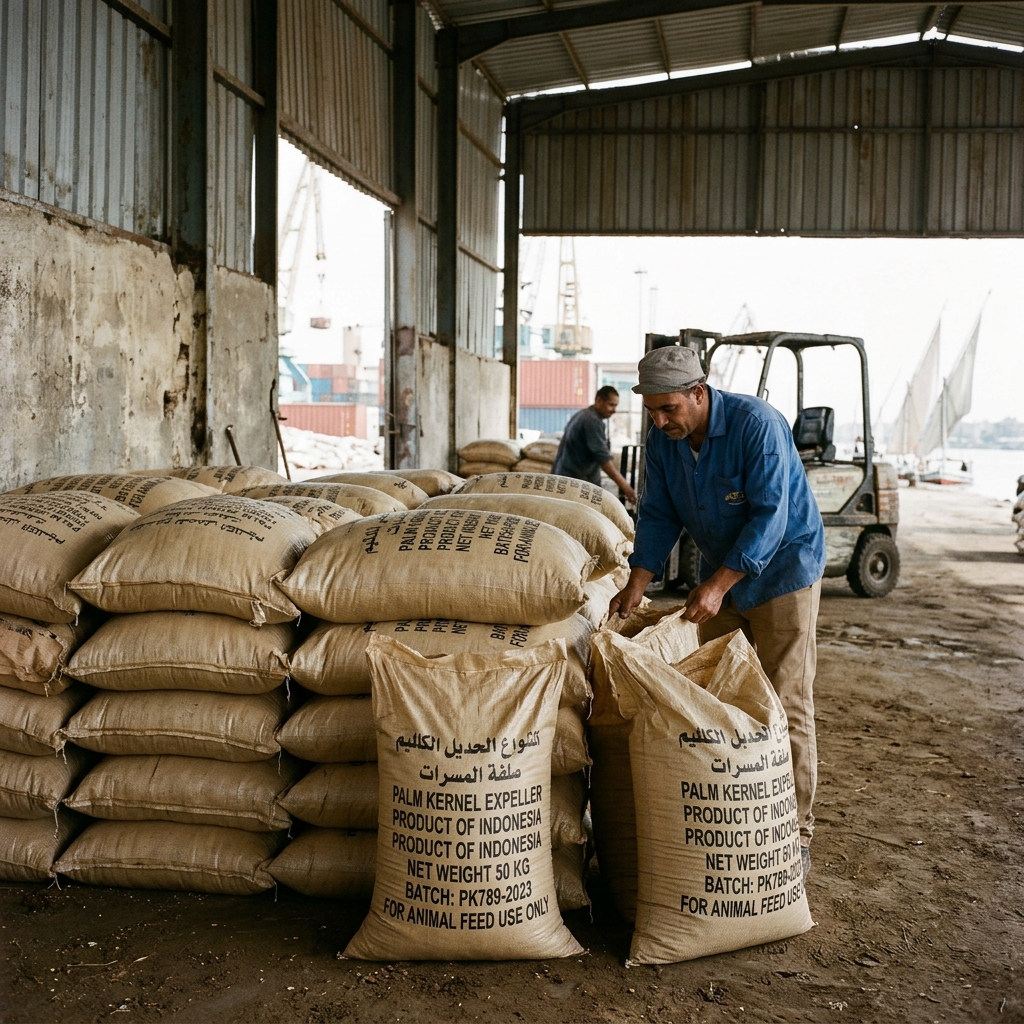
Procuring Palm Kernel Expeller Egypt shipments requires clear insights into current prices, technical specifications, and trade regulations. Egyptian livestock producers face high feed costs driven by currency fluctuations and global grain volatility. Sourcing alternative, nutrient-dense by-products directly solves these budget strains while preserving animal health.
Egypt imports over 8 million metric tons of animal feed ingredients annually to sustain its commercial livestock sectors. According to the USDA Foreign Agricultural Service, feed ingredients account for up to 70% of total livestock production expenditures in North Africa. As commercial feed millers search for cost-efficient protein and fiber sources, demand for Palm Kernel Expeller Egypt imports has accelerated across major ports like Alexandria and Damietta.
By leveraging high-energy co-products, feed manufacturers can formulate cost-effective rations without sacrificing average daily gains. Integrating palm kernel meal animal feed offers commercial mills a reliable hedge against volatile soybean meal prices. Understanding shipping routes, port clearance protocols, and technical assay baselines enables agribusinesses to protect operational margins.

Understanding Palm Kernel Expeller for Egyptian Animal Nutrition
Palm kernel expeller (PKE), also known as palm kernel meal (PKM), is the solid residue remaining after crushing oil from the palm kernel nut. Crushers obtain this meal via mechanical screw pressing or solvent extraction methods. The resulting ingredient provides an exceptional balance of medium crude protein, metabolizable energy, and digestible dietary fiber.
In dairy and beef operations across the Nile Delta, nutritionists utilize this raw material as an effective ruminant feedstuff. Unlike pure cereal grains, its carbohydrate matrix consists primarily of neutral detergent fiber (NDF) and non-starch polysaccharides. This biochemical profile maintains stable rumen pH levels and minimizes subacute ruminal acidosis (SARA).
Furthermore, commercial feed compounds often benefit from combining tropical by-products. Nutritionists formulate complete feeds by blending expeller meal with high-oil copra meal or energy-dense calcium salts of palm oil fatty acids. This approach generates a balanced total mixed ration (TMR) tailored for dairy buffaloes and desert-reclaimed cattle feedlots.
For poultry and ruminant bedding applications, feedlots also procure absorbent cocopeat to enhance farm hygiene. Combining distinct agricultural co-products ensures that Egyptian feedlot managers optimize animal welfare while lowering per-ton operational costs.
Current Market Trends for Palm Kernel Expeller Egypt in 2026
Analyzing the pricing dynamics of Palm Kernel Expeller Egypt contracts reveals strong structural cost advantages over traditional imported feed grains. Freight rates along Indian Ocean and Red Sea trade routes continue to stabilize, lowering landed containerized and breakbulk costs at Egyptian destination harbors.
Feed compounders in Cairo, Sharqia, and Beheira actively contract containerized and breakbulk shipments to lock in predictable forward margins. Understanding global benchmark pricing ensures that Egyptian importers negotiate favorable sales terms directly with primary origin crushers in Indonesia.
Price Per Ton Outlook: CIF Alexandria and Damietta
During 2026, the palm kernel expeller price per ton Egypt buyers pay hovers between $185 and $225 per metric ton CIF Alexandria for breakbulk consignments. Containerized freight rates vary slightly, trading at a $15 to $25 premium per ton due to domestic chassis handling fees and demurrage deposits.
Domestic processing capacity within Indonesia, seasonal crude palm oil (CPO) production peaks, and international bunker fuel rates dictate this pricing band. Importers secure the most competitive CIF Alexandria feed price points between July and October, when Southeast Asian plantation outputs reach peak seasonal volumes.
Cost Breakdown of Palm Kernel Expeller Egypt Shipments
Accurate budgeting for Palm Kernel Expeller Egypt procurement requires analyzing freight logistics and port fees. Evaluating the landed cost model ensures that Egyptian livestock enterprises avoid unexpected customs penalties or terminal holding charges. Consider the primary cost components for a typical 5,000-metric-ton bulk consignment:
- FOB Origin Price (Indonesia): Represents 55% to 62% of total landed expenditure.
- Ocean Freight & Bunker Surcharge: Accounts for 22% to 28% of total delivered valuation.
- Marine Cargo Insurance: Ranges between 0.5% and 1.0% covering bulk maritime peril risks.
- Egyptian Customs Duties & Value-Added Taxes: Standard 5% tariff baseline plus clearance overhead.
- Stevedoring, Handling, and Demurrage Buffers: 4% to 6% at destination port discharge terminals.

Technical Specifications and Quality Standards
Commercial feed formulations require consistent chemical properties. Importers must confirm that laboratory analysis certificates (COA) match national standards set by the Egyptian Ministry of Agriculture and Land Reclamation. Premium mechanical expeller contains higher residual oil than solvent-extracted meals, supplying critical gross calories to lactating ruminants.
Verified laboratory tests published by research databases such as Feedipedia (INRA/CIRAD/FAO) indicate that solvent-extracted variations exhibit higher protein percentages but lower energy densities. Evaluating these specifications of palm kernel expeller for Egyptian livestock ensures proper ration integration.
| Nutritional Parameter | Typical Specification (Mechanical Expeller) | Egyptian Import Limit / Threshold |
|---|---|---|
| Crude Protein (Dry Matter) | 14.5% – 17.5% | Min. 14.0% |
| Crude Fat (Residual Oil) | 6.0% – 9.0% | Min. 6.0% |
| Moisture Content | 8.0% – 10.5% | Max. 12.0% |
| Crude Fiber | 15.0% – 18.0% | Max. 20.0% |
| Total Ash | 4.0% – 6.0% | Max. 7.0% |
| Aflatoxin B1 / Total | < 10 ppb (µg/kg) | Max. 20 ppb |
| Sand and Silica | 0.5% – 1.2% | Max. 2.5% |
Always inspect shipments for physical characteristics upon vessel discharge. Fresh mechanical expeller features an earthy, roasted aroma and a uniform medium-brown hue. Dark, charred meal signals thermal overheating during screw extrusion, which binds lysine and degrades crude protein feed ingredients.
HS Code and Customs Classification for Egyptian Customs
Classifying shipments under the correct Harmonized System tariff code ensures rapid clearance through maritime customs checkpoints. Importers must specify HS code 2306.60 across all shipping paperwork, including the manifest, Bill of Lading, and commercial invoice.
According to international classification guidelines published by the International Trade Administration, Chapter 23 covers agricultural residues, food processing wastes, and prepared animal fodders. Knowing the exact HS code for palm kernel expeller Egypt customs documentation stops costly classification disputes at port authorities.
Required Customs Documentation
To prevent clearance delays when receiving Palm Kernel Expeller Egypt consignments, importers must file compliant documentation via the Egyptian National Single Window for Foreign Trade (Nafeza platform):
- Advanced Cargo Information (ACID) Number: Must be generated before cargo departs origin ports in Sumatra or Kalimantan.
- Clean on Board Ocean Bill of Lading: Stamped and endorsed by shipping lines without claused exceptions.
- Certified Commercial Invoice & Packing List: Legalized by the relevant bilateral Chamber of Commerce.
- Phytosanitary Certificate: Issued by the national quarantine agency at origin, verifying cargo is free of noxious pests.
- Independent Certificate of Analysis (COA): Assayed by accredited international inspection firms like SGS or Sucofindo.
- Non-Radioactivity and Veterinary Clearance Deeds: Mandatory for Egyptian agricultural release.
Nutritional Benefits for Egyptian Livestock Operations
Livestock enterprises in Egypt operate under rigorous environmental conditions, ranging from humid Mediterranean coastal zones to arid desert reclamation projects. Incorporating premium Palm Kernel Expeller Egypt supplies provides essential bypass protein and digestible fiber that optimize ruminant nutrition Egypt programs.
Empirical findings published in the peer-reviewed journal Animal Feed Science and Technology demonstrate that replacing up to 30% of concentrate feeds with palm kernel meal improves fat-corrected milk yield without depressing dry matter intake. The functional fiber maintains efficient ruminal motility in both water buffaloes and exotic cattle breeds.
In intensive beef cattle fattening programs, expeller meal provides steady, non-acidotic energy that prevents metabolic disorders typical of heavy corn diets. Furthermore, compounding diets with pure cooking energy sources like RBD CP8 palm olein optimizes total caloric density across commercial livestock rations.
Import Regulations and Clearance for Palm Kernel Expeller Egypt
Navigating Egyptian agricultural import regulations demands adherence to strict veterinary health protocols. The Central Administration of Plant Quarantine (CAPQ) and the General Organization for Export and Import Control (GOEIC) enforce precise quality thresholds on incoming bulk agro-commodities.
Egyptian feed enterprises that choose to import palm kernel meal from Indonesia to Egypt must confirm that the supplying mill holds valid export clearance certificates. Partnering with a reliable Indonesian palm expeller supplier minimizes quality variance and guarantees adherence to destination quarantine mandates.
Step-by-Step Port Clearance Protocol
Following a standard logistical schedule expedites discharge upon arrival at Alexandria, Damietta, or Port Said terminals:
- Digital ACID Issuance: Register the purchase transaction on the Nafeza portal to receive the ACID number before sailing.
- Berth Allocation & Hatch Inspection: Port quarantine surveyors inspect vessel holds for moisture ingress, mold crusting, or pests.
- Composite Quarantine Sampling: CAPQ officials collect representative composite samples across multiple hold levels.
- Laboratory Mycotoxin Screening: Certified labs screen samples for aflatoxins, ochratoxin, Salmonella, and heavy metal residues.
- Duty Settlement & Gate Pass: Settle the assessed customs tariffs and terminal cargo dues to secure release paperwork.
- Inland Bulk Transport: Dispatch pneumatic bulk trucks or flatbed trailers directly to regional compound feed mills.
Practical Storage and Handling Best Practices
Egypt’s hot climate presents logistical challenges during summer months when warehouse temperatures regularly surpass 40 degrees Celsius. Storing bulk Palm Kernel Expeller Egypt stocks correctly preserves nutritive quality and stops oxidative rancidity.
Because mechanical expeller meal retains 6% to 9% natural crude fat, prolonged exposure to heat and high humidity accelerates free fatty acid (FFA) development. Store bulk expeller in well-ventilated, dry warehouses mounted on clean pallets, away from damp perimeter walls.
Additionally, agricultural processing plants often utilize solid biomass fuels for industrial boilers. Importers frequently combine feed shipments with energy-dense palm kernel shell consignments to maximize ocean freight economies across chartered vessels.
Makmur Amanah Sejahtera provides high-quality palm products such as Palm Kernel Expeller, Palm Kernel Shell, Crude Palm Oil, Palm Kernel Oil, etc. Kindly contact us at WhatsApp +6282140002198 or email us at admin@makmuramanah.co.id.
Frequently Asked Questions
What is the current price per ton for Palm Kernel Expeller Egypt imports?
Palm Kernel Expeller imports into Egypt typically range between $185 and $225 per metric ton CIF Alexandria or Damietta in 2026. Landed costs vary based on ocean freight fluctuations, container availability, seasonal Indonesian palm harvesting cycles, and foreign exchange rates.
What is the exact HS code for importing palm kernel expeller into Egypt?
The correct tariff classification is HS Code 2306.60. This internationally recognized customs subheading applies directly to oilcake and other solid residues resulting from palm kernel oil extraction, whether ground into meal or formed into pellets for animal feed.
What are the minimum crude protein specifications for Egyptian livestock?
Egyptian quarantine and agricultural standards specify a minimum crude protein content of 14.0% on a dry matter basis. High-grade mechanical expeller delivers between 15.0% and 17.5% crude protein, supplemented by 6.0% to 9.0% residual oil for balanced energy.
Can Egyptian dairy farms feed palm kernel meal to buffaloes and cows?
Yes, palm kernel expeller is highly recommended for Egyptian dairy cows and water buffaloes. Its high neutral detergent fiber content buffers rumen pH, prevents digestive acidosis, and promotes high milk butterfat percentages when included at 15% to 30% of total mixed rations.
How long does shipping take from Indonesian origins to Egyptian ports?
Transit times from primary Indonesian export terminals in Sumatra or Kalimantan to Alexandria and Damietta average 20 to 28 days. Timelines depend on container routing schedules, transshipment hubs, weather conditions, and Red Sea maritime navigation clearance.
Strategic Outlook: Boosting Livestock Margins in 2026
Egyptian agribusinesses must adapt to shifting global feed trade patterns. Relying entirely on costly corn and soybean imports exposes commercial livestock operations to margin volatility and trade supply interruptions. Implementing strategic ingredient substitutions protects feeding programs against unexpected price hikes.
Sourcing directly from verified Indonesian origin crushers ensures consistent supply and certified quality parameters. By securing long-term contracts for Palm Kernel Expeller Egypt, your enterprise achieves reliable animal feed security, lower ration costs, and resilient operational margins throughout 2026.
 English
 Indonesian
 Chinese
 Arabic
