
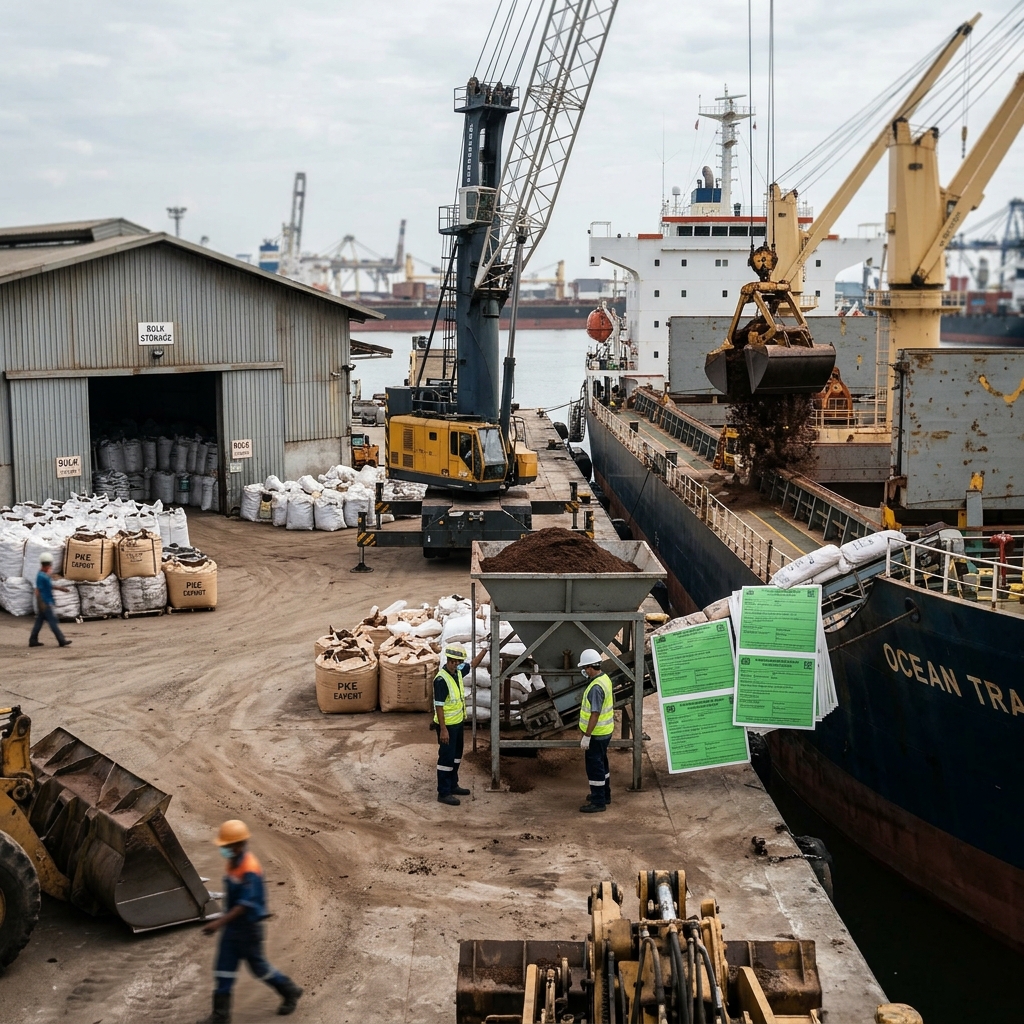
GACC Approved Palm Kernel Expeller: 5 Elite Tips for 2026
Sourcing GACC approved palm kernel expeller requires strict adherence to Chinese customs standards, phytosanitary protocols, and stringent quality verifications. Feed millers across Guangdong, Shandong, and Jiangsu face severe border rejections when sourcing documentation lacks registration validation under Decrees 248 and 249. This comprehensive guide details every critical step needed to secure, inspect, and import compliant shipments without costly maritime port delays.
China imported over 1.2 million metric tons of palm kernel expeller (PKE) in recent years to support its expanding dairy and beef herds. However, customs enforcement has tightened dramatically under updated biosecurity frameworks. Consequently, safely securing GACC approved palm kernel expeller remains the primary operational hurdle for procurement teams seeking cost-effective ruminant protein sources.
What is GACC Approved Palm Kernel Expeller?
A GACC approved palm kernel expeller is a byproduct of mechanical palm oil extraction that originates from processing facilities registered and audited by the General Administration of Customs China. This certification ensures the feed ingredient complies with China’s strict safety standards, biosecurity measures, and contaminant limits before vessel dispatch.
GACC accreditation guarantees full traceability throughout the processing, storage, and transport phases. Facilities holding this official status undergo rigorous inspections by both the origin country’s quarantine authority and Chinese agricultural biosecurity auditors. Consequently, shipments originating from unregistered processing mills face immediate turn-back orders or incineration at Chinese ports.
GACC Approved Palm Kernel Expeller Regulatory Foundations
Under GACC Decree 248 and Decree 249, overseas processing and storage facilities exporting agricultural feed ingredients into mainland China must maintain active listing in the official Single Window registration system. Enforcing strict feed safety Decree 249 protocols prevents biological hazards from entering domestic feed supply lines.
Moreover, producing compliant GACC approved palm kernel expeller requires documented hazard control processes, strict mold prevention strategies, and zero cross-contamination risks. Industrial processors must also submit toxicological analyses proving their meal meets National Standard GB 13078-2017 for animal feed hygiene.
Nutritional Profile and Ruminant Feeding Value
Palm kernel expeller serves as a proven mid-level protein and high-fiber energy ingredient for modern commercial livestock diets. According to comprehensive Feedipedia animal feed resources, expeller-pressed palm kernel cake contains roughly 14% to 18% crude protein alongside an energy-dense residual oil content between 6% and 10%.
Furthermore, livestock nutritionists leverage its rich neutral detergent fiber (NDF) fraction to optimize rumen fermentation dynamics in lactating dairy cattle. In contrast to rapidly fermentable starches, the non-fibrous carbohydrates in palm kernel expeller minimize subacute ruminal acidosis (SARA) risks in high-output dairy herds.
Why Chinese Livestock Producers Demand GACC Approved Palm Kernel Expeller
China’s dairy sector continues to modernize rapidly, driving an urgent need for cost-efficient dietary fiber and protein alternatives. Importers actively purchase GACC approved palm kernel expeller to balance nutritional delivery against soaring compound feed expenditures.
Additionally, USDA Foreign Agricultural Service reports highlight persistent efforts by Chinese feed mills to lower dietary reliance on imported raw soybeans. Sourcing certified palm byproducts delivers an immediate structural solution to achieve ration stability without sacrificing milk fat performance.
Cost-Effective Crude Protein and Dietary Fiber
Distributors of GACC approved palm kernel expeller provide feed formulators with unmatched economic flexibility. Compared to standard canola meal or distillers dried grains (DDGS), palm kernel meal presents a distinct cost-per-protein unit advantage during seasonal market volatility.
Scientific research published in Livestock Science demonstrates that replacing up to 20% of conventional protein meals with palm kernel cake maintains both body condition scoring and average daily milk yield. Furthermore, integrating copra meal alongside palm meals offers complementary amino acid profiles for ruminant animal feed China formulations.
Mitigating Exposure to Volatile Soybean Meal Prices
Global commodity swings routinely destabilize operating margins for commercial feed producers throughout East Asia. Incorporating GACC approved palm kernel expeller into daily rations establishes an effective buffer against sudden soybean price spikes.
Large feeding operations in Hebei and Ningxia regularly contract bulk expeller shipments six months forward. This strategic procurement locks in predictable operating margins while meeting regional environmental and agricultural targets.
GACC Approved Palm Kernel Expeller Specifications and Quality Standards
Procuring raw animal feed ingredients requires detailed attention to physical and chemical parameters. When purchasing GACC approved palm kernel expeller directly from crushing mills in Southeast Asia, buyers must demand strict batch compliance against rigorous palm kernel meal export specifications.
The table below summarizes commercial trade specifications against the mandatory import hygiene limits enforced by Chinese customs under standard GB 13078-2017.
| Parameter | Standard Grade PKE | Premium Mechanical Expeller | China Quarantine Limit (GB 13078) |
|---|---|---|---|
| Crude Protein (Dry) | Min 14.5% | Min 16.0% – 18.0% | Commercial Contract Term |
| Moisture Content | Max 12.0% | Max 8.0% – 10.0% | Max 12.5% |
| Crude Fat (Residual Oil) | Max 10.0% | 6.0% – 8.0% | Monitored for Rancidity |
| Crude Fiber | Max 18.0% | Max 15.0% | Commercial Contract Term |
| Aflatoxin B1 | Max 50 ppb | Max 20 ppb | Strict Max 30 ppb (Feed Limit) |
| Sand & Silica / Ash | Max 2.5% / Ash Max 6.0% | Max 1.0% / Ash Max 4.5% | Strict Tolerance on Heavy Metals |
Contaminants, Mycotoxins, and Heavy Metal Tolerances
Meeting Chinese customs clearance quarantine China standards requires systematic testing for heavy metals such as Lead (Pb), Cadmium (Cd), and Arsenic (As). GACC border laboratories automatically reject cargo containing lead concentrations exceeding 5.0 mg/kg or arsenic exceeding 2.0 mg/kg.
Furthermore, tropical shipping conditions expose cargo to elevated humidity levels that promote Aspergillus flavus growth. Exporters executing a compliant PKE export protocol Indonesia must control moisture before loading to eliminate potential aflatoxin spikes during sea transits.
5 Proven Steps to Import GACC Approved Palm Kernel Expeller into China
Securing seamless customs clearance demands meticulous operational execution. Importers should execute this structured five-step workflow to ensure regulatory compliance and avoid vessel demurrages:
- Verify Facility Registration Status: Query the exporter’s specific establishment registration code directly within the official GACC Single Window database before signing purchase contracts.
- Validate Commercial Documentation: Ensure the origin Phytosanitary Certificate, Certificate of Origin, and Non-GMO Declaration match the exact entity names registered in China.
- Coordinate Independent Pre-Shipment Inspection: Appoint accredited surveyors like SGS or CCIC to inspect moisture, foreign matter, and pest status during vessel loading.
- Secure Verified Analysis Records: Obtain comprehensive testing assays verifying total absence of prohibited animal remains, pathogenic salmonella, and toxic chemical residues.
- Complete Advance Port Filing: Lodge automated electronic customs declarations at designated destination ports at least 72 hours prior to vessel berthing.
Purchasing teams wondering how to buy GACC approved palm kernel expeller must prioritize experienced trade partners with unblemished export records. Sourcing certified GACC approved palm kernel expeller from verified mills minimizes regulatory friction and secures consistent bulk volumes.
Critical Verification Steps on the Single Window Portal
Never rely solely on scanned certificate copies provided by unknown intermediaries. Chinese buyers must access the official overseas feed manufacturer catalog on the GACC portal to verify validity dates and authorized business scopes.
Additionally, confirm that both the manufacturing mill and the direct export trading house appear in official registration records. Discrepancies between the billing shipper and the registered manufacturer trigger instant red-channel physical inspections upon arrival.
Managing Phytosanitary and Fumigation Protocols
Chinese biosecurity officers inspect every agricultural cargo hold for invasive quarantine pests, including warehouse beetles and exotic weevils. Consequently, cargo holds must undergo phosphine fumigation at certified dosage rates prior to departure from the loading terminal.
The origin country’s quarantine department must issue a valid Phytosanitary Certificate explicitly stating treatment chemicals, application temperatures, and complete exposure durations. Any defect in fumigation documentation leads to mandatory re-fumigation anchorage delays spanning up to 14 days.
Logistics, Bulk Vessel Handling, and Storage Protocols
Bulk ocean freight presents substantial risks of cargo deterioration if vessel holds encounter extreme tropical moisture. Safe maritime transport of GACC approved palm kernel expeller demands strict temperature management and waterproof cargo protection.
Chartering vessels equipped with active mechanical ventilation systems prevents condensation buildup along ship bulkheads. Furthermore, crew members must regularly record hold temperatures to detect spontaneous heating caused by residual free fatty acid oxidation.
Bulk Vessel vs. Containerized Shipping Logistics
Large enterprise feed conglomerates in China generally favor Supramax or Handymax bulk shipments ranging from 15,000 to 35,000 metric tons. Managing bulk vessel palm kernel expeller clearance in China requires pre-clearing discharge berths at major agricultural terminals such as Tianjin, Qingdao, and Nantong.
Conversely, regional feed processors often prefer 20-foot dry van containers lined with heavy-duty moisture liners. While containerized freight incurs higher handling costs per ton, it provides flexible inventory turns and lowers initial working capital requirements.
Advanced Feed Energy Optimization Strategies
Innovative livestock enterprises combine palm kernel expeller with high-efficiency rumen-protected fats to boost dietary energy density. Utilizing calcium salts of palm oil fatty acids provides bypassed energy that directly enhances milk production yields without interrupting microbial fiber digestion.
Feed millers also balance bulk feed fat profiles with refined olein sources like RBD CP8 to supply premium caloric value. Furthermore, facilities running integrated bio-energy systems leverage biomass fuel sources like palm kernel shell to supply sustainable industrial heat for on-site drying infrastructure.
Overcoming Common Customs Clearance Pitfalls
Importers evaluating import requirements for palm kernel expeller into China frequently encounter operational bottlenecks that cause costly supply chain disruptions. Connecting directly with an established GACC registered palm kernel expeller supplier Indonesia eliminates the following common compliance pitfalls:
- Expired Enterprise Approvals: GACC registrations require periodic renewals; importing from a supplier whose credential expired mid-voyage results in immediate rejection.
- Moisture Induced Heating: Loading PKE with moisture exceeding 11% into unventilated holds causes caking, high peroxide values, and intense rancidity.
- Mislabeled Packaging Markings: Bagged shipments must carry durable dual-language labels displaying registration numbers, batch codes, and shelf life warnings.
- Quarantine Pests Presence: Live storage pests discovered during initial quarantine boarding trigger costly offshore gas treatment protocols.
Makmur Amanah Sejahtera provides high-quality palm products such as Palm Kernel Expeller, Palm Kernel Shell, Crude Palm Oil, Palm Kernel Oil, etc. Kindly contact us at WhatsApp +6282140002198 or email us at admin@makmuramanah.co.id.
Frequently Asked Questions
How can Chinese buyers verify if a supplier has GACC approval for palm kernel expeller?
Importers must check the official overseas feed manufacturer database hosted on the GACC Single Window platform. Search the exporter’s establishment code or company name to confirm active certification for palm kernel meal before executing commercial contracts.
What is the correct HS code for importing palm kernel expeller into China?
Palm kernel expeller enters China under HS Code 2306.60.0000, representing oilcake residues from palm nut extraction. Buyers should verify tariff classifications with licensed customs brokers to calculate exact value-added taxes, bilateral duty exemptions, and quarantine fees.
What are the aflatoxin limits enforced by GACC on palm kernel meal?
China’s National Feed Hygiene Standard (GB 13078) mandates that Aflatoxin B1 levels in imported raw feed materials must not exceed 30 to 50 ppb. Importers should target pre-shipment laboratory assays below 20 ppb to avoid border rejections caused by transit mold propagation.
How long does GACC facility registration take for overseas palm feed processors?
Securing greenfield GACC facility registration typically requires six to twelve months. The process entails origin quarantine audits, biosecurity submissions, bilateral government assessments, and sample testing protocols before Chinese customs authorities formally issue an official establishment registration code.
Can GACC approved palm kernel expeller replace soybean meal in dairy rations?
Feeding GACC approved palm kernel expeller safely replaces 15% to 25% of soybean meal in commercial dairy rations. While expeller contains less crude protein than soy, its digestible fiber and bypass energy support rumen health and maintain milk butterfat percentages efficiently.
Conclusion: Securing Your Supply Chain in 2026
Securing dependable shipments of GACC approved palm kernel expeller demands precise logistical coordination, systematic laboratory validations, and unwavering regulatory compliance. By aligning with certified suppliers who maintain active GACC credentials, livestock producers across China can reduce ration expenses while elevating overall herd feed efficiency.
Moreover, modern procurement teams must conduct rigorous due diligence on pre-shipment moisture levels, vessel hold hygiene, and phytosanitary certificates. Taking proactive steps today prevents costly demurrage penalties and ensures uninterrupted feed production operations throughout 2026.
By partnering with experienced processors who supply certified GACC approved palm kernel expeller, commercial importers safeguard their supply chain against regulatory bottlenecks and market volatility.

 English
 Indonesian
 Chinese
 Arabic
