

Understanding what is cocopeat used for empowers modern horticulturists, commercial greenhouse operators, and home gardeners to build resilient root architecture while slashing irrigation demands. Traditional field soils often suffer from heavy compaction, choking delicate feeder roots and harboring aggressive fungal pathogens. Cocopeat solves these critical challenges by offering an ultra-porous, chemically stable, and exceptionally moisture-retentive root environment.
If you have ever asked what is cocopeat used for when browsing agronomy suppliers, you are participating in a global transition toward sustainable crop substrates. Global agricultural assessments from the Food and Agriculture Organization (FAO) show that coir substrates are now among the most adopted renewable soil amendments worldwide, conserving millions of liters of freshwater across commercial farms annually.
Definition: Cocopeat (also known botanically as coco coir pith or coconut dust) is an organic, biodegradable soilless growing medium extracted from the cellular mesocarp of coconut husks. In commercial horticulture, what is cocopeat used for includes seed germination, container soil mixes, hydroponic cultivation, and soil moisture retention, delivering up to 70% porosity and exceptional capillary hydration.
Whether you manage acres of drip-irrigated commercial glasshouses or nurse rare tropical houseplants, mastering this versatile growing medium directly enhances plant vigor, minimizes transplant shock, and guarantees root aeration.
What Is Cocopeat and How Is It Manufactured?
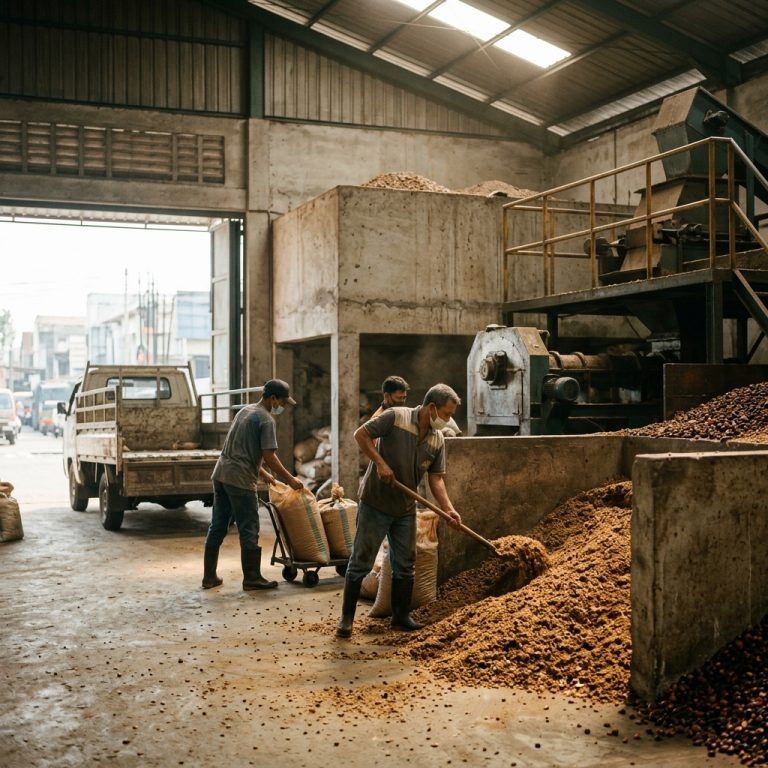
Cocopeat originates from the fibrous husk enclosing the coconut fruit (Cocos nucifera). While processors traditionally extract long coir fibers for ropes, geo-textiles, and automotive upholstery, millions of granular, sponge-like micro-sponges remain. Historically treated as agricultural waste, this coir pith is now recognized as one of the planet’s premier horticultural substrates.
Transforming raw coconut husk dust into export-grade substrate requires meticulous industrial refining. Raw coir naturally contains elevated levels of sodium and potassium due to coastal cultivation. Premium processors age, double-wash with fresh water, and chemically buffer the coir pith with calcium nitrate to displace unwanted salts.
According to agronomic studies published in ScienceDirect coir substrate research, buffered coir pith preserves structural cellular integrity for up to five years. The material resists biological degradation far longer than peat moss, preventing container substrate settling and maintaining steady root oxygenation over multiple crop cycles.

What Is Cocopeat Used For Across Modern Horticulture?
When examining what is cocopeat used for across diverse horticultural disciplines, versatility remains its primary advantage. Growers incorporate this organic medium across varied settings to address stubborn biological hurdles and manage delicate root zones.
What Is Cocopeat Used For in Seed Germination and Propagation?
The earliest vegetative stage is where coir shines brightest. Fragile embryonic root radicles need a loose, frictionless medium to expand outward without physical resistance. Finely screened coconut dust provides gentle support, preventing surface crusting and allowing even sprout emergence across germination trays.
Moreover, high-grade cocopeat is naturally sterile and devoid of weed seeds, parasitic nematodes, and damping-off fungi like Pythium. Horticulturists also deploy it for stem and cane cuttings, because its capillary matrix maintains 100% relative humidity around cut callus tissues while simultaneously diffusing life-giving oxygen.
Container Plants and Houseplant Potting Blends
Indoor potted plants perish far more often from overwatering and root hypoxia than drought. Heavy potting soils compact when wet, forcing out atmospheric air and suffocating root tissue. Incorporating 30% to 50% coir creates thousands of resilient microscopic air channels that drain away excess gravitational water while preserving internal moisture.
Aroid houseplants such as Monstera, Philodendron, Anthurium, and Epipremnum thrive in custom coir mixes. The medium accelerates root branching, allowing indoor plants to uptake nitrogen and essential trace minerals without succumbing to wet-foot root rot.
What Is Cocopeat Used For in Vegetable Gardening and Raised Beds?
Outdoor soils endure brutal environmental fluctuations, from torrential rains to scorching heat waves. Blending coarse coir into dense clay topsoils immediately breaks up sticky aggregates, dramatically enhancing drainage and working texture.
Conversely, in sandy soils prone to rapid nutrient and water loss, cocopeat acts as an absorbent biological barrier. It holds irrigation moisture directly in the root zone, allowing heavy-feeding summer vegetables like heirloom tomatoes, peppers, and squashes to produce record yields without experiencing mid-day wilting.
Hydroponic Systems: Soilless Cultivation at Scale
Commercial greenhouse managers routinely examine what is cocopeat used for in controlled environment agriculture (CEA). High-tech automated facilities grow vine tomatoes, European cucumbers, bell peppers, and fresh strawberries directly inside compressed coir grow slabs or nursery containers.
In closed-loop drip fertigation systems, cocopeat provides completely inert, uniform root support that allows agronomists exact command over electrical conductivity (EC) and pH balance. Published plant research in Frontiers in Plant Science underscores that coir substrates exhibit superior physical stability and oxygen distribution compared to synthetic rockwool plugs.
Extension horticulturists at the University of Florida IFAS Extension emphasize that coir possesses a notable cation exchange capacity (CEC), buffering roots against sudden fertigation dips or mechanical drip failures.

7 Proven Benefits: Why Growers Choose Cocopeat
Evaluating why commercial nurseries transition to coir requires understanding its deep physiological and physical strengths. A core reason behind what is cocopeat used for is harmonizing rapid aeration with moisture capture, but the benefits stretch much further:
- Unrivaled Water Retention: Cocopeat absorbs up to 9 to 10 times its dry mass in water, holding moisture firmly within internal micropores and releasing it slowly as transpiration dictates.
- Superb Air-Filled Porosity: Even when completely saturated with liquid, premium coir pith preserves between 15% and 25% air porosity, completely preventing root hypoxia.
- Naturally Balanced pH: Cocopeat sits naturally at a slightly acidic to neutral pH of 5.6 to 6.8, matching the optimum uptake window for primary agricultural micronutrients without costly lime amendments.
- Natural Antifungal Resistance: Unsterilized, seasoned coir harbors beneficial colonies of native Trichoderma fungi, which outcompete dangerous root pathogens like Phytophthora and Rhizoctonia.
- Extended Multi-Season Durability: Containing elevated levels of tough lignin and cellulose, coir resists rapid microbial decay, lasting three to five seasons in continuous greenhouse production.
- Ethical Environmental Footprint: Coco coir repurposes a natural agricultural byproduct, unlike sphagnum peat moss, which requires mining ancient, carbon-sequestering peat bogs.
- High Cation Exchange Potential: The medium provides an effective chemical buffer that locks onto calcium, magnesium, and trace elements, shielding crops from sudden nutrient burn.
Cocopeat vs. Peat Moss: Comprehensive Horticultural Comparison
Understanding what is cocopeat used for relative to traditional sphagnum peat moss is crucial for optimizing potting costs and crop vigor. Horticultural research conducted by Penn State Extension demonstrates that coir stands as the premier sustainable peat moss alternative. The comparison below illustrates their technical differences:
| Horticultural Characteristic | Cocopeat (Coir Pith) | Sphagnum Peat Moss | Expanded Perlite |
|---|---|---|---|
| Natural Base pH Range | 5.6 – 6.8 (Near Neutral) | 3.5 – 4.5 (Intensely Acidic) | 7.0 – 7.5 (Neutral) |
| Water Holding Capacity | 800% – 1000% dry weight | 600% – 800% dry weight | 200% – 300% dry weight |
| Rewettability Once Dried | Immediate (Naturally Hydrophilic) | Extremely Poor (Hydrophobic) | Instantaneous Surface Drain |
| Physical Durability | 3 to 5 Years (Lignin-Rich) | 1 to 2 Years (Rapid Breakdown) | Indefinite (Inorganic Mineral) |
| Ecological Impact | 100% Renewable Byproduct | Destroys Wetland Carbon Bogs | Energy-Intensive Thermal Ore |
Crucially, dry sphagnum peat repels water aggressively, necessitating toxic synthetic chemical wetting agents to rehydrate properly. Cocopeat rehydrates instantly without artificial surfactants, safeguarding container crops against sudden summer desiccation.
Step-by-Step Guide: How to Buffer and Prepare Cocopeat Bricks
Commercial cocopeat is compressed into space-saving 650-gram bricks or 5-kilogram blocks for cost-efficient global transit. Before deploying the substrate into containers, proper hydration and chemical buffering ensure optimal crop safety:
- Hydrate the Block: Place your compressed cocopeat brick into a heavy-duty container. Add approximately 4 to 5 liters of warm water per kilogram of coir. Allow 15 to 20 minutes for the brick to absorb the liquid and expand five to seven times in physical volume.
- Break Up Remaining Cores: Fluff the hydrated coir thoroughly by hand or with a garden fork, breaking up any dense, unhydrated core fragments until the substrate is airy and uniform.
- Buffer with Calcium and Magnesium: Raw coir contains excess potassium and sodium bound to its exchange sites, which lock up free calcium. Dissolve a concentrated Calcium-Magnesium (Cal-Mag) supplement into warm water and thoroughly drench the coir, letting it sit for 24 hours to condition the substrate chemically.
- Rinse and Verify Electrical Conductivity: Flush the buffered coir thoroughly with clean water until runoff tests below an electrical conductivity (EC) of 0.5 mS/cm.
- Incorporate Specialized Amendments: Blend the conditioned substrate with rich compost, organic worm castings, perlite, or pumice to complete your desired growing recipe.

Cocopeat Mixing Ratios for Vegetable and Houseplant Soils
Because cocopeat is an inert soilless medium with virtually no innate nitrogen, phosphorus, or potassium, growing directly in 100% raw unfertilized coir will quickly starve plants. Mix your buffered coir with balanced structural amendments to achieve optimal plant vitality:
- Indoor Foliage Potting Soil: 50% buffered cocopeat, 30% perlite or pumice, and 20% mature worm castings.
- Raised Bed Vegetable Blend: 40% cocopeat, 30% organic compost, 20% local garden topsoil, and 10% coarse drainage grit.
- Succulent and Cacti Mixture: 25% fine cocopeat, 50% coarse horticultural perlite or pumice, and 25% coarse river sand.
- Clean Seed Germination Formula: 70% finely screened cocopeat combined with 30% fine perlite.
Agricultural Synergies and Sustainable By-Products
Tropical agricultural processing delivers valuable sustainable solutions well beyond horticultural soils. Just as coconut palms produce premium coir pith, coconut processing also delivers nutrient-dense Copra Meal for high-protein livestock and dairy rations.
Similarly, the palm oil agro-industrial sector transforms processing streams into essential commercial assets. Sustainable palm residuals yield eco-friendly industrial biomass like Palm Kernel Shell for industrial green energy production and Palm Kernel Expeller for premium ruminant animal feed supplements. Refined palm components, such as edible RBD CP8 olein and specialized Calcium Salts of Palm Oil Fatty Acids, further drive international food processing and high-energy dairy herd nutrition.
Commercial nursery managers and international importers must always verify substrate supply chain reliability. When sourcing certified bulk quantities, discover what is cocopeat used for across industrial agriculture and secure premium, low-EC export materials that fulfill strict global phytosanitary standards.
Makmur Amanah Sejahtera provides high-quality palm products such as Palm Kernel Expeller, Palm Kernel Shell, Crude Palm Oil, Palm Kernel Oil, etc. Kindly contact us at WhatsApp +6282140002198 or email us at admin@makmuramanah.co.id.
Frequently Asked Questions About Cocopeat
What is cocopeat used for when planting indoor tropical foliage?
When planting indoor foliage, cocopeat prevents fatal root rot and maintains steady aeration. It replaces hydrophobic peat moss, allowing root networks to breathe through millions of micropores while absorbing water evenly during inconsistent household watering cycles without compacting.
Can plants grow exclusively in pure cocopeat?
Plants can survive in 100% pure cocopeat only if supplied with continuous liquid hydroponic nutrients. Cocopeat contains virtually zero innate macro-elements. Without supplemental fertigation or blended compost amendments, growing crops will rapidly suffer from fatal nitrogen and phosphorus deficiencies.
Why must you wash or buffer cocopeat before using it?
Raw coconuts absorb high levels of sodium, chloride, and potassium from coastal soils. Chemical buffering with calcium nitrate displaces these hazardous salts from coir exchange sites, preventing severe salt burn and ensuring plant roots freely absorb vital calcium and magnesium.
What is cocopeat used for during drought conditions?
During drought conditions, cocopeat functions as a subterranean sponge reservoir. Blended into dry sandy topsoils, it reduces overall irrigation demand by up to 50%, capturing applied irrigation water and preventing moisture waste caused by rapid deep drainage.
How long does cocopeat last before degrading in soil?
Because of its durable lignin content, cocopeat breaks down exceptionally slowly, lasting between three and five full years in garden soils or container pots. This durability keeps the soil airy and prevents structural compaction across consecutive growing seasons.
Conclusion: Cultivate Stronger Roots with Cocopeat
Recognizing what is cocopeat used for transforms your agricultural and gardening results. By introducing this renewable, pathogen-free coir substrate into potting mixes, seedling flats, and commercial greenhouse beds, you shield fragile feeder roots against drought stress, waterlogging, and deadly fungal rot.
Ultimately, knowing what is cocopeat used for empowers both industrial growers and passionate home hobbyists to cultivate vigorous, high-yielding crops sustainably. Transition away from depleting peat moss bogs and unlock rapid vegetative vitality by incorporating high-performance coco coir into your horticultural operations today.
 English
 Indonesian
 Chinese
 Arabic
