
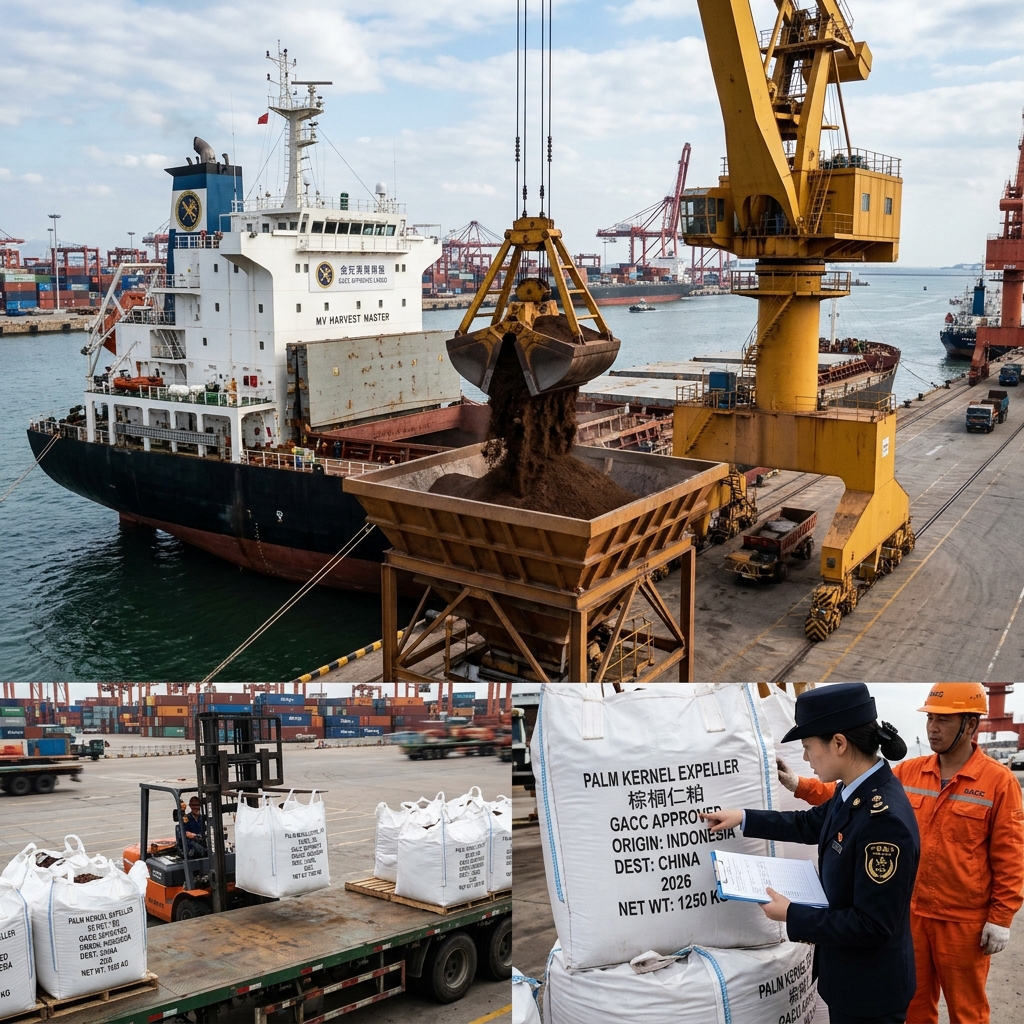
Securing certified GACC approved palm kernel expeller is now the baseline requirement for international agribusinesses supplying China’s booming dairy and livestock sectors. Without valid customs clearance credentials, agricultural consignments face immediate rejection, costly quarantine demurrage, or forced re-export at Chinese destination ports. This definitive 2026 export guide unpacks the regulatory hurdles, quality benchmarks, and logistics strategies required to import and trade palm kernel expeller (PKE) successfully under Chinese import protocols.
China imported over 100 million metric tons of animal feed ingredients annually over recent trade cycles, according to trade analysis from the USDA Foreign Agricultural Service. Driven by modern dairy farms in Shandong, Hebei, and Inner Mongolia, Chinese demand for cost-effective, high-fiber energy feeds continues to surge. However, tightened enforcement under Decrees 248 and 249 by the General Administration of Customs of the People’s Republic of China requires absolute compliance. Importers and exporters must collaborate with certified processing facilities to maintain frictionless trade flows.
What Is GACC Approved Palm Kernel Expeller?
GACC approved palm kernel expeller is mechanically extracted palm oil by-product that originates exclusively from manufacturing mills registered and audited by China’s General Administration of Customs under the CIFER portal system. This certified animal feed ingredient complies with stringent limits on mycotoxins, heavy metals, foreign matter, and biosecurity protocols enforced by Chinese border authorities.
Palm kernel expeller represents the solid residue remaining after crushing oil palm (Elaeis guineensis) seeds to extract crude palm kernel oil. Highly prized in cattle rations, PKE delivers balanced proportions of crude protein, metabolisable energy, and digestible neutral detergent fiber (NDF). Studies published by the Food and Agriculture Organization (FAO) highlight PKE as an exceptional energy supplement for lactating cows and beef steers due to its rumen-friendly digestion characteristics.
As a cornerstone ruminant animal feed raw material, it serves as a functional buffer against subacute ruminal acidosis (SARA) while supporting milk solid production. Because the mechanical pressing process avoids volatile chemical solvents, the resulting expeller cake maintains a rich fatty acid profile that supports livestock body conditioning during high-yield lactations.
Nutritional Profile and Feeding Value for Chinese Livestock
Chinese commercial feed formulators utilize palm kernel meal primarily to optimize rumen function and depress ration costs compared to corn and soybean meal. The high neutral detergent fiber content (often exceeding 50%) provides safe, non-acidotic energy via fermentable cellulose and hemicellulose.
- Crude Protein (CP): Typically ranges between 14.0% and 17.5%, supporting baseline nitrogen requirements in ruminant diets.
- Crude Fat / Residual Oil: 7.0% to 10.0%, providing dense dietary energy without disrupting rumen microbial flora.
- Crude Fiber: 14.0% to 18.0%, stimulating chewing activity, rumination saliva production, and stabilizing ruminal pH.
- Metabolisable Energy: Approximately 10.5 to 11.5 MJ/kg DM for ruminant species, creating steady caloric delivery.
Key Advantages of GACC Approved Palm Kernel Expeller
Utilizing certified GACC approved palm kernel expeller provides livestock operations with verified freedom from pathogenic salmonella, regulated weed seeds, and excessive chemical residues. Industrial dairy farms across northern China rely on consistent pellet durability and low moisture levels to preserve palatability in computerized total mixed ration (TMR) mixers.
Furthermore, certified mills implement advanced mechanical de-stoning systems and multi-stage screening. This engineering control mitigates high silica and residual shell content, safeguarding livestock dentition and preventing premature wear on commercial feed milling dies.
Why GACC Registration Is Mandatory for Palm Kernel Expeller Exporters
China operates one of the world’s most sophisticated digital sanitary and phytosanitary (SPS) tracking regimes. The official authority, the General Administration of Customs of the People’s Republic of China (GACC), requires every overseas facility manufacturing, processing, or storing feed ingredients to secure valid registration prior to maritime shipment.
Under General Administration of Customs China decree 248 and Decree 249, unregistered shipments arriving at gateway ports like Qingdao, Tianjin, or Shanghai are categorized as illegal agricultural cargo. Customs agents deny discharge permits automatically. Consequently, traders face catastrophic port demurrage fees, mandatory destruction, or costly re-routing to secondary international markets.
Decree 248 vs. Decree 249: Understanding the Legal Framework
Navigating Chinese customs requires a granular understanding of both major legislative decrees that govern modern animal nutrition imports:
- Decree 248 (Provisions on the Administration of Registration of Overseas Manufacturers of Imported Food and Feed): Mandates that all foreign manufacturing plants receive formal recommendation from their competent domestic authority (such as the Ministry of Agriculture in Indonesia or Malaysia) and secure registration within the CIFER (China Import Food Enterprises Registration) database.
- Decree 249 (Administrative Measures on Import and Export Food and Feed Safety): Defines comprehensive importer liability, label compliance, quarantine inspection mechanisms, and rapid alert protocols for non-compliant agricultural consignments.
The CIFER “White List” Verification System
Chinese customs authorities verify every cargo against an active bilateral “White List.” Sourcing from certified CIFER palm kernel expeller manufacturers Indonesia ensures your consignment details match registered production quotas precisely. Before executing commercial contracts, buyers must verify the manufacturer’s 18-digit registration code inside the official CIFER single-window system.
Obtaining authentic CIFER registration feed ingredients recognition requires rigorous site audits, validated hazard analysis critical control points (HACCP), and continuous batch traceability. Sourcing from a mill with an expired registration status or unverified scope renders standard documentation completely invalid at customs checkpoints.
Key Quality Specifications for GACC Approved Palm Kernel Expeller in 2026
Chinese feed compounders enforce precise chemical and physical limits. Scientific research on tropical feed safety in ScienceDirect agricultural studies emphasizes that mold development and lipid peroxidation during sea transit represent the most critical degradation risks for expeller cakes.
Reviewing comprehensive GACC approved palm kernel expeller specifications and lab tests before finalizing letters of credit guarantees commercial compliance. The following technical parameters represent the standard purchase contract terms required by tier-one Chinese agricultural trading houses:
| Parameter / Metric | GACC Compliant Standard | Sub-Standard / Rejection Level | Testing Protocol |
|---|---|---|---|
| Crude Protein (CP) | Min 14.5% – 16.0% | < 14.0% | Kjeldahl Method (ISO 5983) |
| Moisture Content | Max 8.0% – 10.0% | > 12.0% (Risk of Heating) | Oven Dry (103°C, 4 hrs) |
| Profat (Protein + Fat) | Min 21.0% – 23.0% | < 20.0% | Combined Soxhlet & Combustion |
| Aflatoxin B1 | Max 20 – 30 ppb (µg/kg) | > 50 ppb | HPLC / ELISA Quantitative |
| Sand and Silica | Max 1.5% – 2.5% | > 3.0% | Acid-Insoluble Ash |
| Free Fatty Acids (FFA) | Max 8.0% – 12.0% | > 15.0% (Oxidized Rancidity) | Titration Method |
Complying with statutory aflatoxin limits China animal feed standards requires immediate mechanical drying and climate-controlled storage after kernel crushing. Suppliers must consistently furnish certified independent laboratory analysis certificates from internationally accredited testing bodies such as SGS, Intertek, or Sucofindo before vessel loading commences at export terminals.
Step-by-Step Export Protocol: Shipping GACC Approved Palm Kernel Expeller to China
Learning how to export GACC approved palm kernel expeller to China demands meticulous compliance throughout processing, freight handling, and customs declaration. Following a standardized procedure ensures seamless entry across all major Chinese maritime ports.
- Verify Processing Mill Accreditation: Ensure the origin crushing facility possesses an unexpired GACC CIFER registration number listed under the appropriate commodity classification.
- Implement Intensive In-Line Cleaning: Run raw expeller flakes through high-intensity magnetic separators and mechanical destoners to eliminate tramp iron, residual palm shell fragments, and physical dirt.
- Execute Pre-Shipment Laboratory Testing: Commission certified sampling officers to verify that total aflatoxins, heavy metals (lead, arsenic, cadmium), and pesticide residues sit comfortably beneath Chinese GB sanitary thresholds.
- Obtain Government Phytosanitary Certification: Secure an official bulk feed cargo phytosanitary certificate from the origin country’s quarantine agency, attesting that the cargo is free from designated quarantine pests.
- Fumigate Sea Holds or Shipping Containers: Conduct approved phosphine (PH3) fumigation to eradicate weevils, beetles, and biological vectors prior to maritime transit.
Moreover, suppliers must label shipping bags or provide bulk vessel shipping documentation bearing the exact manufacturer name, registration code, and lot details matching the CIFER database entry precisely. Any clerical discrepancy between origin documents and customs manifests creates immediate clearance holds.
Managing Transit Biosecurity and Moisture Migration
A frequent cause of customs rejection in southern and northern Chinese ports is moisture condensation inside container boxes or vessel bulk holds. When cargo travels from tropical extraction zones into chilly Chinese ports during winter, condensation forms rapidly on steel ceilings.
Experienced shippers pack high-absorption desiccant poles inside dry containers and enforce strict cargo moisture ceilings of less than 9.0% at loading time. Keeping moisture low prevents localized caking and completely inhibits the production of heat-induced mold pockets during ocean voyages.
Comparing Animal Feed Ingredients in Modern Feed Formulations
While buying GACC approved palm kernel expeller forms the backbone of cost-effective ruminant nutrition, feed millers frequently blend multiple agricultural coproducts to optimize protein and digestible energy profiles.
For example, integrating high-fiber Copra Meal elevates palatability and adds complementary essential amino acids to livestock diets. In intensive dairy systems, nutritionists combine PKE with bypass fats like Calcium Salts of Palm Oil Fatty Acids to boost milk production volume and milk fat percentages without overloading ruminal digestion.
Additionally, agricultural processing plants often utilize solid biomass like Palm Kernel Shell to generate green thermal steam for solvent-free mechanical crushing operations. Sustainable soil conditioning applications in nursery operations also utilize organic substrates such as Cocopeat, reflecting circular agribusiness efficiency across Southeast Asian plantation operations.
Partnering with a reliable Indonesian palm kernel expeller supplier guarantees consistent supplies of high-grade expeller cake while adhering to traceability mandates required by Chinese quarantine authorities.
Critical Documentation Checklist for Chinese Customs Clearance
Navigating the customs clearance protocol for PKE animal feed in Chinese ports requires flawless trade paperwork. Any clerical discrepancy between documentation and customs declarations can halt port clearance immediately. Importers must assemble and double-check seven core trade records:
- Official Phytosanitary Certificate: Endorsed by the national quarantine bureau of the exporting country, noting specific GACC registration numbers.
- Certificate of Origin (Form E): Grants preferential zero-tariff or reduced-tariff import duty rates under the ASEAN-China Free Trade Agreement.
- Certificate of Quality and Weight: Issued by authorized third-party inspection firms (e.g., SGS, CCIC) at the origin load port.
- Non-Genetically Modified Organism (Non-GMO) Statement: Certifying that the mechanical palm by-product contains no transgenic traits.
- Clean Bill of Lading (B/L): Confirming maritime transport terms without derogatory condition notations.
- Commercial Invoice and Packing List: Featuring matching exporter registration entries, batch references, and gross/net weights.
- Fumigation and Treatment Certificate: Proving successful pest eradication within cargo holds prior to sailing.
Facilitating seamless palm kernel meal export China operations depends on filing customs paperwork electronically before vessels berth. Working alongside an experienced customs broker possessing direct EDI connectivity to single-window Chinese import portals ensures that customs entries clear review before discharge begins.
Makmur Amanah Sejahtera provides high-quality palm products such as Palm Kernel Expeller, Palm Kernel Shell, Crude Palm Oil, Palm Kernel Oil, etc. Kindly contact us at WhatsApp +6282140002198 or email us at admin@makmuramanah.co.id.
Frequently Asked Questions
What does GACC approved palm kernel expeller mean?
GACC approved palm kernel expeller refers to palm kernel meal produced by an overseas crushing facility formally audited and registered under China’s CIFER customs system. This certification confirms that the feed ingredient satisfies China’s biosecurity, quality, heavy metal, and mycotoxin legal thresholds.
What is the shelf life of palm kernel expeller during sea transit to China?
Properly processed palm kernel expeller with moisture levels below 9.0% maintains nutritional stability for 6 to 9 months. To prevent rancidity and mold growth during maritime shipping, suppliers must ensure low initial moisture, professional fumigation, and proper ventilation throughout container transit.
Which Chinese livestock sector consumes the most palm kernel expeller?
Commercial dairy and beef feedlots consume the vast majority of imported palm kernel expeller in China. Ruminants efficiently digest the high neutral detergent fiber and moderate crude protein, making PKE an economical alternative to expensive domestic corn and imported soybean meal rations.
How can an importer check if a foreign PKE mill has active GACC registration?
Importers can verify overseas processing mills directly through the public query interface on China’s official CIFER website (ciferquery.singlewindow.cn). Users search by country, commodity category (feed and feed additives), and the manufacturing enterprise’s formal administrative registration number.
What are the maximum allowable aflatoxin levels for PKE in China?
Under Chinese national feed hygienic standards (GB 13078), Aflatoxin B1 concentrations in plant-derived animal feed materials must strictly remain below 30 to 50 micrograms per kilogram (ppb), depending on the targeted livestock category. Exporters typically target below 20 ppb for commercial safety.
Conclusion: Securing Your Supply of GACC Approved Palm Kernel Expeller
The global feed landscape requires agile procurement, strict regulatory compliance, and unfaltering product consistency. Navigating Chinese customs regulations does not have to result in regulatory bottlenecks or unpredictable shipping delays. By prioritizing accredited manufacturing facilities, maintaining uncompromising mycotoxin monitoring, and executing precise import documentation, agribusinesses can establish profitable and enduring trade corridors into the Chinese feed market.
As import requirements become increasingly rigorous throughout 2026, partnering with established, accredited processing entities remains the ultimate safeguard for supply chain stability. Choose a certified partner capable of delivering premium, reliable GACC approved palm kernel expeller tailored to the exact nutritional specifications of modern livestock producers.

 English
 Indonesian
 Chinese
 Arabic
