
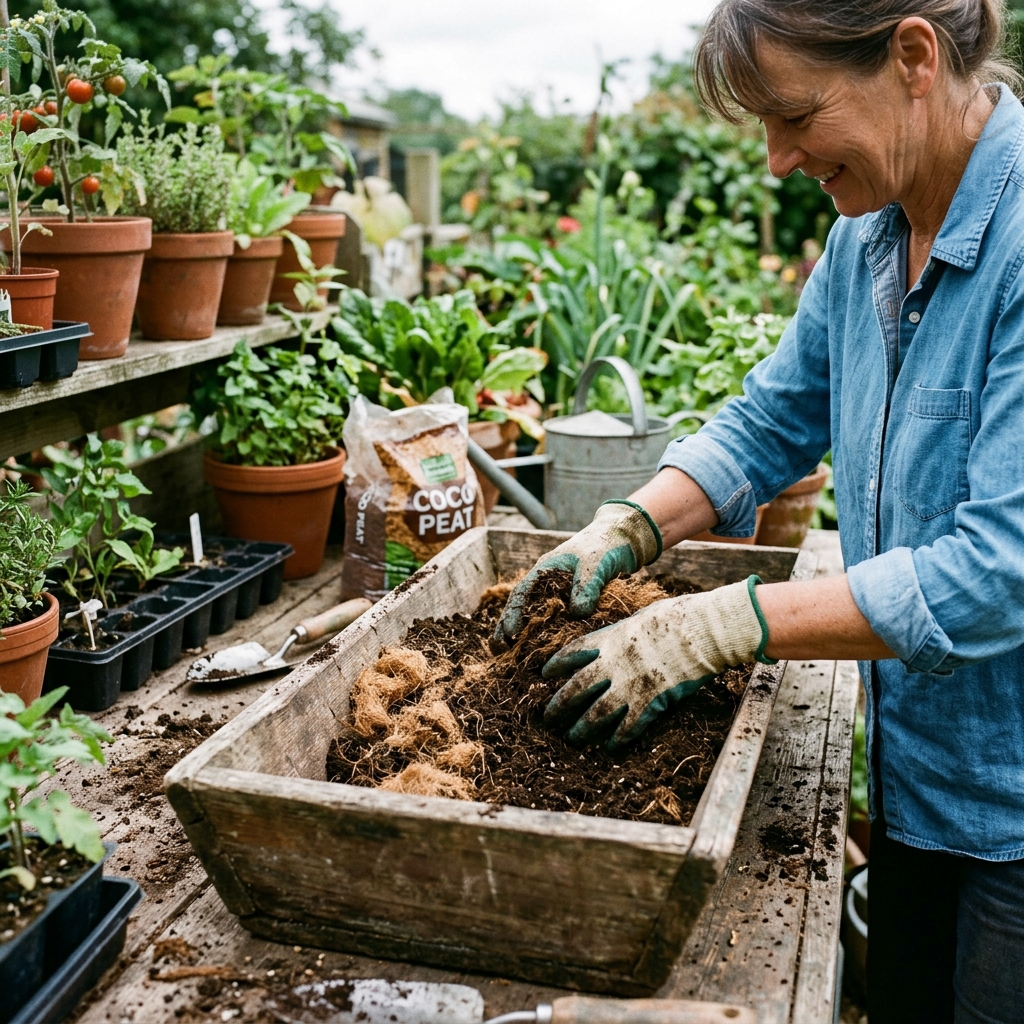
Yes, you can mix cocopeat with soil to create an exceptional, lightweight growing medium that balances moisture retention with robust root aeration. Whether you cultivate container vegetables, exotic aroids, or outdoor raised beds, combining coco pith with standard garden loam revitalizes compacted earth and accelerates root expansion.
According to research published by the University of Florida IFAS Extension, coconut coir can retain up to eight to ten times its dry weight in water while maintaining 15% to 25% air-filled porosity. However, dumping raw coir straight into garden beds without proper preparation can induce severe nutrient lockouts and stunted growth. Understanding how, when, and in what proportions to blend these amendments makes the difference between thriving flora and waterlogged, nutrient-depleted roots.
Why Gardeners Choose to Mix Cocopeat with Soil
Garden soils often swing between two extremes: heavy clay that suffocates roots or porous sand that drains fertilizer before roots absorb it. When you mix cocopeat with soil, you integrate a natural sponge composed of spongy micro-tubes that moderates moisture fluctuations.
Unlike traditional peat moss, coconut coir is a renewable byproduct derived from coconut processing. Furthermore, coconut coir features an optimal baseline pH range of 5.8 to 6.8, which fits most horticultural crops. Peat moss, in contrast, requires agricultural lime to neutralize its harsh 3.5 to 4.5 acidity.
Additionally, gardeners who mix cocopeat with soil establish resilient rhizosphere environments. The fibrous structure resists biological breakdown for several seasons, ensuring physical soil structure does not collapse midway through peak summer growth.
[Image: A close-up split frame showing compact garden soil on the left and a rich, fluffy blend of dark soil and golden-brown cocopeat on the right | Alt: Gardener preparing to mix cocopeat with soil for potted vegetables | Title: How to Mix Cocopeat With Soil Correctly]
Physical Structure When You Mix Cocopeat with Soil
Cocopeat acts as an elastic buffer within dense earth. When blended properly, it separates compact clay particles, allowing fine feeder roots to penetrate deeper into the container or bed.
Simultaneously, coir creates uniform capillary pathways. Water distributes evenly sideways throughout the pot rather than channeling straight down the container edges, which frequently happens when conventional potting soils dry out and shrink away from pot walls.
Biological Soil Activity and Microbial Flora
Studies highlighted in the Food and Agriculture Organization (FAO) Soils Portal demonstrate that porous carbon structures provide shelter for beneficial mycorrhizal fungi and aerobic bacteria. Because cocopeat supplies stable lignin without rapidly decaying, these microbes colonize root zones faster, improving overall stress tolerance against heat and pathogen attacks.
Incorporating an organic garden medium like coconut coir potting mix also supports soil respiration. Data from the USDA Natural Resources Conservation Service (NRCS) emphasizes that crumb-structured aggregate soils optimize microbiological nutrient cycling far better than monolithic compacted clays.
The 5 Best Ratios to Mix Cocopeat with Soil for Every Plant Type
Achieving ideal results requires tailoring your volumetric blend to the physiological needs of your specific plant species. Using a one-size-fits-all formula usually leads to either dehydration or root rot. Here is the best ratio to mix cocopeat with soil across varying cultivation scenarios:
- Standard Houseplants and Tropicals (30% Cocopeat, 50% Potting Soil, 20% Perlite): Ideal for Monsteras, Pothos, and Philodendrons that demand constant capillary moisture paired with ample oxygen around thick roots.
- Vegetable Raised Beds and Outdoor Containers (40% Cocopeat, 40% Garden Soil, 20% Aged Compost): Provides the heavy water retention capacity and biological fertility required by thirsty fruiting crops like tomatoes, peppers, and cucumbers.
- Seed Starting and Microgreens (50% Cocopeat, 30% Soil, 20% Vermiculite): Yields a friable, gentle coco pith substrate that delicate seedling roots can navigate without encountering crusting or compaction.
- Heavy Clay Soil Remediation (30% Cocopeat, 60% Existing Clay Soil, 10% Coarse Sand): Can you mix cocopeat with clay soil effectively? Yes; this ratio loosens sticky aggregates and breaks down surface baking, turning stubborn ground into workable loam over successive seasons.
- Drought-Tolerant Ornamentals and Cacti (15% Cocopeat, 45% Native Soil, 40% Pumice or Grit): Prevents the fatal rot common to arid succulents while providing just enough cohesion to stop loose mineral grit from drying out instantaneously.
Notice how organic carbon amendments transform soil texture. When establishing large permaculture projects, agricultural growers also recycle high-lignin organic biomass like Palm Kernel Shell for pathways and deep-mulch aeration layers alongside processed coir substrates.
[Image: High-resolution infographic displaying a clean pie-chart breakdown of the 5 potting ratios when combining cocopeat, garden soil, and aeration components | Alt: Visual ratio guide detailing how to mix cocopeat with soil for vegetables and houseplants | Title: Best Ratios to Mix Cocopeat with Soil Infographic]
Substrate Comparison: Cocopeat Blend vs. Alternative Growing Media
To evaluate whether you should mix cocopeat with soil or choose alternatives like peat moss or pure potting soil, consider this direct performance comparison:
| Parameter | Cocopeat + Soil Mix | Peat Moss + Soil Mix | Standard Unamended Soil |
|---|---|---|---|
| Water Retention | Very High (8–10x weight) | High (7–8x weight) | Moderate to Low |
| Re-wetting Ability | Effortless (Hydrophilic) | Difficult (Becomes Hydrophobic) | Moderate (Forms crusts) |
| Baseline pH | Neutral/Mild Acid (5.8–6.8) | Acidic (3.5–4.5) | Variable (5.0–8.0) |
| Decomposition Rate | Slow (High lignin) | Moderate | Depends on organic load |
| Environmental Impact | Sustainable Byproduct | Destructive Bog Mining | Minimal Local Impact |
| Air-Filled Porosity | 18%–25% | 10%–15% | 5%–12% |
Essential Tools and Materials Before You Mix Cocopeat with Soil
Before initiating your soil amendment process, assemble the proper equipment to guarantee accurate volumetric measurements and thorough blending.
- Substrate Components: Compressed cocopeat blocks, pasteurized garden loam, perlite or coarse horticultural grit, and organic compost.
- Hydration and Buffering Agents: Clean municipal or rainwater, a liquid Calcium-Magnesium (Cal-Mag) supplement, and an Electrical Conductivity (EC) meter.
- Mixing Implements: A 20-gallon mixing container or durable tarp, a garden spade, heavy-duty gardening gloves, and a soil moisture meter.
How to Mix Cocopeat with Garden Soil Step-by-Step
Learning how to mix cocopeat with garden soil correctly prevents seedling shock. Dry compressed cocopeat blocks require careful rehydration and chemical buffering before coming into contact with sensitive plant root systems.
- Hydrate the Compressed Block: Place your dehydrated cocopeat brick in a large tub. Add warm water at an approximate ratio of 4:1 (water volume to coir weight). Allow the brick to expand for 20 to 30 minutes until fully expanded and soft.
- Rinse Out Residual Salts: Many agricultural coir products originate in coastal coconut plantations and harbor elevated electrical conductivity (EC). Flush the expanded substrate with clean freshwater through a fine mesh strainer until your runoff EC falls below 0.8 mS/cm.
- Buffer with Calcium and Magnesium: Raw coco surfaces naturally display negative cation exchange sites saturated with sodium and potassium ions. Soak the rinsed coir in a Cal-Mag solution (buffered at 1.5 to 2.0 EC) for 12 hours. This step displaces monovalent sodium and prevents the coir from locking out crucial calcium later.
- Sterilize or Aerate the Garden Soil: If utilizing outdoor garden topsoil, remove stones, weeds, and thick root fragments. For indoor plants, pasteurize the field soil in an oven at 180°F (82°C) for 30 minutes to eliminate pests, fungal spores, and weed seeds.
- Blend the Components Thoroughly: Pour the calculated volumes of expanded coir, conditioned soil, and mineral amendments (such as perlite or pumice) into a wheelbarrow or mixing tarp. Turn the pile repeatedly until the color and moisture consistency appear uniform.
Why You Must Buffer Before You Mix Cocopeat with Soil
When you mix cocopeat with soil without prior buffering, the unbonded cation sites on the coir fibers immediately strip free calcium and magnesium ions straight out of your potting soil. Consequently, the foliage exhibits severe tip burn, leaf curling, and stunted shoot growth.
Buffering satisfies these bonding sites upfront with buffered cocopeat, guaranteeing that all fertilizer added to your garden stays fully bioavailable to root hairs rather than bound to substrate walls.
Achieving Optimal Potting Soil Drainage
One major error horticulturists encounter is underestimating substrate settling. Pure cocopeat holds moisture tenaciously, so failing to integrate perlite, pumice, or grit compromises potting soil drainage over time.
Ensure that coarse aggregates represent at least 15% to 20% of your total volume. This guarantees permanent macro-pores that drain excess gravity water within seconds of irrigation, preserving soil aeration throughout heavy rains.
Crucial Mistakes to Avoid When You Mix Cocopeat with Soil
While the benefits of mixing cocopeat with potting soil are substantial, inexperienced growers often commit fundamental handling errors that derail crop productivity.
- Failing to Account for Coir’s Zero-Nutrient Baseline: Cocopeat is an inert media containing virtually zero nitrogen, phosphorus, or micronutrients. Always enrich your soil blend with slow-release organic fertilizers, worm castings, or agricultural meals like Copra Meal and compost extracts to supply essential baseline nutrition.
- Over-Watering Due to Misleading Surface Appearance: Cocopeat retains water deep inside the pot even when the top half-inch looks dry and pale. Always insert a finger 2 inches into the soil before irrigating. Over-watering suffocates root hairs and invites fungal Pythium infections.
- Omitting Drainage Amendments in Closed Pots: Blending fine cocopeat with silty garden earth without coarse perlite or pumice causes particle settling. Over time, the lower third of the container forms an anaerobic mire.
- Using Industrial-Grade, High-Salinity Cocopeat: Cheap landscaping coir frequently retains dangerous levels of ocean salinity. Always confirm the product packaging specifies “Low EC” and “Washed & Buffered” before using it on sensitive seedlings.
[Image: An experienced horticulturist testing the dampness and porosity of freshly mixed coco coir and native topsoil in a potting tray | Alt: Checking soil moisture after choosing to mix cocopeat with soil | Title: Proper Moisture Testing When You Mix Cocopeat With Soil]
Long-Term Management: Fertilization and Watering Strategies
Managing a bed where you mix cocopeat with soil requires slight adjustments compared to conventional loam management. Because cocopeat increases total water holding capacity, you will irrigate less frequently but with deeper soakings.
Furthermore, because organic coconut coir drains extra salts efficiently during irrigation, soluble nutrients leach through free-draining pots more rapidly than in clay soils. Apply balanced organic fertilizers every two to three weeks during the active vegetative cycle.
In high-performance commercial nursery applications, agronomists combine precise fertigation regimes with rich natural amendments. Utilizing high-protein organic meals, or supplementing animal feedstocks and soil enrichments with derivatives such as Palm Kernel Expeller, demonstrates how industrial organic coproducts drive regenerative circular farming ecosystems globally.
As documented in research indexed by the ScienceDirect Agricultural Database, substrates amended with 30% coconut coir retain potassium and phosphorus near the root zone up to 28% longer than bare sandy substrates, directly boosting harvest yields in fruiting crops.
Expert Video Tutorial Concept: “The Science of Coco Coir: How to Wash, Buffer, and Blend Soil for Maximum Root Yield” — Demonstrating step-by-step hydration, calcium-nitrate buffering protocols, and physical hand-tests for aeration porosity.
Premium Agricultural & Palm Solutions
Makmur Amanah Sejahtera provides high-quality palm products such as Palm Kernel Expeller, Palm Kernel Shell, Crude Palm Oil, Palm Kernel Oil, etc. Kindly contact us at WhatsApp +6282140002198 or email us at admin@makmuramanah.co.id.
Frequently Asked Questions
Can you mix cocopeat with soil directly without washing it?
You should never mix unwashed cocopeat with soil. Raw cocopeat typically carries excess sodium and chloride salts from its origin. Rinsing and buffering it protects young root systems from salt burns, osmotic shock, and calcium deficiencies.
What is the single best ratio to mix cocopeat with soil for houseplants?
The ideal universal ratio is 30% cocopeat, 50% high-quality potting soil, and 20% perlite or pumice. This precise formula delivers sustained moisture while maintaining plenty of oxygen pockets to prevent the onset of lethal root rot.
Does cocopeat attract gnats or garden pests?
Cocopeat itself is sterile and does not harbor fungus gnats. However, if you keep your blend waterlogged, fungus gnats can colonize decaying organic matter in the soil. Always let the top two inches dry out slightly between waterings.
Can you reuse soil mixed with cocopeat after harvest?
Yes, you can reuse the blend across multiple seasons. Remove dead roots, solarize or pasteurize the substrate to eradicate lingering pathogens, and recondition the mix with 10% fresh compost and organic slow-release fertilizer.
Can you mix cocopeat with soil for succulents and cactus?
You can use cocopeat for succulents, but only in very modest amounts (10% to 15% maximum). Pair it with 40% coarse mineral grit or volcanic pumice and 45% soil to avoid retaining excess moisture around delicate desert roots.
Final Thoughts on Soil Amending in 2026
Transforming ordinary garden dirt into a fertile, spongy, high-yielding potting media is straightforward once you know how to balance texture and fertility. Incorporating buffered coco pith into your gardening routine offers superior root health, reduces water waste by nearly half, and protects fragile root hairs from temperature shocks.
[Image: A healthy potted plant displaying dense, fibrous white roots throughout a balanced cocopeat and garden soil substrate | Alt: Thriving roots produced after growers mix cocopeat with soil | Title: Healthy Root Structure from Mixing Cocopeat With Soil]
Remember that moisture control and proper buffering remain essential steps before potting your prized plants. When you take the time to prepare your materials and mix cocopeat with soil using the recommended ratios, your garden containers and raised beds will reward you with lush foliage, vibrant blooms, and bountiful harvests season after season.


 English
 Indonesian
 Chinese
 Arabic
