
جدول المحتويات
- ما هو مستخلص نواة النخيل (PKE)؟
- Top 4 Uses of PKE in 2025
- Proven Benefits of PKE
- PKE vs. Palm Kernel Meal (PKM): The Key Differences
- الأسئلة الشائعة حول PKE
- الخلاصة: مستقبل نواة النخيل في الأعلاف العالمية
ما هو مستخلص نواة النخيل (PKE)؟
مستخلص نواة النخيل (PKE) is a high-value co-product from the palm oil industry. It is the solid residue that remains after the oil has been mechanically extracted from the نواة النخيل, which itself comes from the mighty عناقيد ثمار نخيل الزيت. This expeller pressing process makes PKE a dense and valuable ingredient, primarily for the animal feed sector.
Rich in fiber, moderate in protein, and with a useful residual oil content, PKE serves as a cost-effective alternative to more expensive feedstuffs like soybean meal or corn. Its unique nutritional profile makes it particularly suitable for certain types of livestock, contributing to a more sustainable agricultural cycle.
Top 4 Uses of PKE in 2025
The versatility of PKE allows it to be used in several key industries. While it is most famous as an animal feed, its applications are expanding as industries seek more sustainable and economical resources. The palm industry provides a range of valuable products, from زيت النخيل الخام و زيت نواة النخيل to solid biomass.
1. Ruminant Feed (Cattle, Goats, Sheep)
The primary use of PKE is in feed for ruminant animals. Its high fiber content is easily digestible by the specialized digestive systems of cattle, goats, and sheep. It provides a good source of energy from residual oil and fiber, along with valuable protein for growth and milk production.
Many large-scale dairy and beef operations incorporate PKE into their rations to lower feed costs without compromising nutritional quality. According to the منظمة الأغذية والزراعة (الفاو), it is valued as a balanced supplement for grazing animals.
2. Non-Ruminant Feed (Poultry and Swine)
Using PKE in non-ruminant diets, such as for poultry and swine, is possible but requires careful formulation. The high fiber levels, specifically non-starch polysaccharides (NSPs), can be difficult for these animals to digest.
To overcome this, feeds containing PKE are often supplemented with enzymes that help break down the complex fibers, improving nutrient absorption. This makes it a viable component in feed for older birds and pigs, though less so for young starter animals.
3. Biofuel and Biomass Production
Beyond animal feed, PKE is gaining traction as a source of renewable energy. Its high biomass density and calorific value make it an excellent solid fuel for industrial boilers, often used alongside قشرة نواة النخيل. This practice turns a co-product into a green energy source, reducing reliance on fossil fuels as detailed in studies on biomass energy potential.
4. Organic Fertilizer and Soil Conditioner
The organic matter present in PKE makes it a useful, albeit less common, ingredient in organic fertilizers. When composted, it enriches the soil with essential nutrients and improves soil structure, enhancing water retention and aeration for better plant growth.
Proven Benefits of PKE
The widespread adoption of PKE is driven by a powerful combination of economic, nutritional, and environmental advantages.
Cost-Effectiveness
As a co-product of the massive palm oil industry, PKE is significantly more affordable than many primary feed crops. This price advantage allows farmers to reduce their overall production costs, a critical factor in a competitive agricultural market.
Balanced Nutritional Value
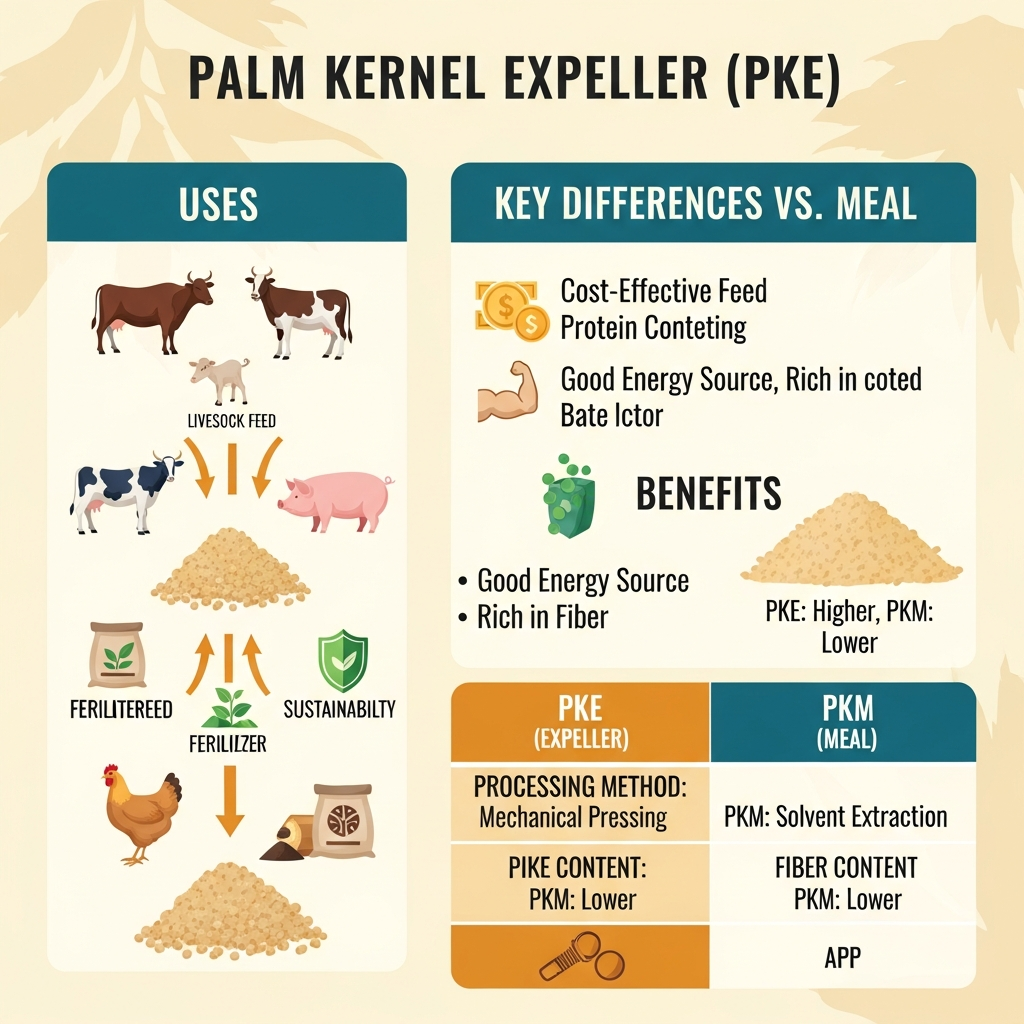
This feed ingredient offers a balanced nutritional profile. It typically contains 14-18% crude protein, 5-10% residual oil (fat), and a high crude fiber content of 12-18%. This composition provides a steady release of energy, supports muscle development, and promotes healthy digestive function, especially in ruminants.
Sustainability and Waste Reduction
Integrating the معصرة نواة النخيل into various supply chains is a prime example of a circular economy. It utilizes a material that would otherwise be considered waste, reducing the environmental footprint of palm oil production. To learn more about industry standards, visit the المائدة المستديرة حول زيت النخيل المستدام (RSPO).
PKE vs. Palm Kernel Meal (PKM): The Key Differences
Though often used interchangeably, PKE and Palm Kernel Meal (PKM) are not the same. The primary distinction lies in their production method, which directly impacts their nutritional composition and physical form.
طريقة الاستخلاص
The defining difference is the oil extraction technique. PKE is produced through mechanical pressing, where a screw press (expeller) physically squeezes the oil from the kernel. PKM, on the other hand, is typically produced using solvent extraction, where a chemical solvent (like hexane) is used to dissolve and remove the oil. Sometimes, PKM refers to the product of a second solvent extraction on PKE.
التركيب الغذائي
The extraction method affects the final nutrient content. Because mechanical pressing is less efficient, PKE retains a higher residual oil content (5-10%) compared to solvent-extracted PKM (1-3%). This makes PKE higher in energy. Conversely, with less oil, PKM has a slightly more concentrated protein percentage. Research from journals like علوم وتكنولوجيا تغذية الحيوانات frequently highlights these differences.
Physical Appearance and Application
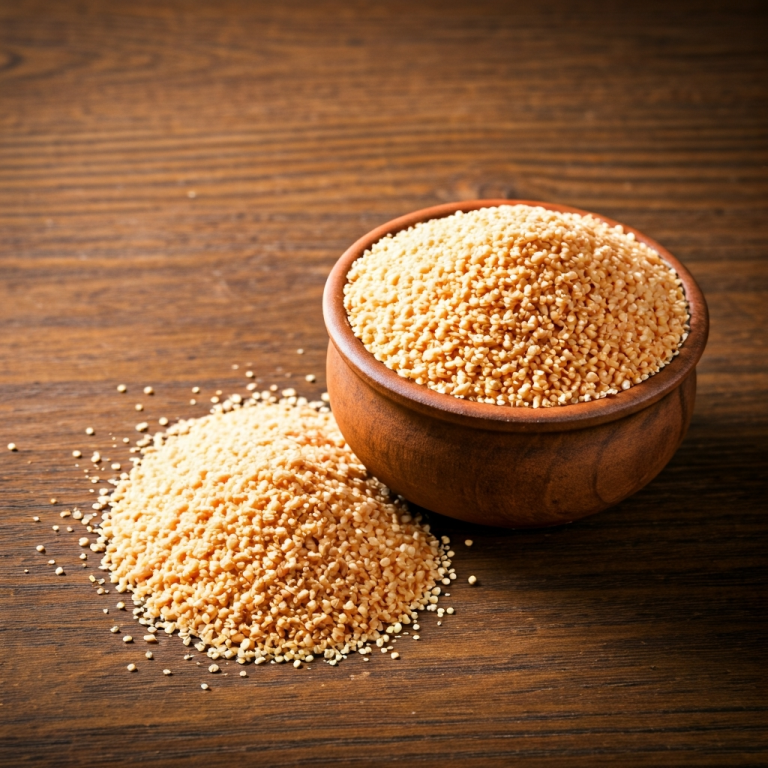
The physical forms are also distinct. PKE is coarse, dense, and often sold as broken cake or pellets. PKM is a finer, more powdery meal. This can influence how they are mixed into feed, with the texture of PKE being preferred by some animals while the fineness of PKM allows for more uniform blending.
الأسئلة الشائعة حول PKE
- Is PKE suitable for all animals?
- PKE is ideal for ruminants like cattle and goats due to its high fiber content. For non-ruminants such as poultry and swine, it can be used but often requires enzyme supplementation to aid digestion, especially for younger animals.
- What is the typical shelf life of PKE?
- When stored in a cool, dry place away from direct sunlight, PKE can have a shelf life of up to 6 months. Proper storage is crucial to prevent mold growth and rancidity of the residual oil.
- How does PKE differ from Palm Kernel Shell?
- They are different co-products. PKE is the fleshy part of the kernel after oil extraction and is used for feed. قشرة نواة النخيل is the hard outer covering of the kernel and is primarily used as a high-calorific biomass fuel.
- Why is PKE considered a sustainable feed ingredient?
- PKE is sustainable because it is a co-product, meaning it utilizes a part of the palm fruit that would otherwise be discarded after oil production. This practice reduces waste, maximizes resource efficiency, and lowers the environmental footprint of the palm oil industry.
مورد منتجات النخيل الموثوق به
هل تبحث عن منتجات النخيل عالية الجودة؟
تقدم شركة ماكمور أمانة سجاهتيرا منتجات نخيل عالية الجودة مثل عصارة نواة النخيل، وقشرة نواة النخيل، وزيت النخيل الخام، وزيت نواة النخيل، وغيرها. يرجى التواصل معنا عبر واتساب على الرقم +6282140002198 أو عبر البريد الإلكتروني على admin@makmuramanah.co.id.
الخلاصة: مستقبل نواة النخيل في الأعلاف العالمية
مستخلص نواة النخيل (PKE) stands out as a remarkably valuable resource in the global agricultural and energy sectors. Its status as a cost-effective, nutritious, and sustainable co-product ensures its continued importance in animal feed formulations worldwide.
By understanding its uses, benefits, and key differences from palm kernel meal, farmers and producers can make informed decisions to optimize their operations. As the world moves toward more sustainable practices, the role of resourceful ingredients like PKE is set to become even more critical.
 Arabic
  English
  Indonesian
  Chinese